MAI has developed a methodology that allows for more accurate prediction of the service life of aircraft parts made from composites – materials that have already become the basis of the "black wing" of the Russian MC-21. Instead of calculating only the moment of failure, engineers model the gradual accumulation of damage and reduction in structural strength.

Traditional Wöhler curves show how many load cycles a material can withstand before failure, but this is not enough for composites. MAI takes into account how stiffness and strength change over time, how microdamage appears, and how internal material degradation develops.
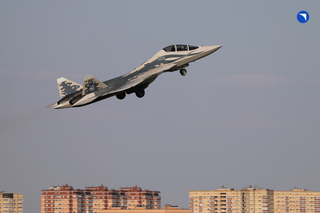
For the MC-21, this approach is particularly relevant: its composite high-aspect-ratio wing has become one of the aircraft's key structures. It was the use of carbon fiber that made it possible to create a long and narrow wing, which, if made of metal, would have been significantly heavier or would have required compromises in strength.
The new methodology is based on Wim Van Paepegem's model, adapted by MAI specialists for domestic materials and aerospace tasks. Calculations are verified on samples and full-scale units, and the approach itself is already being applied in work for design bureaus.
For the industry, this is the next step after creating the "black wing" itself: now it is necessary not only to learn how to produce large composite structures but also to accurately understand how they will age throughout their service life. This can allow for reducing excessive safety margins, lowering structural mass, and more accurately planning maintenance.
Read more on the topic:
Never miss our newsAdd this site to your preferred sources to see us more oftenAdd on Google