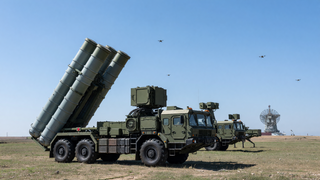
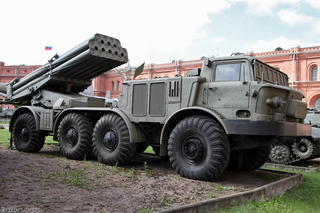
More details about the new capabilities of the Alfa Sverkhdalnost radar have emerged a day after the publication of the complex's initial specifications. OKB Alfa clarified that the station is capable of detecting and tracking drones flying directly near the ground surface – this mode is becoming one of the key features for the small aerial target detection system.
The developer previously disclosed the radar's operating range: standard UAVs with a radar cross-section of 0.1 m² or more are detected by the station at a distance of 15 to 30 km, while small drones with an RCS of less than 0.01 m² are detected up to 7 km away.
It has now become known that the complex's capabilities are not limited to detection: the radar can simultaneously track up to 20 targets moving at speeds from 10 to 270 m/s.
Working with low-flying objects is especially important for this class of systems. A target flying almost at the surface is more difficult for radar control due to signal propagation characteristics and background reflections from the ground. OKB Alfa, however, claims the ability to detect and track both aircraft-type and copter-type UAVs even when flying directly near the surface.
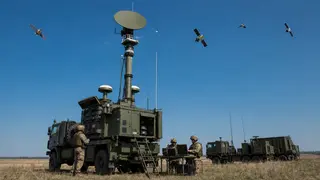
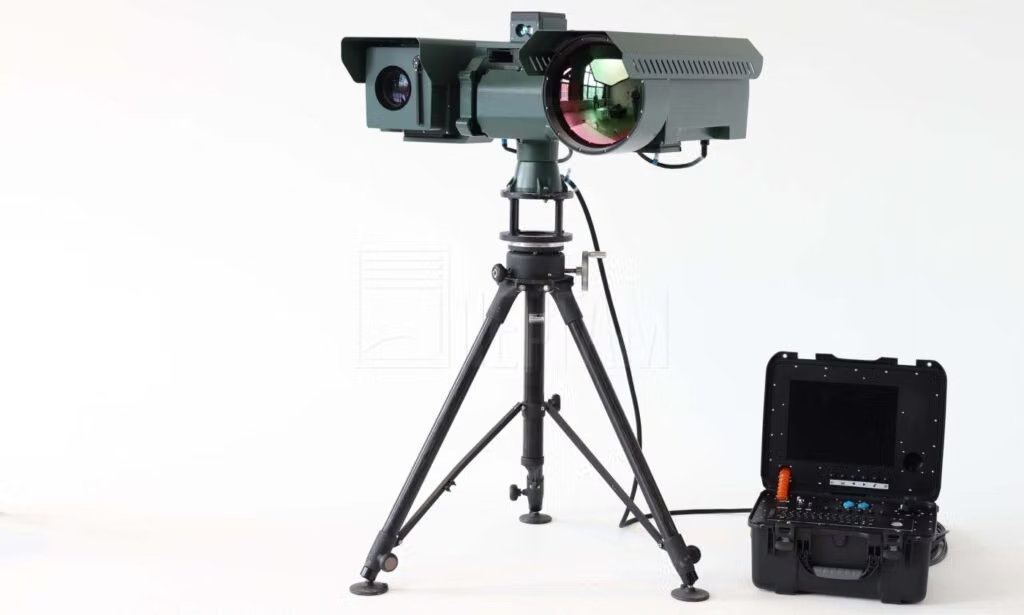
Alfa Sverkhdalnost combines a solid-state radar with a fixed phased array antenna and an A-900M thermal imaging complex. One radar panel provides a 90-degree sector in azimuth and 50 degrees in elevation, while the installation of four panels creates a 360-degree circular view.
After detection, the target can be further recognized by the optical system. The thermal imager with a cooled detector can detect an object measuring 0.3×0.3 m at a distance of up to 4.5 km, and the video camera has a lens with 40x optical zoom and a focal length of up to 1070 mm.
Read more on the topic:
Never miss our newsAdd this site to your preferred sources to see us more oftenAdd on Google