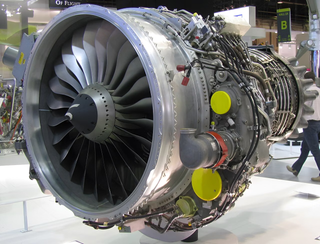
A method has been proposed to move dangerous rotating stall in a multi-stage compressor of a gas turbine engine outside the operating range to reduce vibrational loads on the working blades. The method was developed and patented by engineers of PAO "ODK-Saturn".
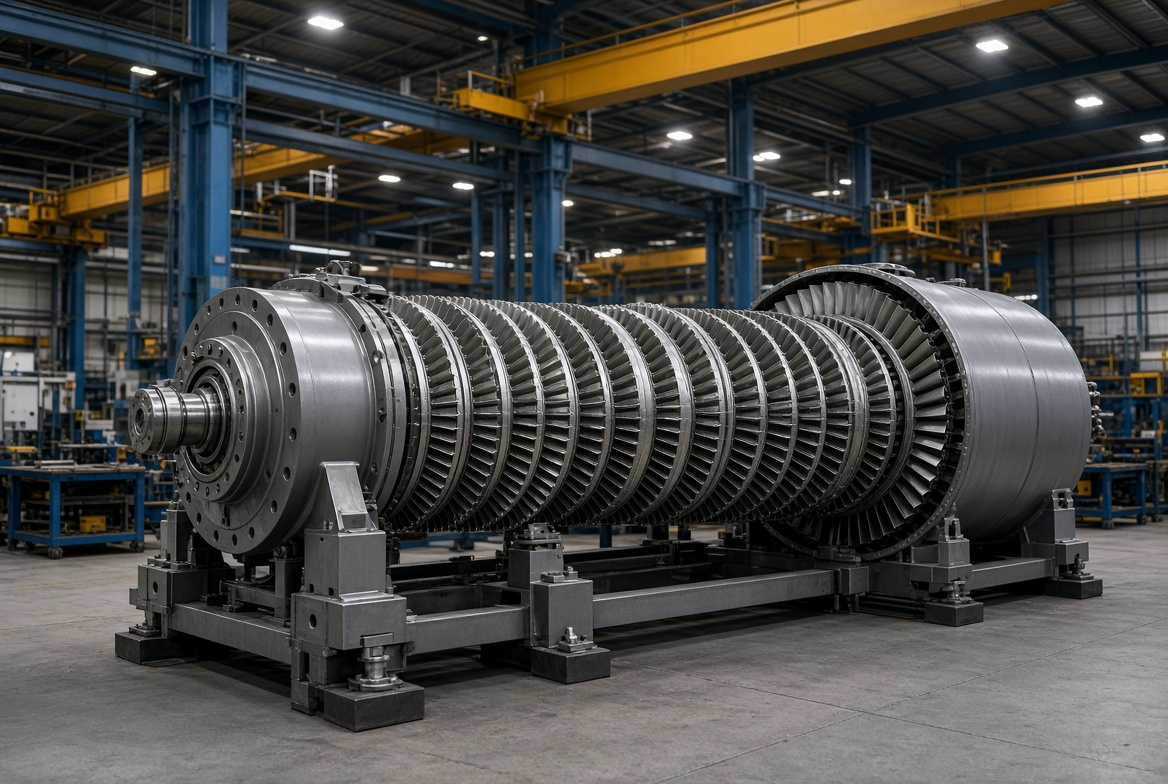
Rotating stall occurs when the flow stability in the compressor is disturbed. For working blades, this is a dangerous mode: it is accompanied by strong oscillations, increases vibrational stresses, and can degrade compressor performance. In existing approaches, stall is mainly detected by its characteristic frequency, after which tests have to be taken out of the dangerous mode.
The new method allows not only to detect stall, but also to determine which stages of the multi-stage compressor are most susceptible to stall oscillations. To do this, engineers analyze the signal from a pressure pulsation sensor on the compressor casing simultaneously in narrow and wide frequency ranges. By changing the signals at the blade passing frequencies, the most unstable stages can be identified.
After detecting the problem area, a method for changing the compressor's operating mode is selected. During tests, the angles of the guide vanes can be increased, air bleed can be opened after a certain stage, or both solutions can be combined. For each option, the rotating stall frequency is determined again and the aerodynamic parameters of the stage are recalculated.
In the example given in the patent, stall was initially recorded at 11,660 rpm, while the idle speed was 11,500 rpm. Opening the bleeds after the fourth stage reduced the stall onset threshold to 11,270 rpm – by 390 rpm. However, a more noticeable effect was achieved by changing the angles of the guide vanes of the first and second stages by +3°. After this, the stall was shifted to 10,400 rpm, which is approximately 1260 rpm below the initial value.
As a result, the proposed technology should reduce stall-induced vibrational stresses in the working blades and increase the margin of gas-dynamic stability of the compressor in the operating speed range. This refers specifically to the fine-tuning of an already created GTE during bench tests: instead of trying to completely eliminate rotating stall, engineers propose to move the dangerous mode to where the engine does not use it.
Read more on the topic:
Never miss our newsAdd this site to your preferred sources to see us more oftenAdd on Google