Translated with AI from the Russian original.
The "Bion-M" No. 3 spacecraft is planned to be launched in 2030 into a polar orbit at an altitude of about 800 kilometers. During the mission, scientists will study the effects of increased cosmic radiation on living organisms to obtain data for preparing future manned expeditions beyond low Earth orbit.
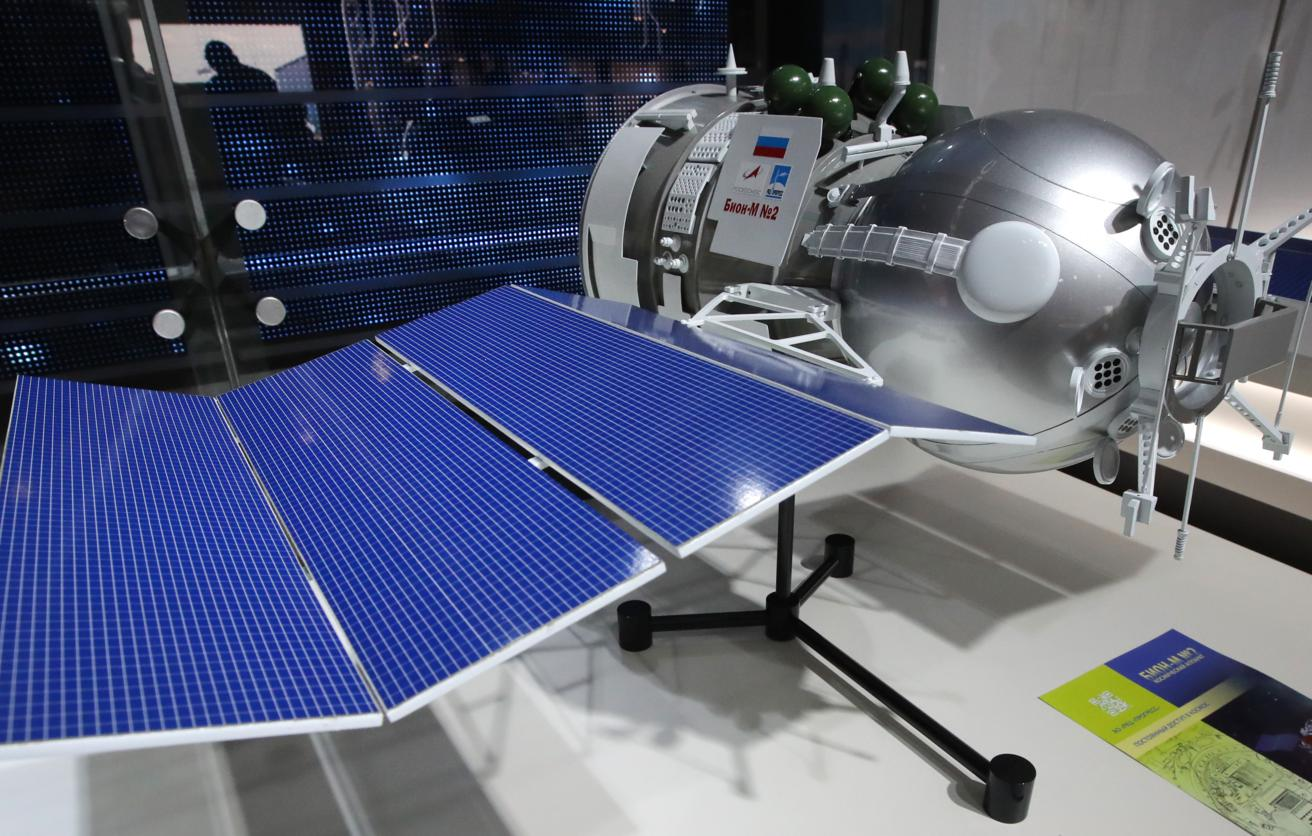
Vladimir Sychev, head of the scientific department of the Institute of Biomedical Problems of the Russian Academy of Sciences, announced the preparation of a new scientific program. The research project was supported by the bureau of the Council of the Russian Academy of Sciences for Space.
According to the scientist, the chosen flight altitude will allow the experimental conditions to be brought closer to the radiation environment characteristic of deep space. The results obtained will help assess the impact of cosmic rays on the human body, which is considered one of the key tasks in preparing long-duration expeditions to the Moon and Mars.
The scientific complex will be based on equipment already used on the "Bion-M" No. 2 spacecraft. The launch of "Bion-M" No. 2 took place in August 2025 from the Baikonur Cosmodrome aboard a Soyuz-2.1b rocket. The spacecraft entered a polar orbit at an altitude of about 380 km — the radiation level there is about one-third higher than on the ISS. Now the research program will be expanded: in addition to laboratory animal lines, genetically diverse groups are planned to be used, which will provide more complete data on the body's reaction to the space environment.
The "Bion-M" No. 3 mission will be the next stage of the Russian program of space biological research. Experiments in polar orbit should collect information that cannot be obtained at lower altitudes, where the level of radiation exposure is significantly lower.
Read more on the topic:
Never miss our newsAdd this site to your preferred sources to see us more oftenAdd on Google

















