Translated with AI from the Russian original.
The descent module of the "Soyuz MS-28" spacecraft returned to Earth thanks to a multi-stage parachute system, which reduced its speed to 9.5–10 m/s before touching the surface. Details of the technology's operation were revealed by specialists from Rostec's Parachute Engineering Research Institute.
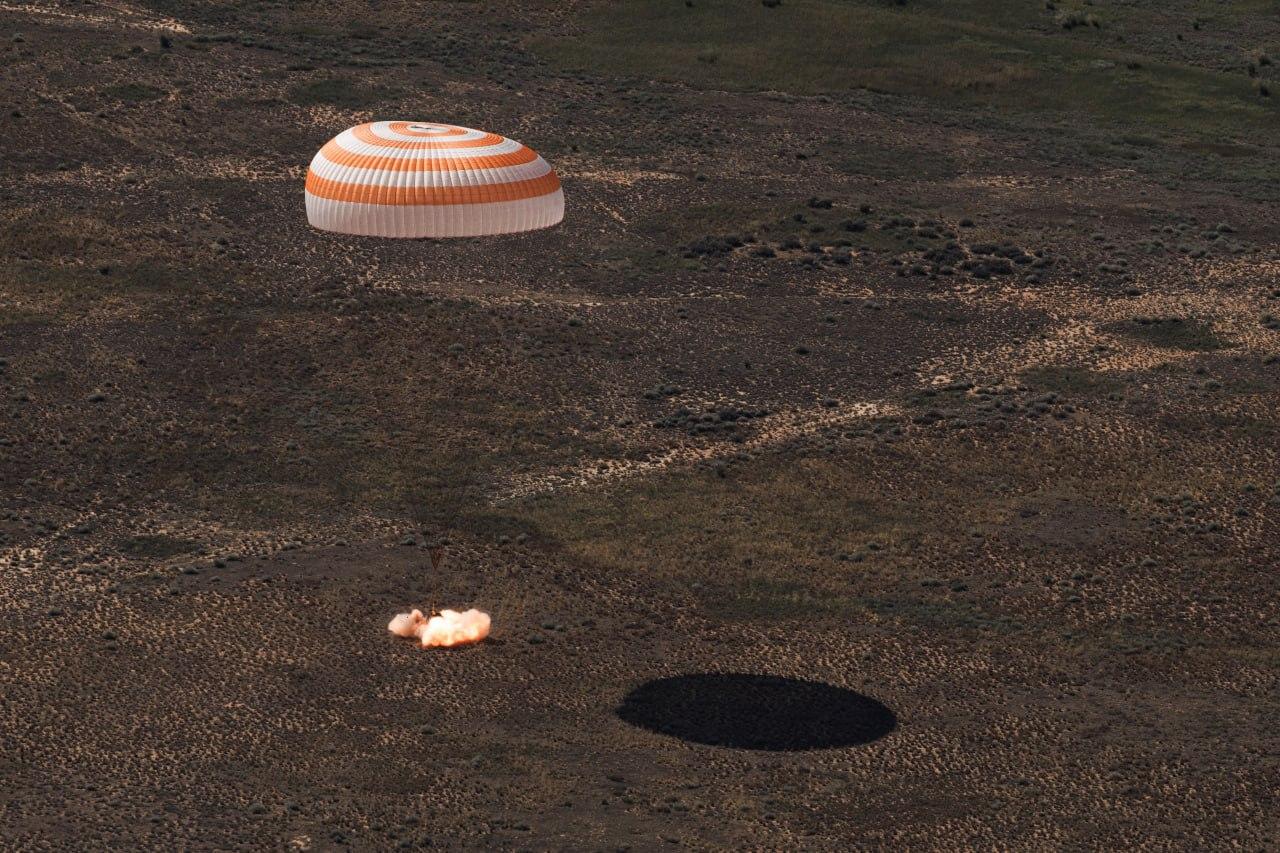
The return of a spacecraft is one of the most challenging stages of a flight. After entering the atmosphere, the craft experiences enormous loads, high speed, and heating, and the crew needs to be ensured the smoothest possible descent before landing.
As Rostec reported, a system of four parachute canopies is responsible for the safe landing of the "Soyuz". First, two drogue parachutes with a total area of 16 m² deploy. They stabilize the descent module's movement and prepare for the deployment of the main canopy.
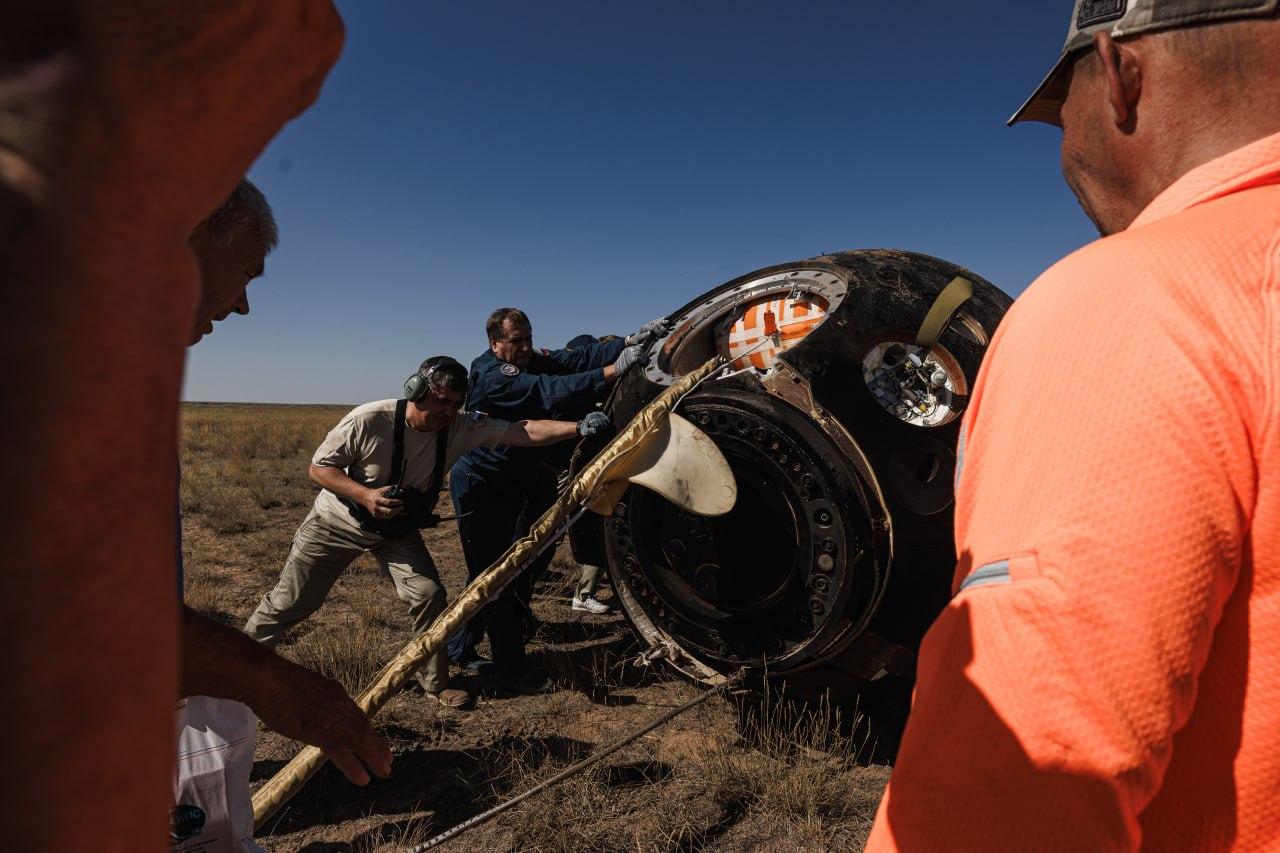
Then, the main parachute with an area of about 1000 m² comes into play. It bears the primary load and reduces the capsule's speed to a safe level, minimizing overloads for the cosmonauts at the moment of landing.
The design of the parachute system is engineered to operate in extreme conditions. The materials used can withstand temperatures up to 300 °C, which arise when the craft passes through dense layers of the atmosphere.
For additional crew protection, "Soyuz" spacecraft are equipped with a backup parachute system with a 590 m² canopy. This ensures the possibility of a safe return even in an emergency situation.
Read more on the topic:
Never miss our newsAdd this site to your preferred sources to see us more oftenAdd on Google

















