Translated with AI from the Russian original.
In Russia, a model of a flat jet nozzle for promising supersonic civilian aircraft has been registered. The development is designed to reduce noise and maintain thrust and economic characteristics during takeoff and landing.
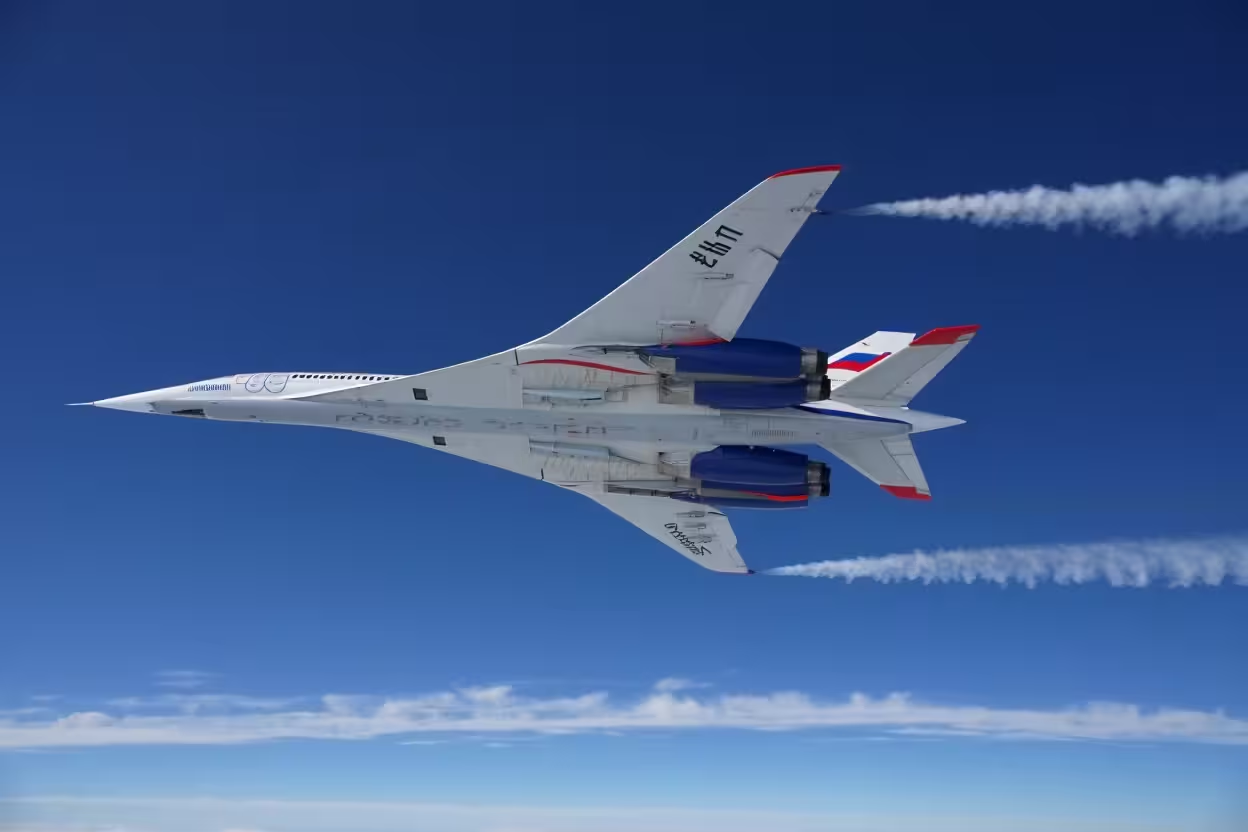
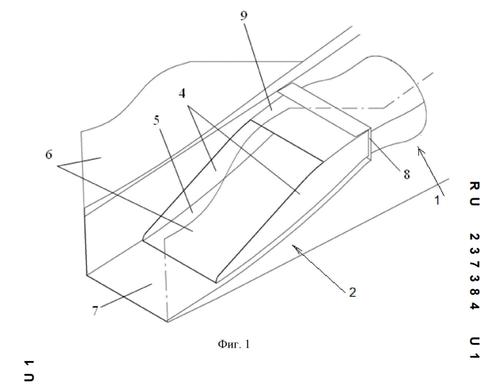
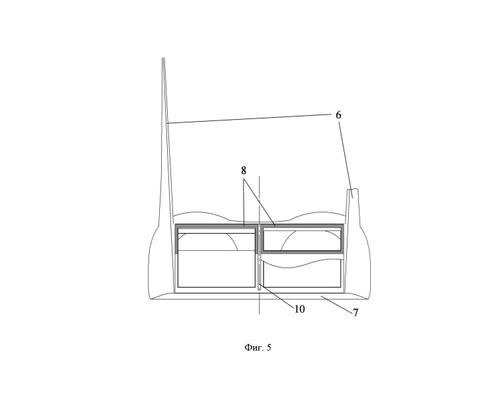
The nozzle has a rectangular critical section and consists of subsonic and supersonic parts. The supersonic part is elongated by 6-8 calibers and equipped with an adjustable flap that deflects downward at an angle of up to 20°. The nozzle is installed with a gap in a U-shaped niche in the rear of the fuselage, formed by the keels of the vertical tail and the shielding surface.
This scheme shields the jet and reduces the acoustic impact on the area during takeoff and landing modes. At the same time, the gap improves the flow around the rear of the fuselage and reduces thrust loss.
Calculations show that thrust losses are 1.5-2.5% of ideal thrust, which corresponds to the level of round axisymmetric nozzles.
At the same time, the design contains only one moving element - an adjustable flap, which reduces weight and complexity compared to noise reduction systems with several rows of flaps.
As a reminder, a flat nozzle in Russia has already been proposed for usein the new second-stage AL-51F1 engine for the Su-57 fighter. But there, this configuration is designed to reduce the radar and thermal signature of the aircraft in the rear hemisphere.
Read more materials on the topic:
- "Dark cabin", cameras and AI: details of a supersonic aircraft in Russia revealed
Never miss our newsAdd this site to your preferred sources to see us more oftenAdd on Google

















