Translated with AI from the Russian original.
Researchers from Tula State University, together with colleagues from Irkutsk, have made significant progress in the development of so-called "living batteries."
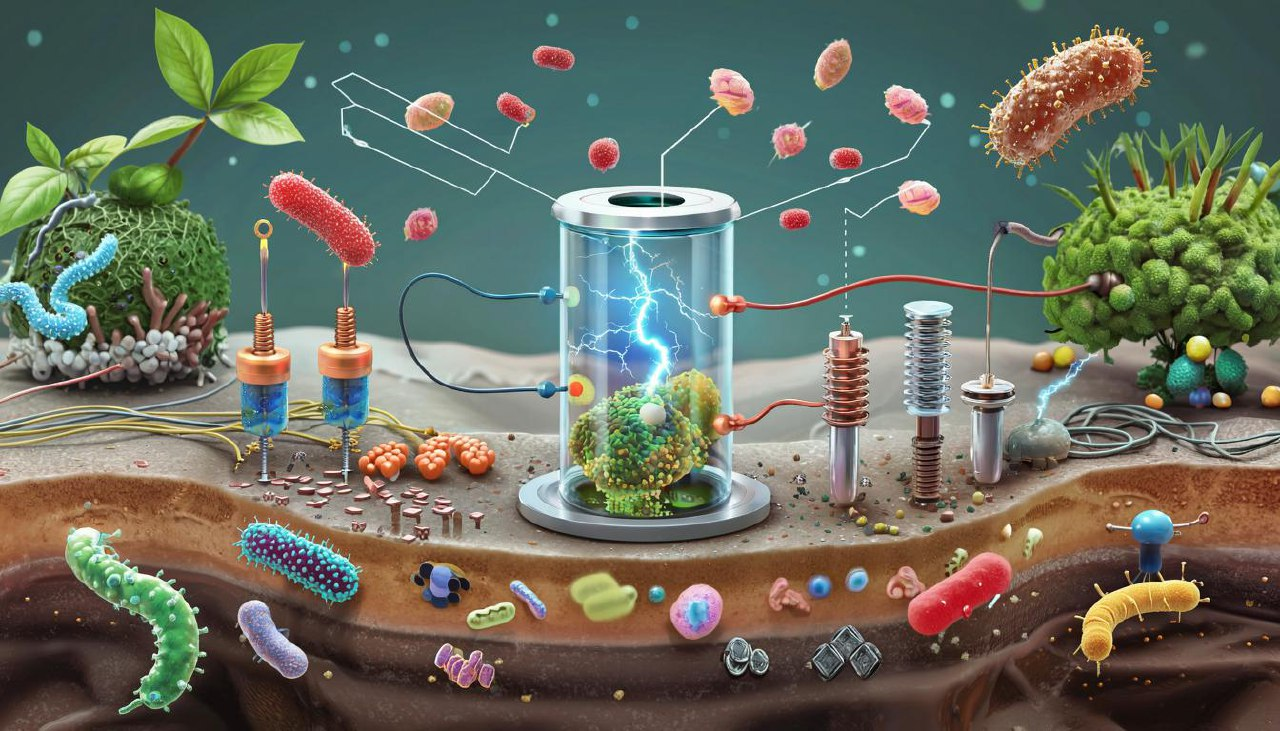
Electricity in these devices is generated by natural biochemical processes occurring in plants and microorganisms. These installations, known as plant-microbial fuel cells (PMFCs), are not only environmentally friendly but can also be used to treat wastewater. Their operation is based on two electrodes: the anode provides the movement of electrons, stimulated by the activity of plant and bacterial cells, and water is released at the cathode.
The main problem was the slow cathode reaction, which is usually accelerated with catalysts. Until now, expensive platinum has been used for this, which limited the introduction of technologies.
We replaced platinum with more affordable manganese dioxide, and this allowed us to increase the power by almost one and a half times — from 20 to 33 mW/m², and also reduce the internal resistance of the system
According to experts, such elements are particularly promising for regions with warm climates and a shortage of clean water. The team is now working on scaling up the technology and preparing it for testing in real conditions.
Subscribe to "First Technical" news in Google News to stay up to date with the latest events from the world of science and technology.
Read materials on the topic:
Russian scientists have created an optical synapse based on an analogue of the natural mineral tenorite
Sechenov University trained a neural network to determine the location of brain tumors with high accuracy
A test for rapid detection of fungal infection in the lungs was created in Russia
Smart yogurt: a Novgorod development stimulates brain activity and protects against mental retardation
Never miss our newsAdd this site to your preferred sources to see us more oftenAdd on Google

















