Scientists from Perm National Research Polytechnic University (PNRPU) have created a mathematical model that allows detailed study of how epithelial cells are rebuilt under mechanical stress. This model can be used both to study wound healing processes and to analyze the mechanisms of cancer development. The results of the study arepublished in the "Russian Journal of Biomechanics."
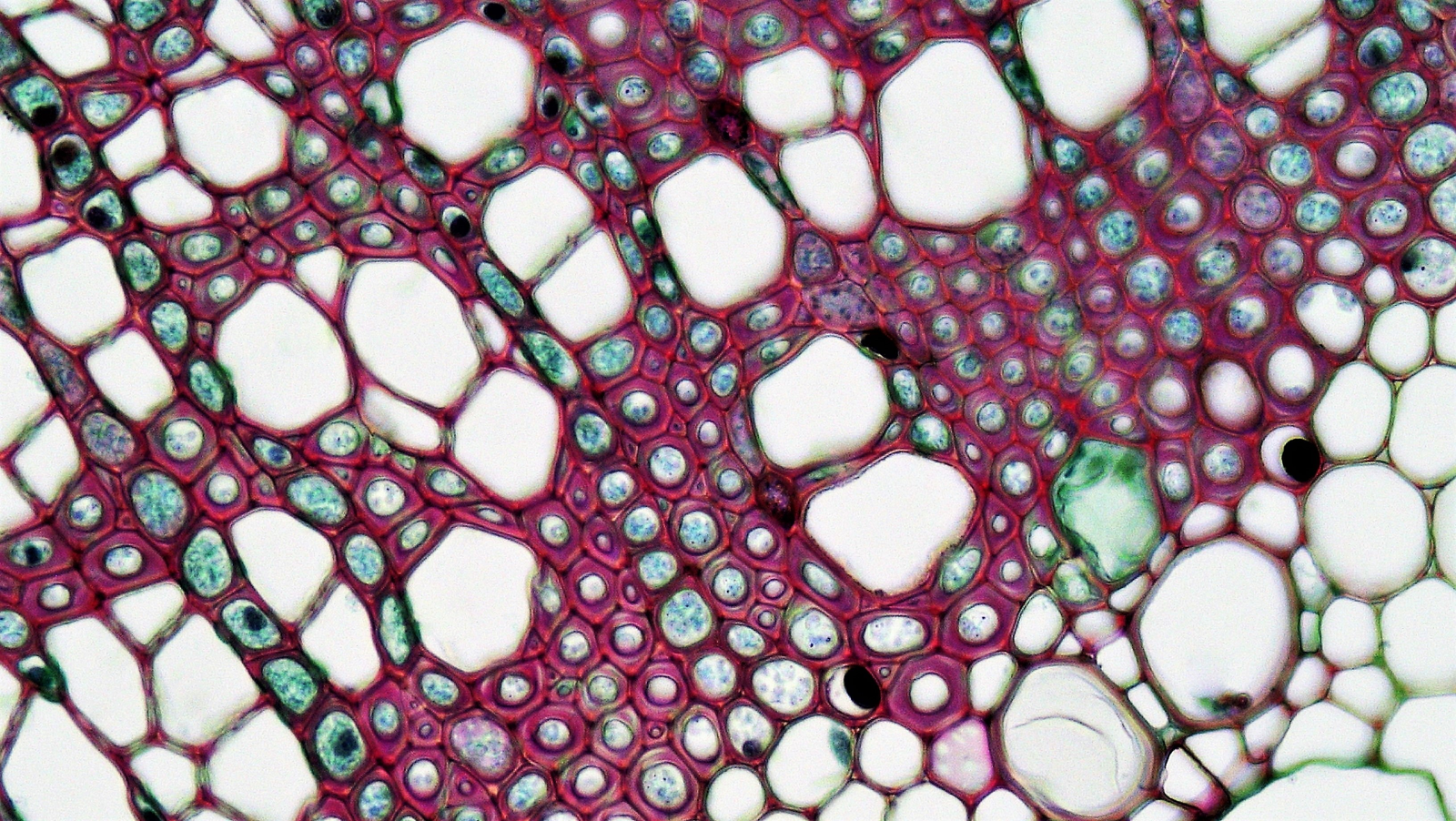
Epithelial tissues are constantly subjected to mechanical stress - stretching, compression, damage. To maintain integrity, cells change shape and relative position - this process is called repacking. In a healthy body, it contributes to rapid wound healing, but in cancer, the same mechanism fails: cells lose contact with each other, begin to divide uncontrollably and form a tumor.
Existing models of cellular behavior are often too simplistic and do not take into account key factors such as changes in cell shape, chemical signals between them, and the characteristics of different tissue types. The development of Perm scientists is free from these shortcomings.
We used an advanced vertex model, which describes cells as polygons connected by vertices (points) and capable of changing their shape and size depending on interaction with neighbors. This is a set of equations that allow us to calculate the elasticity of biological elements, the mechanical forces that act on them - for example, tissue stretching - and the chemical signals they exchange.
The model has already been tested on clinical trial data and has shown high accuracy. It will help:
- Predict tissue healing after surgery or trauma.
- Investigate the mechanisms of metastasis in oncology.
- Optimize the development of medical implants and prostheses.
Special attention should be paid to intercalation - this is the name of the ability of tissue elements to change their position relative to neighbors. We investigated a large range of values of this parameter. Its most optimal value (dint = 0.40) was established, at which the most stable state of the epithelium is achieved, that is, the tissue behaves most naturally and stably, as in a healthy organism.
The development opens up new opportunities for biomedical research, including the study of cancerous tumors. In the future, the model can be improved for personalized medicine, allowing to predict the reaction of a particular patient's tissues to treatment.
Read more on the topic:
Antimalarial drug may be the key to treating rare genetic diseases: a new discovery by Kazan scientists
A unique laboratory for growing cells for disease research has opened in Tomsk
Never miss our newsAdd this site to your preferred sources to see us more oftenAdd on Google

















