Specialists from the Institute of Problems of Superplasticity of Metals of the Russian Academy of Sciences have developed a technology for manufacturing a hollow fan blade for the PD-14. This was reported by the Rostec press service.
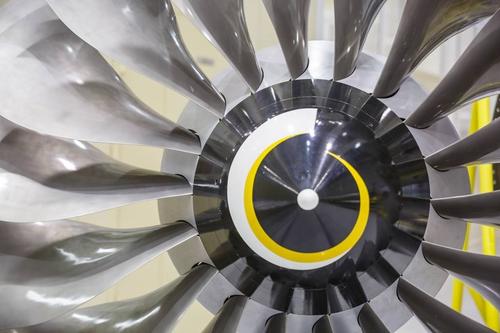
The Institute of Problems of Superplasticity of Metals of the Russian Academy of Sciences has developed a technology for manufacturing an element of the PD-14 aircraft engine - a hollow fan blade.
Druzhinina recalled that Rostec is an industrial partner of the Eurasian Scientific and Educational Center (REC) in the Republic of Bashkortostan. The organization develops and manufactures a number of products for the State Corporation that are necessary in aircraft construction. For example, these are backup generators for VK-1600 engines (used on Ka-62 type helicopters), as well as starter generators for PD-35.
Active and dynamic development of the region is impossible without cooperation between its research sector and industrial enterprises. The REC has become a platform that has enabled representatives of these industries to unite and build a constructive dialogue at the regional level. Because to solve specific industry problems, it is more convenient to work with teams formed in universities and research institutes, which they already know thanks to scientific and educational centers. Today we are already seeing the results of the work of the REC participants.
It is known that the PD-14 weighs 2,870 kg and has a thrust of 14,000 kgf in take-off mode. The engine can provide a flight range of up to 5,100 km, but in the future it may grow to 7,000 km. Its specific fuel consumption in cruise mode (kg/kgf • h). According to the developers, this is 10-15% better than analogues from other manufacturers, but the specific fuel consumption figure is not specified.
Read materials on the topic:
Competitors for Airbus and Boeing: seven Russian aircraft are in the certification stage
Never miss our newsAdd this site to your preferred sources to see us more oftenAdd on Google














![Growth Point: After 5G Launch, Mobile Internet in Russia Accelerated by 20%","subtitle":"TelecomDaily recorded an upload speed increase of 19.7%, and download speed of almost 14%","announce":""}[]}],](https://media.ixbt.site/fit-in/320x/ixbt-data/1727896/ai-image-nvgq0a0v5cjnyxwoc8xpelva.webp)