Due topowerful solar flares on the morning of December 30, residents of Moscow and St. Petersburg may see the Northern Lights on New Year's Eve. However, the probability of this phenomenon is not the highest, noted Sergey Bogachev, head of the Laboratory of Solar Astronomy at the Institute of Space Research (IKI) of the Russian Academy of Sciences.
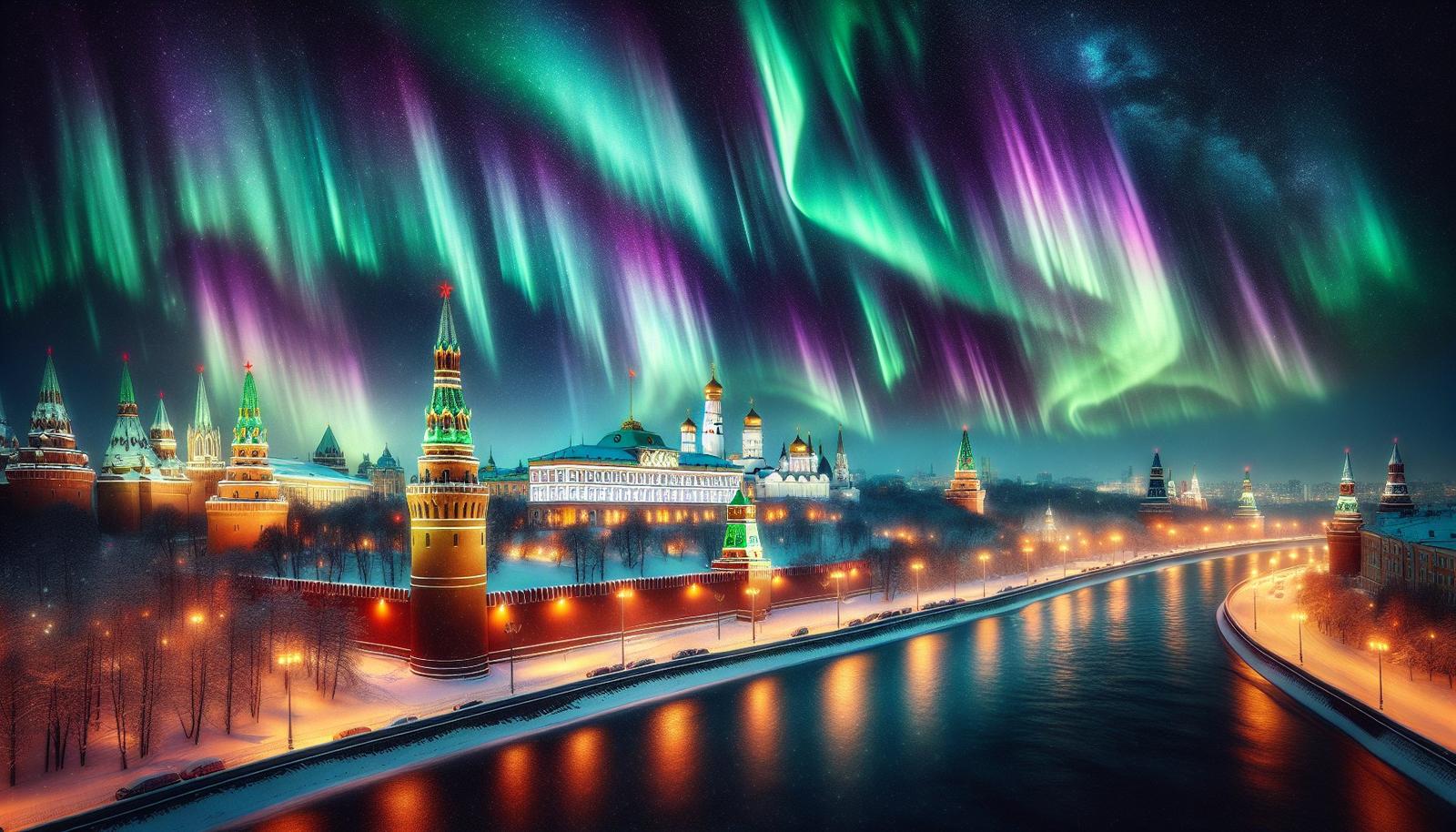
According to him, the probability of the Northern Lights on New Year's Eve in Moscow is 20%, in St. Petersburg - about 40%, in the Murmansk region - 70%.
But the situation is very dynamic. It can swing in any direction. Two class X flares occurred on the Sun on the morning of December 30. They will reach Earth in the middle of the day on December 31 and cause auroras that can be observed on New Year's Eve.
The expert clarified that, depending on the power of X-ray radiation, solar flares are divided into five classes: A, B, C, M, and X. The minimum class A0.0 corresponds to a radiation power of 10 nW per 1 m² in Earth orbit. When moving to the next letter, the power increases tenfold.
On Sunday, December 29, the Sun recorded 15 powerful flares, one of which also reached the strongest class - X.
Read related materials:
Two-day apocalypse: a plasma cloud was heading towards Earth, and with it - magnetic storms of the maximum level
Ten-hour magnetic storm will cover the Earth due to a solar flare
Scientists: The Earth is threatened by a solar superflare capable of throwing humanity back into the Stone Age
Never miss our newsAdd this site to your preferred sources to see us more oftenAdd on Google

















