The Russian Quantum Center and the Center for Quantum Technologies of the Faculty of Physics of Moscow State University have presented Russia's first prototype of a 50-qubit quantum computer based on single neutral rubidium atoms. It was created as part of the "Quantum Computing" roadmap, coordinated by the Rosatom State Corporation, and successfully tested on December 19.

The prototype is an optical table, most of which is occupied by a laser system with ultra-high vacuum and optical access. It is used to cool and control the states of single neutral rubidium atoms and create an array of optical tweezers, i.e., focused laser beams. The qubit is encoded in the internal degrees of freedom of this single atom.
In this vacuum system, we create a magneto-optical trap in which we capture atoms from rubidium vapor and cool them with a laser. And then, from a cold gas cloud, we capture single atoms into focused optical microtraps. Currently, at the Center for Quantum Technologies of Moscow State University, we can create quantum registers of 50 atoms arranged in an ordered array, implement operations on single qubits with an accuracy of more than 0.998, and entangling two-qubit operations with an accuracy of more than 0.9. Neutral atoms in optical tweezers are a good system from the point of view of scaling prospects; it is more or less clear to us how to go from systems of tens of qubits to hundreds and even thousands of qubits.
During the control experiment, not only the operability of this system was tested, but also the ability to connect to it remotely using a cloud platform. Both test directions have been successfully completed.
The press service of Moscow State University notes that this achievement becomes the foundation for developing the system to the level of 300 or more qubits, implementing error correction and logical qubits. In the near future, scientists at the Center for Quantum Technologies of the Faculty of Physics of Moscow State University plan to work on increasing the accuracy of operations and launching useful algorithms. The Russian nuclear industry has already launched a program of pilot implementations of quantum computing, and Rosatom is waiting for new developments from domestic scientists.
«Quantum Computing»
In 2020, the Russian government approved a roadmap for the development of the high-tech field of "Quantum Computing." One of its goals is to create a quantum computer with a capacity of at least 50 qubits by the end of 2024.
In Russia, this task is being implemented by several scientific groups developing prototypes on different technological platforms: neutral atoms, ions, superconductors, and photons.
Read materials on the topic:
Russian scientists have created a 50-qubit quantum computer with a qudit technology
A new Russian method for fast three-qubit operation on fluxoniums has been developed
Now on home

Герой России Гарнаев: никто из профессионалов о возобновлении производства на КАЗ всерьёз не говорит
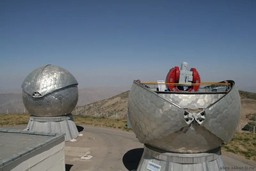
Система отслеживает спутники на высотах до 50 000 км и ведёт за ними наблюдение

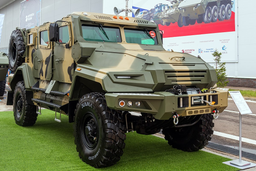
The armored vehicle is equipped with a KamAZ-740.35-400 diesel engine with a power of 400 hp.

Constant improvements in avionics, weapons and tactical capabilities will make the aircraft a flexible response to future challenges

The exterior of the KamAZ-54901 features fairings on the cab and chassis for fuel economy

Fighters are in demand both domestically and abroad
Tyazhpromexport and Venezuela Agree on Plant Revival

The company not only completed the state order, but also quickly mastered the production of AK-12K for special forces
Experts have developed a photogrammetric complex with a resolution of less than 1 cm