RSC Energia has revealed how cosmonauts dispose of some of the waste inside the ISS and decommissioned equipment that has been on the surface of the station for a long time. The last time during the spacewalk of Russian cosmonauts Alexey Ovchinin and Ivan Wagner, Ovchinin disposed of space waste. The ERA robotic arm participated in this process for the first time, giving the cosmonaut room to maneuver.
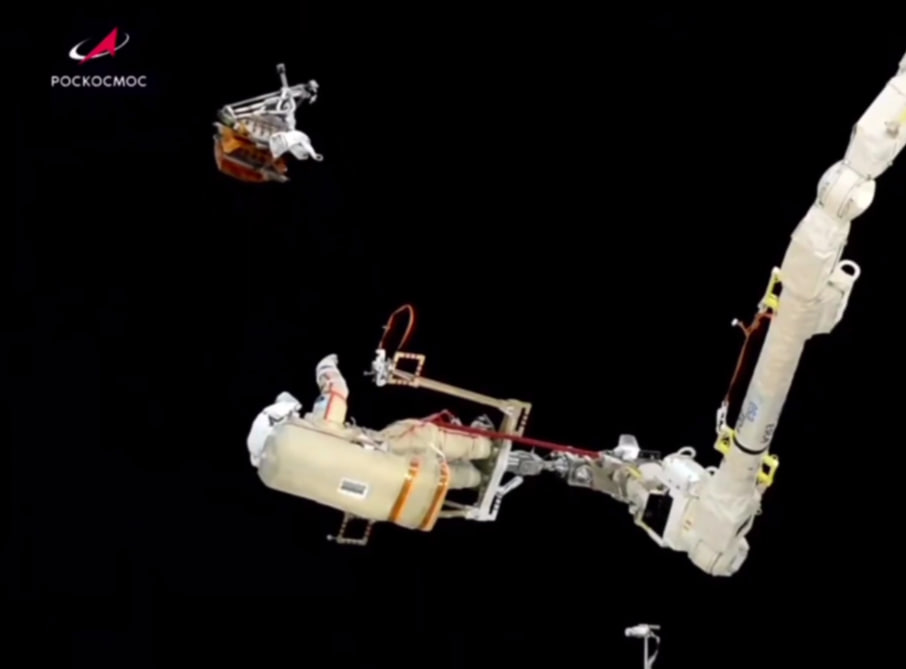
If on Earth a bag of trash can simply be thrown into a container, in space it is a whole separate mission.
How to properly dispose of old equipment from the ISS? Along the "line" of the station's movement, always backwards and preferably at an angle of ~30° (ideally). If you send an object not along, but conditionally upwards, its speed will be less than that of the ISS. If downwards, then higher. This is the "basis" of celestial mechanics: the lower the orbit, the shorter the path of the object. And in both cases, there is a risk of collision. And if the orbit is the same and the object receives a braking impulse (we threw it back, against the movement), it will quickly begin to descend and burn up in the atmosphere. Ideally, this fate has already befallen the "Indicator-ISS" equipment and several other materials discarded by Alexey Ovchinin.
Disposing of space debris requires special calculations, which are carried out by ballistics experts.
Earlier it became known that by the summer of 2027, a device for recycling plastic 3D printing waste into material for new products may appear on the ISS.
Read materials on the topic:
Russia will study and explore space together with Tajikistan
NASA postpones the launch of Russian cosmonaut Kirill Peskov to the ISS
Now on home
Герой России Гарнаев: никто из профессионалов о возобновлении производства на КАЗ всерьёз не говорит
Система отслеживает спутники на высотах до 50 000 км и ведёт за ними наблюдение
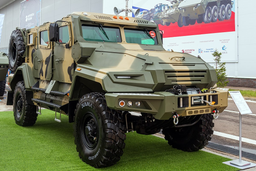
The armored vehicle is equipped with a KamAZ-740.35-400 diesel engine with a power of 400 hp.
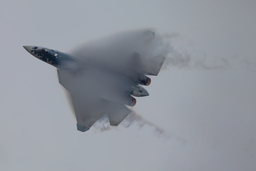
Constant improvements in avionics, weapons and tactical capabilities will make the aircraft a flexible response to future challenges
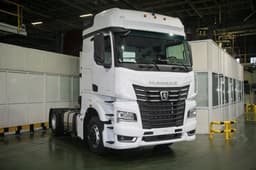
The exterior of the KamAZ-54901 features fairings on the cab and chassis for fuel economy
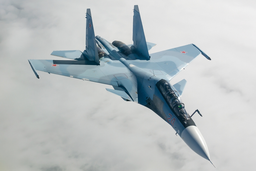
Fighters are in demand both domestically and abroad
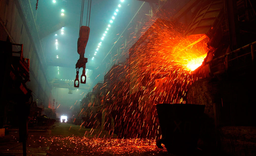
Tyazhpromexport and Venezuela Agree on Plant Revival

The company not only completed the state order, but also quickly mastered the production of AK-12K for special forces
Experts have developed a photogrammetric complex with a resolution of less than 1 cm