The development of a permafrost monitoring system is planned to be completed in Anadyr by the end of 2025. This was announced by Oleg Tregubov, a leading researcher at the North-Eastern Integrated Research Institute (SVKNII) of the Far Eastern Branch of the Russian Academy of Sciences, Candidate of Geological and Mineralogical Sciences.

In 2025, the drilling of the missing wells and the installation of measuring equipment are planned.
We are talking about 35 wells with a depth of 10.5 m and 12 profiles with a length of 50-100 m.
A new approach to permafrost monitoring will allow short-term and long-term forecasting of the development of permafrost conditions and threats to urban infrastructure.
Tregubov noted that the system will model spatial models of seasonal and long-term temperature fields and determine the rate of talik formation at various depths. The pilot segment of the automated ground temperature monitoring network includes six wells.
Temperature measurements at depths of 1, 3, 5 and 10 m are transmitted to the server at six-hour intervals. Measurements are taken year-round and cover the seasonal temperature dynamics.
In the future, the system will be able to connect automated networks of other settlements in Chukotka. The device will operate in experimental mode for three years.
Earlier, www1.ru reported that Russia will improve the observation system at marine coastal stations of the hydrometeorological network for the Northern Sea Route.
Read related materials:
Exploring the depths of the World Ocean: how the Almaz EIS of project 22010 is being built
Russian drones now control oil spills on the Northern Sea Route
Now on home

Герой России Гарнаев: никто из профессионалов о возобновлении производства на КАЗ всерьёз не говорит
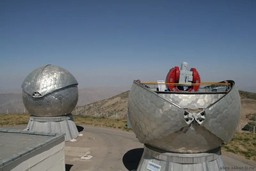
Система отслеживает спутники на высотах до 50 000 км и ведёт за ними наблюдение


The armored vehicle is equipped with a KamAZ-740.35-400 diesel engine with a power of 400 hp.
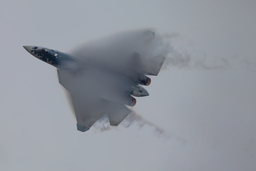
Constant improvements in avionics, weapons and tactical capabilities will make the aircraft a flexible response to future challenges

The exterior of the KamAZ-54901 features fairings on the cab and chassis for fuel economy
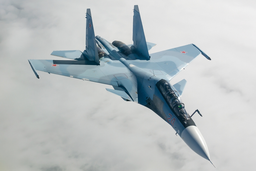
Fighters are in demand both domestically and abroad

Tyazhpromexport and Venezuela Agree on Plant Revival

The company not only completed the state order, but also quickly mastered the production of AK-12K for special forces
Experts have developed a photogrammetric complex with a resolution of less than 1 cm