A navigator for unmanned aerial vehicles (UAVs) based on artificial intelligence (AI) has been developed at the Moscow Aviation Institute (MAI). It will enable drones to determine their location in case of satellite communication loss. This was reported by the university's press service.

The research stand for new navigation systems was created on the platform of a passenger car. Specialists moved around in it in dense urban environments and collected data to train the AI. The neural network was trained not only to recognize errors, but also to identify unreliable satellite signals for their exclusion from future navigation solutions.
It was found that the new device for UAV navigation is more effective than the Kalman filter (a mathematical algorithm that allows estimating the state of a system based on incomplete, noisy information).
This is because the conditions under which this mathematical algorithm works are violated here. Artificial intelligence does not have such a strict mathematical model as an optimal filter, where predictions are made on the basis of dozens of mathematical equations, but it has experience, and repeated experience, gained from dozens or even hundreds of passes, of how the navigation system behaved, and based on its previous experience, it can give an accurate forecast of how the navigation system will behave.
Earlier www1.ru reported that in Sevastopol they will begin to create software for autonomous drone flights.
Read materials on the topic:
AI will put enemy drones into a "Stupor": Russia has new complexes to protect objects from UAVs
Now on home
Герой России Гарнаев: никто из профессионалов о возобновлении производства на КАЗ всерьёз не говорит
Система отслеживает спутники на высотах до 50 000 км и ведёт за ними наблюдение

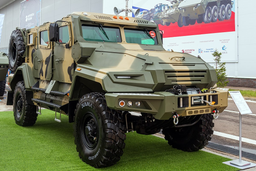
The armored vehicle is equipped with a KamAZ-740.35-400 diesel engine with a power of 400 hp.
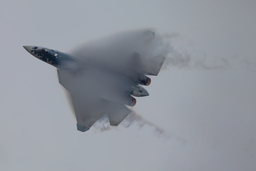
Constant improvements in avionics, weapons and tactical capabilities will make the aircraft a flexible response to future challenges

The exterior of the KamAZ-54901 features fairings on the cab and chassis for fuel economy
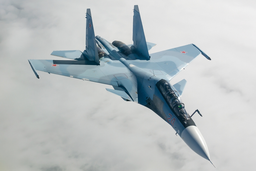
Fighters are in demand both domestically and abroad

Tyazhpromexport and Venezuela Agree on Plant Revival
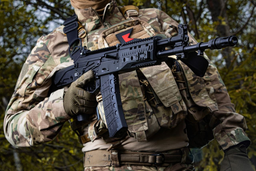
The company not only completed the state order, but also quickly mastered the production of AK-12K for special forces
Experts have developed a photogrammetric complex with a resolution of less than 1 cm