Translated with AI from the Russian original.
An unmanned aerial vehicle "Osoed" has been developed in Russia, which is designed to intercept enemy drones. The novelty is equipped with a special mechanism that shoots a net from a distance of several meters and covers enemy equipment.
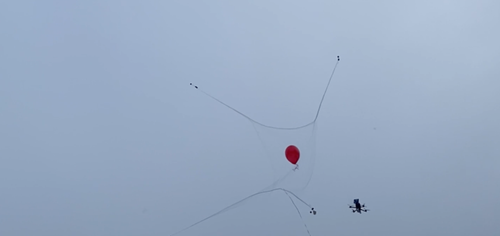
"Osoed" was developed on the basis of an FPV drone, it can reach speeds of up to 140 km/h, and the charge of the battery pack is enough for 24 minutes of flight.
The maximum height is 5-6 km, the working range is 4-5 km. The net is fired automatically at a certain distance, usually in the range of 5-6 meters. After the enemy drone falls into the trap, the operation of its rotors is blocked, and it falls to the ground.
"Osoed" can also be equipped with additional equipment. In particular, it is possible to install a thermal imager, which allows you to switch between day and night modes. Thus, it will be possible to intercept enemy drones, including at night.
Earlier it became known how Russia is able to respond to the creation of the B61-12 thermonuclear air bomb in the USA. Experts consider it necessary to develop the Sarmat, Poseidon or Kinzhal systems.
Read materials on the topic:
Ruthless "Petrel": what is known about Russia's unlimited-range cruise missile
Never miss our newsAdd this site to your preferred sources to see us more oftenAdd on Google

















