Translated with AI from the Russian original.
Researchers at Lomonosov Moscow State University have achieved a breakthrough in the development of materials for X-ray machines. The researchers identified four new manganese compounds with bromine and compact organic residues that have high efficiency in converting X-ray radiation into visible light.
These materials, known as scintillators, play a key role in medical and technical devices, such as X-ray machines and security screening belts in airports. The new compounds have significantly greater efficiency compared to existing hybrid manganese halides; in addition, they are easy to obtain, inexpensive, and non-toxic.
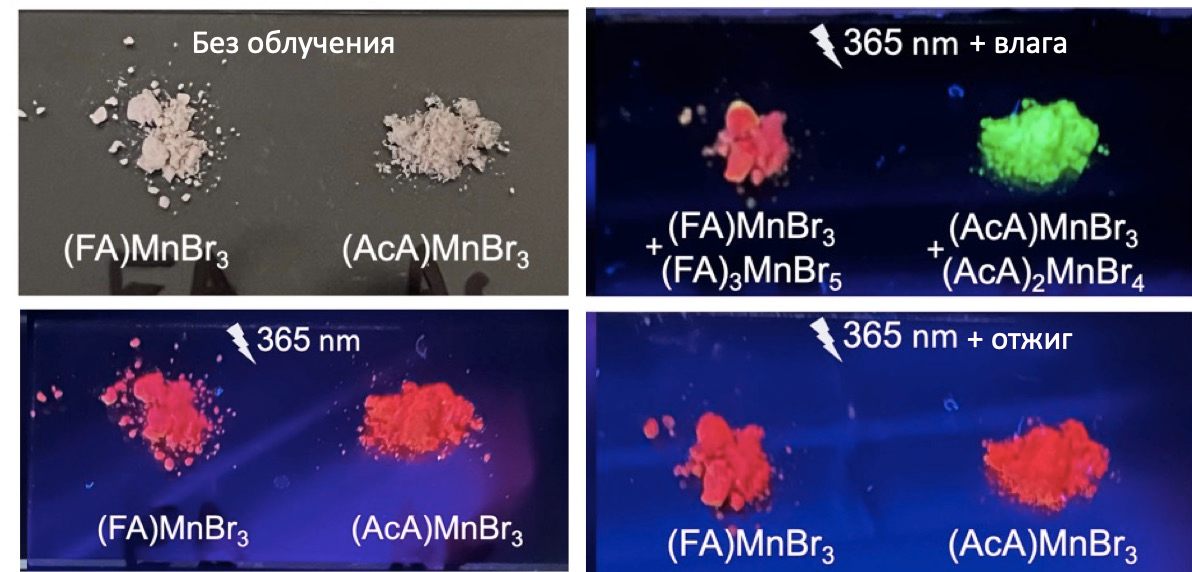
Research shows that many hybrid manganese halides that have been used so far contain large organic particles. These particles take up a lot of space and make the material less dense. Less dense materials need to be used in large quantities to achieve the desired effect, which leads to the creation of thick layers. This, in turn, makes devices larger and prevents high resolution in images.
A feature of the development of scientists from MSU is the compact structure of materials, allowing the creation of devices with higher resolution and smaller dimensions. The samples created by scientists have a relatively high density due to the limited volume of organic components in their structure.
Unlike most similar materials, the samples we synthesized have a relatively high density due to the fact that the organic components of the structure occupy a small fraction of the volume. This allows them to more effectively capture X-ray and visible radiation, and then convert it

How can this discovery affect the life of an ordinary person?
- Safety and efficiency of medical research. New materials promise to improve the operation of X-ray machines in medical institutions. This can lead to more accurate diagnoses, reduced examination times, and increased patient safety.
- Development of security technologies in transport. Luminescent materials are used in inspection devices in airports. Improving the efficiency of scintillators can lead to more accurate security methods and faster inspection, which is important for passengers and staff.
- Progress in the field of ionizing radiation sensors. The development of compact and efficient scintillators opens up new opportunities for creating miniature ionizing radiation sensors. This can be useful for monitoring radiation safety in various fields.
- Accessibility and environmental friendliness. New materials are easy to obtain, inexpensive, and non-toxic. This makes them more accessible for industrial use and reduces the negative impact on the environment.
- Prospects for new technologies. Researchers plan to explore other organic molecules and halogens to create thin-film optoelectronic devices. This can lead to the emergence of effective prototypes of X-ray detectors and visualization screens used in medicine and scientific research.
Never miss our newsAdd this site to your preferred sources to see us more oftenAdd on Google

















