On August 17, 2025, asteroid 2025 PM approached Earth at a distance of about 1 million kilometers, which is considered potentially dangerous by cosmic standards. This event was commented on by Yuri Nefediev, Professor at Kazan Federal University (KFU) and scientific director of the V.P. Engelhardt Astronomical Observatory.
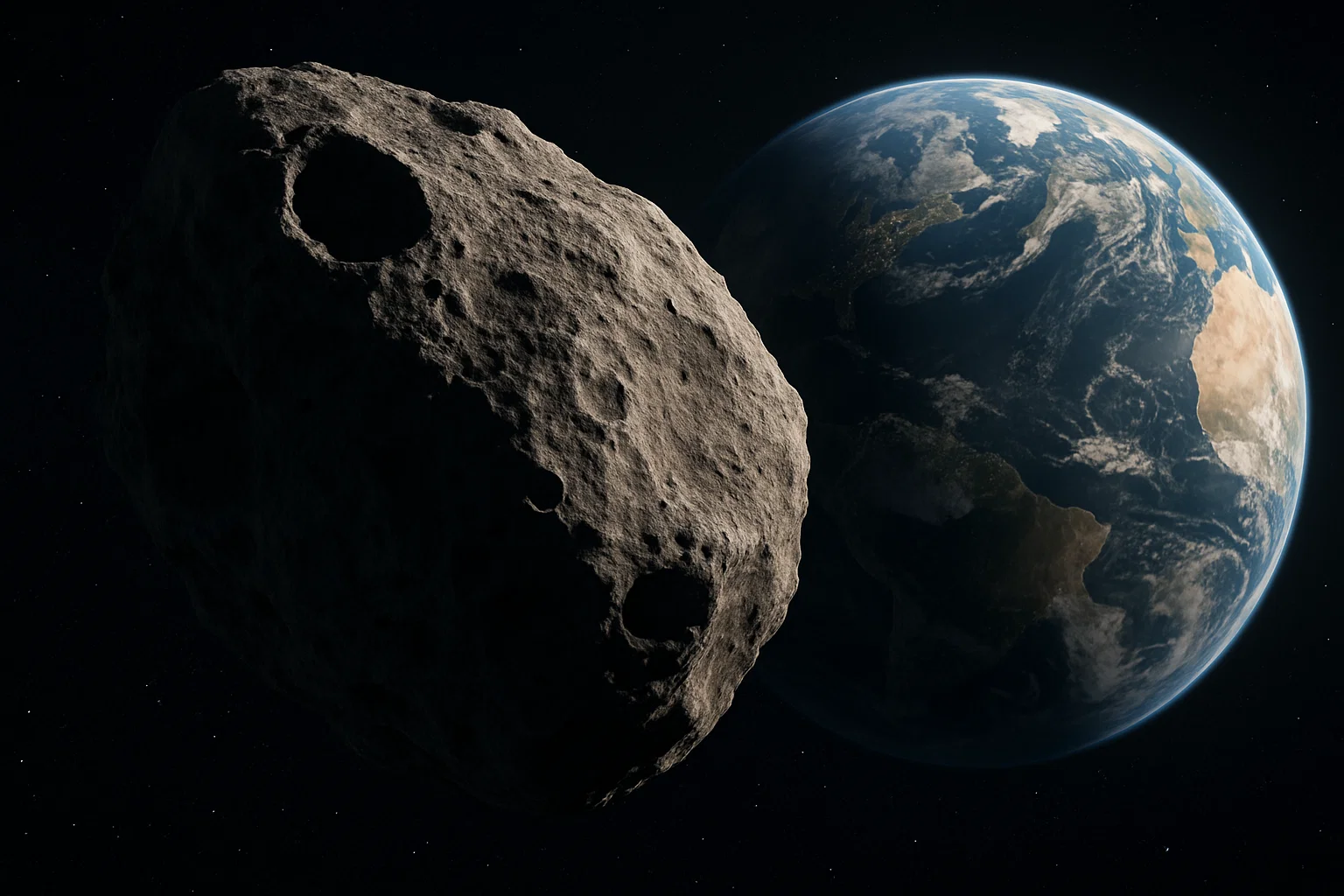
The object was discovered on August 1, 2025, and classified as an Apollo group asteroid - near-Earth objects whose orbits intersect Earth's. According to scientists' estimates, its diameter is about 50 meters, and its composition is most likely stony.
Although 1 million kilometers seems like a huge distance, in astronomy, such close approaches are considered significant. The asteroid fell into the category of potentially hazardous because it was closer than 10 lunar distances (the average distance to the Moon is 384,400 km).
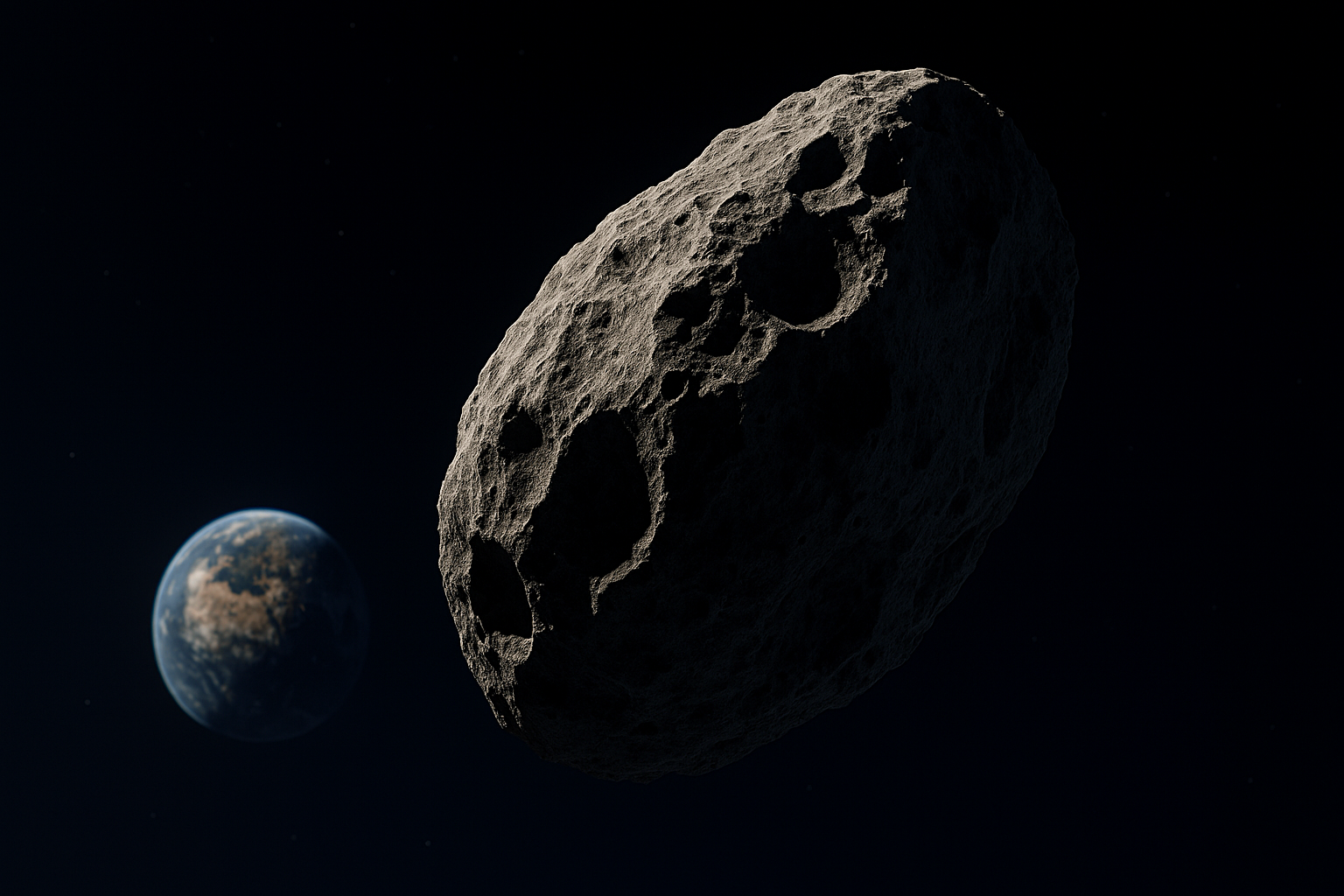
As Professor Nefediev explained, a collision with Earth of an asteroid of this size would lead to local destruction, but not to a global catastrophe.
There is nothing extraordinary in the event that a small asteroid flies near our planet. It should be noted that there are a large number of objects belonging to the Apollo category, measured in the thousands, and most of them are of the near-Earth type, that is, they cross the orbit of our planet.
For comparison:
- The Chelyabinsk meteorite (2013) had a diameter of 17-20 meters and caused a shock wave that damaged buildings.
- The Tunguska meteorite (1908) is estimated at 50-80 meters and flattened the forest over an area of 2,000 km².
Only asteroids larger than 10 km (like the one that led to the extinction of the dinosaurs 66 million years ago) pose a global threat. Fortunately, such objects are rare and carefully tracked.
Indeed, a threat to biological life on Earth can be posed by an asteroid approximately 10 kilometers in size, and mainly of iron content. If an object like 2025 PM falls on our planet, then, of course, there will be catastrophic consequences, but they will be local in nature. The passage of this asteroid is a normal space situation, and such events involving other near-Earth objects will definitely occur in the future.
There are thousands of near-Earth asteroids in the Solar System, and many of them periodically approach our planet. In 2025 alone, several such events have been recorded, and in September, another, larger object is expected to approach.
NASA and other space agencies constantly monitor such bodies using telescopes and automated systems. For example, the DART mission (2022) successfully tested asteroid deflection technology, which may help protect Earth in the future.
As Yuri Nefediev noted, it is almost impossible to observe 2025 PM with an amateur telescope - large professional optics are needed for this.
For those who want to look at this object, it will be difficult to do so, since a fairly large telescope will be required to observe such a small asteroid.
The approach of asteroid 2025 PM is a routine event, but it underscores the need to study near-Earth objects. Modern astronomy allows us to detect potential threats in advance, and in the future, perhaps, to prevent them.
Subscribe to thenews of "First Technical" on Google News to stay up to date with the latest events from the world of science and technology.
Read more materials on the topic:
Russian astronomers: The Moon is losing its gas shell due to the Perseid stream
Biosputnik "Bion-M" No. 2 with space mice on board has been refueled and prepared for launch
Never miss our newsAdd this site to your preferred sources to see us more oftenAdd on Google