The Russian Su-34 bomber is one of the heaviest combat aircraft in Russian aviation. Its maximum takeoff weight approaches 45 tons, which is almost twice as much as the Su-27, from which it originated.
Such a mass, unusual layout, and maintenance features affect how the aircraft is parked. "Pervy Tekhnichesky" explains the peculiarities of parking the "34th" at the airfield.
Cockpit entry — through the landing gear bay
The Su-34 crew enters the cockpit not through the side, as in fighters, but from below — through the nose landing gear bay. This is a unique layout, not found in any Western bomber.
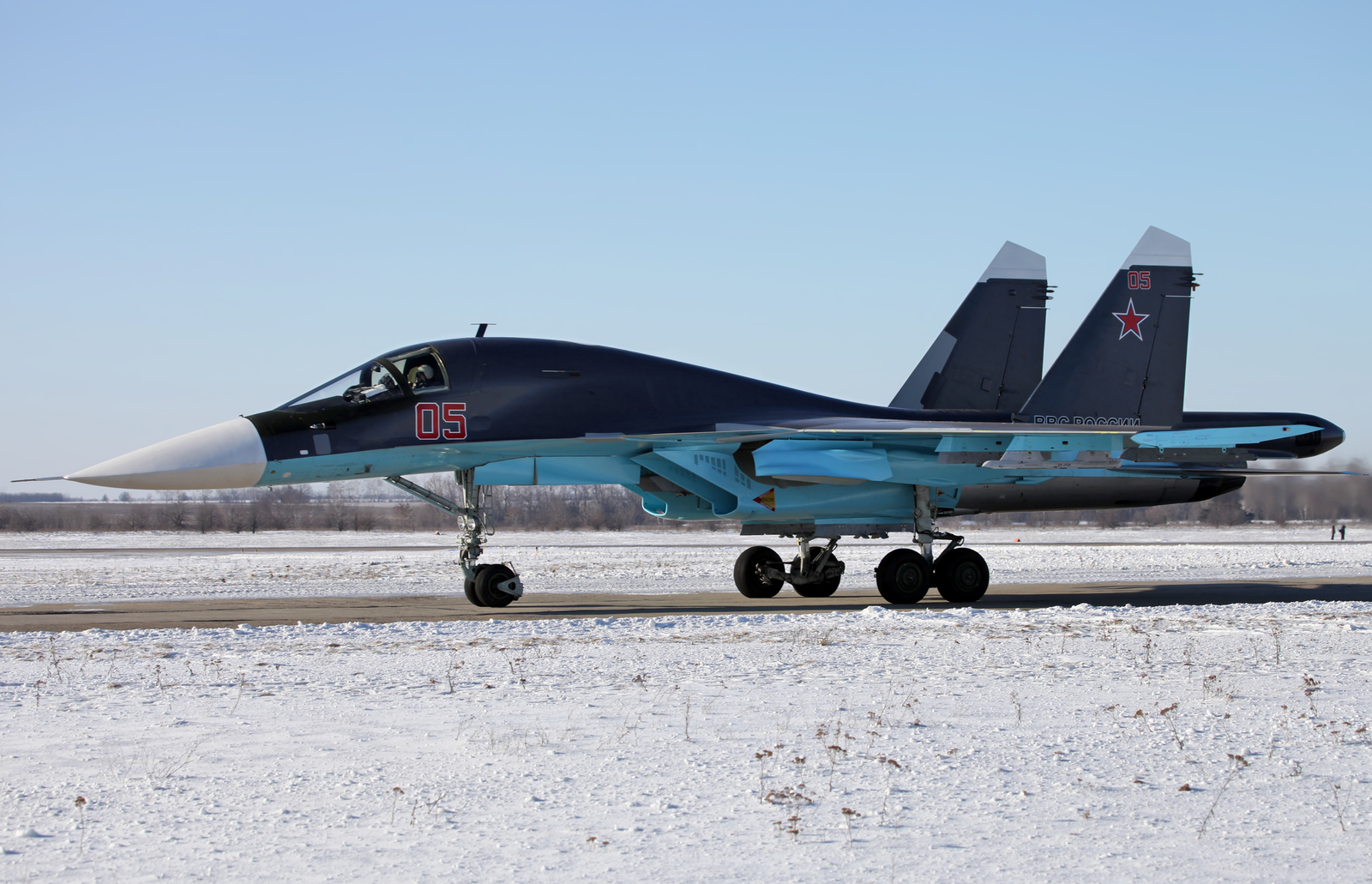
At the parking spot, this means that access to the bay must be clear. The aircraft cannot be tightly covered with covers and ladders: a technician or pilot must approach from below and climb inside. Inside, the cockpit allows stretching and standing almost at full height — one can stand in the aisle behind the seats, slightly stooping. Work is done through hatches from the inside, not through panels from the outside.
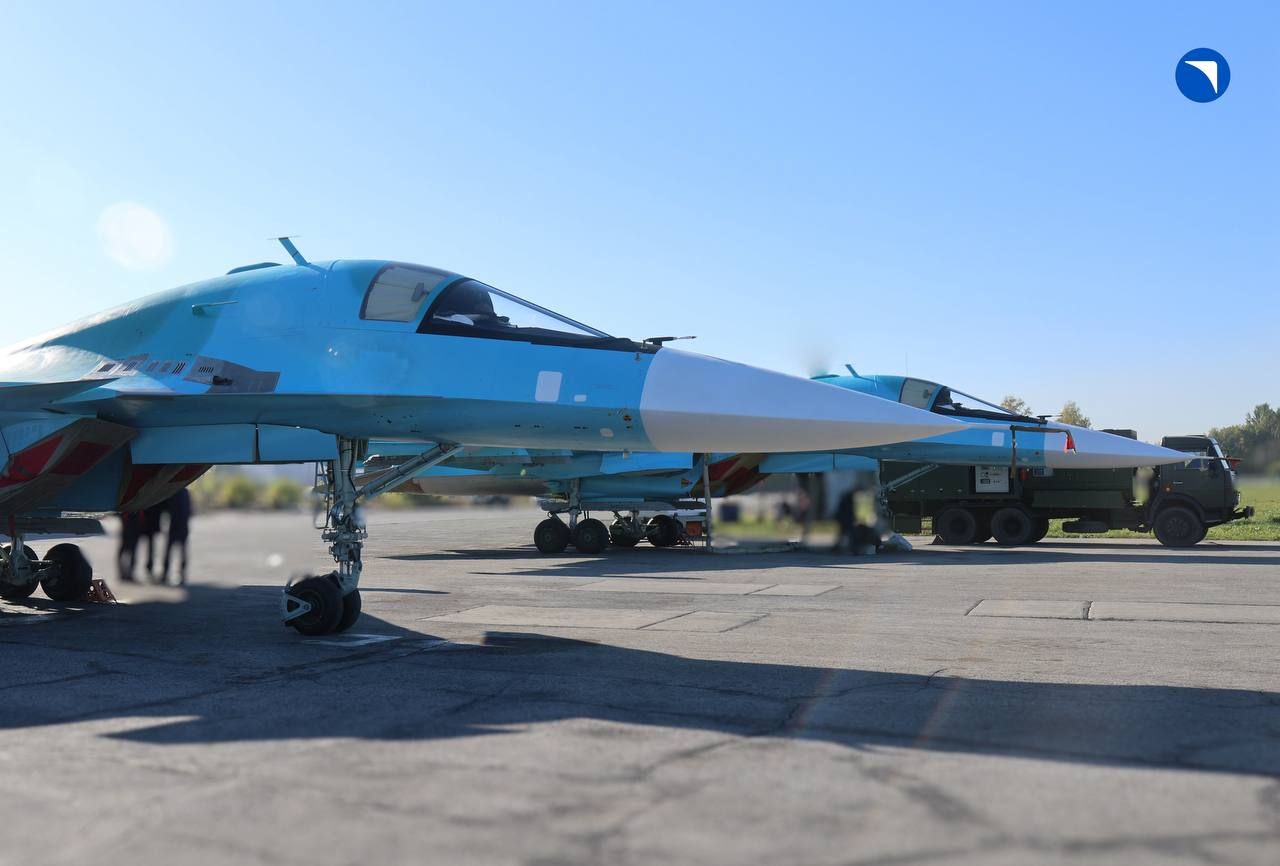
Twin wheel on the nose gear
The Su-34 has two wheels on its nose gear, not one. This is not only about load distribution — it's also about ground maneuvering. The tow bar for towing is largely unified with other aircraft, but due to the two wheels and heavy nose, the twin gear makes the aircraft less maneuverable when turning on narrow taxiways — manually or with a small tug. It needs a larger radius.
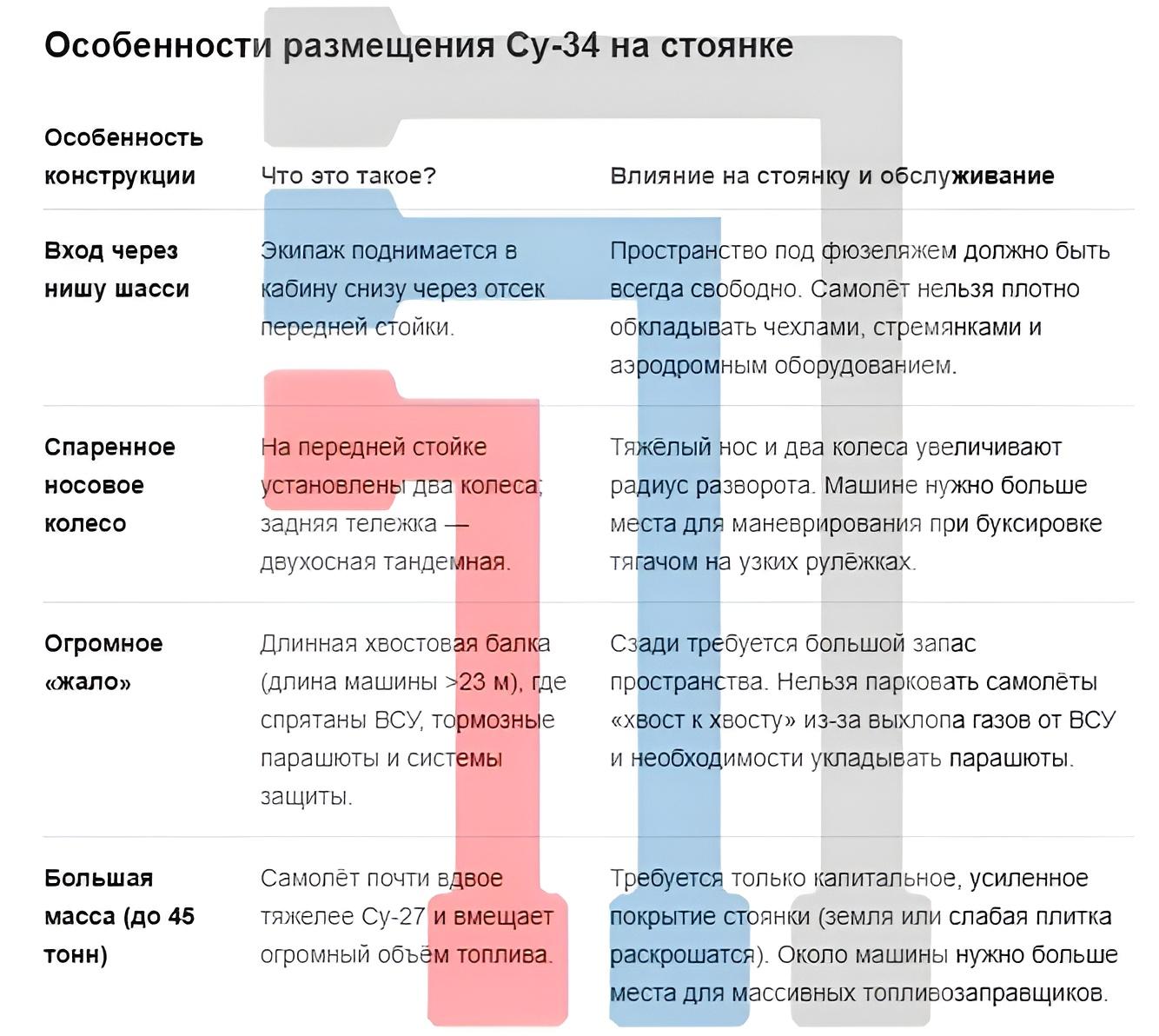
The rear bogie is two-axle, with tandem wheel arrangement. It absorbs surface irregularities. But it also requires the parking area to withstand the load of a 45-ton machine.
Huge "sting"
The Su-34 is noticeably longer than the Su-27 — over 23 m. The tail boom, called the "sting," is not just an extension of the fuselage. Inside it are an auxiliary power unit, a brake parachute container, a fuel tank, and blocks for ejecting heat traps and dipoles.
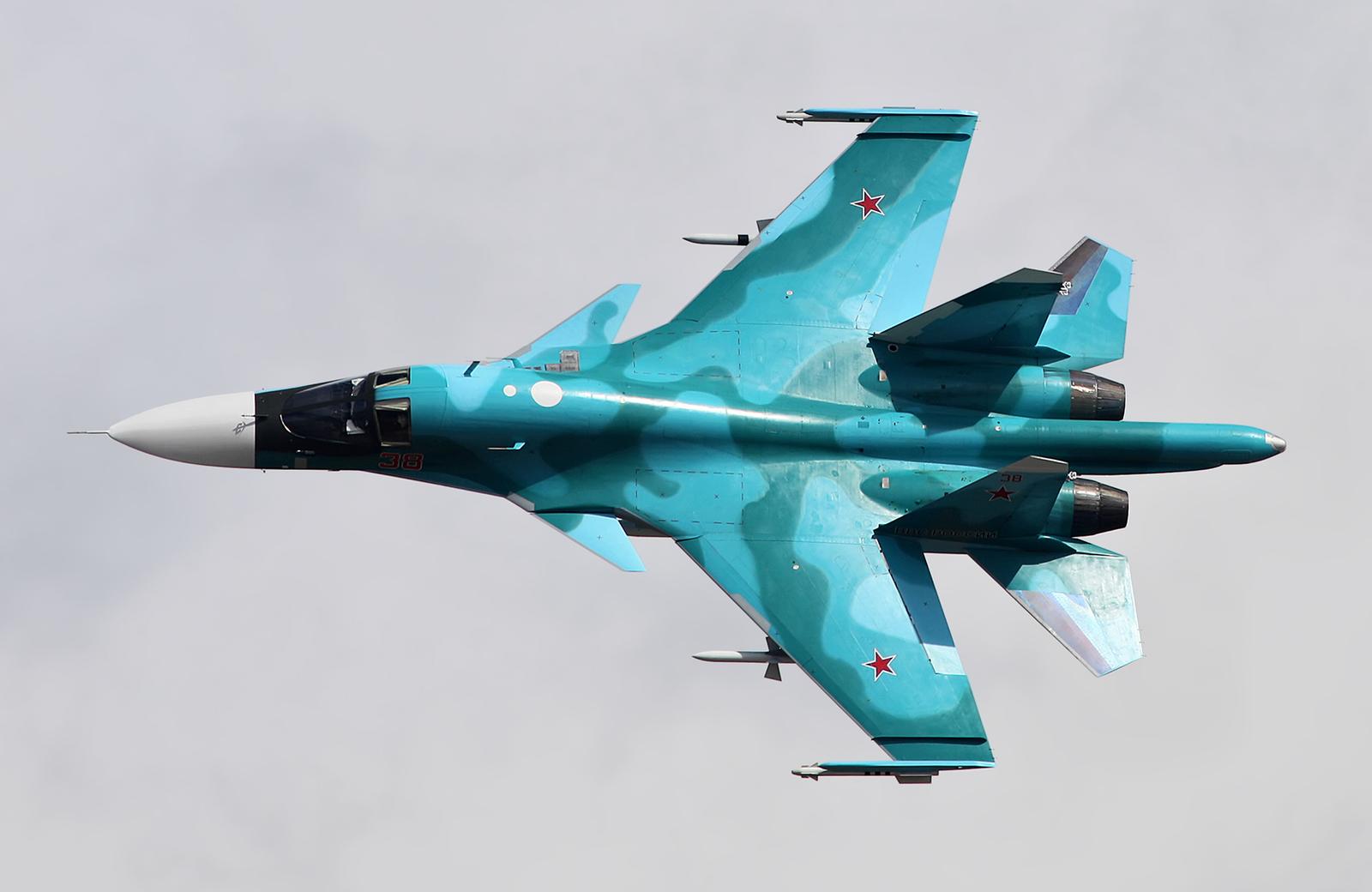
For parking, this means a lot of space must be left behind. Firstly, for the exhaust gases from the APU. Secondly, for servicing the parachute system. You cannot park an Su-34 tail-to-tail with another aircraft — the gap must be large.
Mass and pavement
Almost 45 tons is a serious load on the runway and parking area. Not every airfield can withstand such machines. Therefore, Su-34s are based on prepared sites with capital pavement, not on unpaved runways, as is sometimes thought.
Plus, the aircraft carries more fuel than the Su-27 — refueling takes more time and requires more space at the parking area for fuel trucks.
The Su-34 outwardly resembles a fighter, but on the ground, it behaves like a heavy bomber. Entry from below, twin wheel, long tail with APU and parachutes, large mass — all this makes parking not universal, but tailored to a specific aircraft. That is why you cannot park an Su-34 just anywhere.
Read more on the topic:
Never miss our newsAdd this site to your preferred sources to see us more oftenAdd on Google