Translated with AI from the Russian original.
Russian inventor Evgeny Sviyazheninov from St. Petersburg patented a multi-barreled weapon in which the barrels remain stationary, and electrical ignition pulses are sequentially generated by a separate compact rotor with permanent magnets
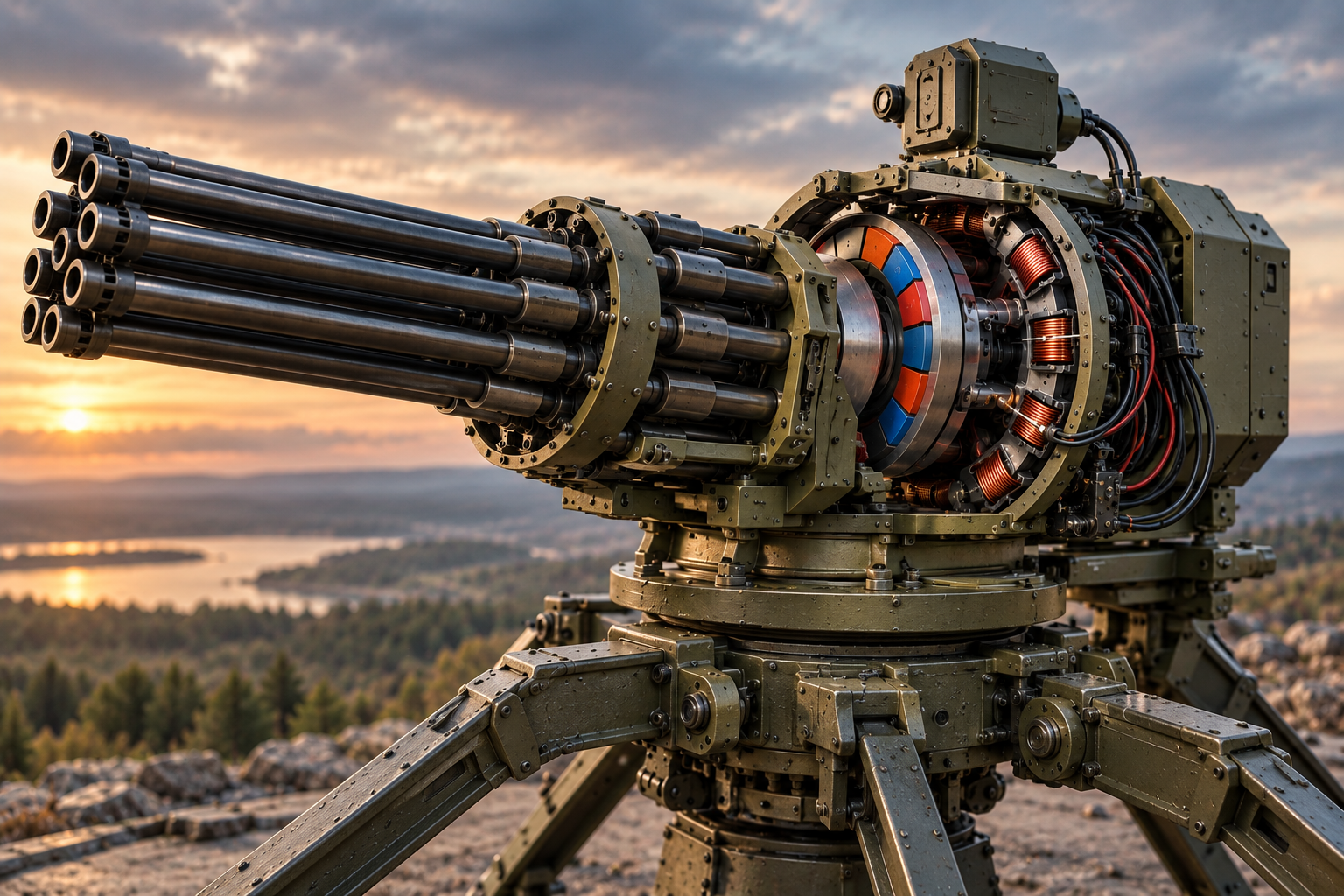
In the classic Gatling gun design, the entire barrel block rotates to ensure a high rate of fire. In the new design, the author proposes to separate this function from the barrels: a small electric drive rotates a light rotor with permanent magnets inside a stationary stator. As the magnets pass by the coils, an EMF is generated in them, forming pulses for electrical ignition of the charges. Each coil is connected to its own barrel.
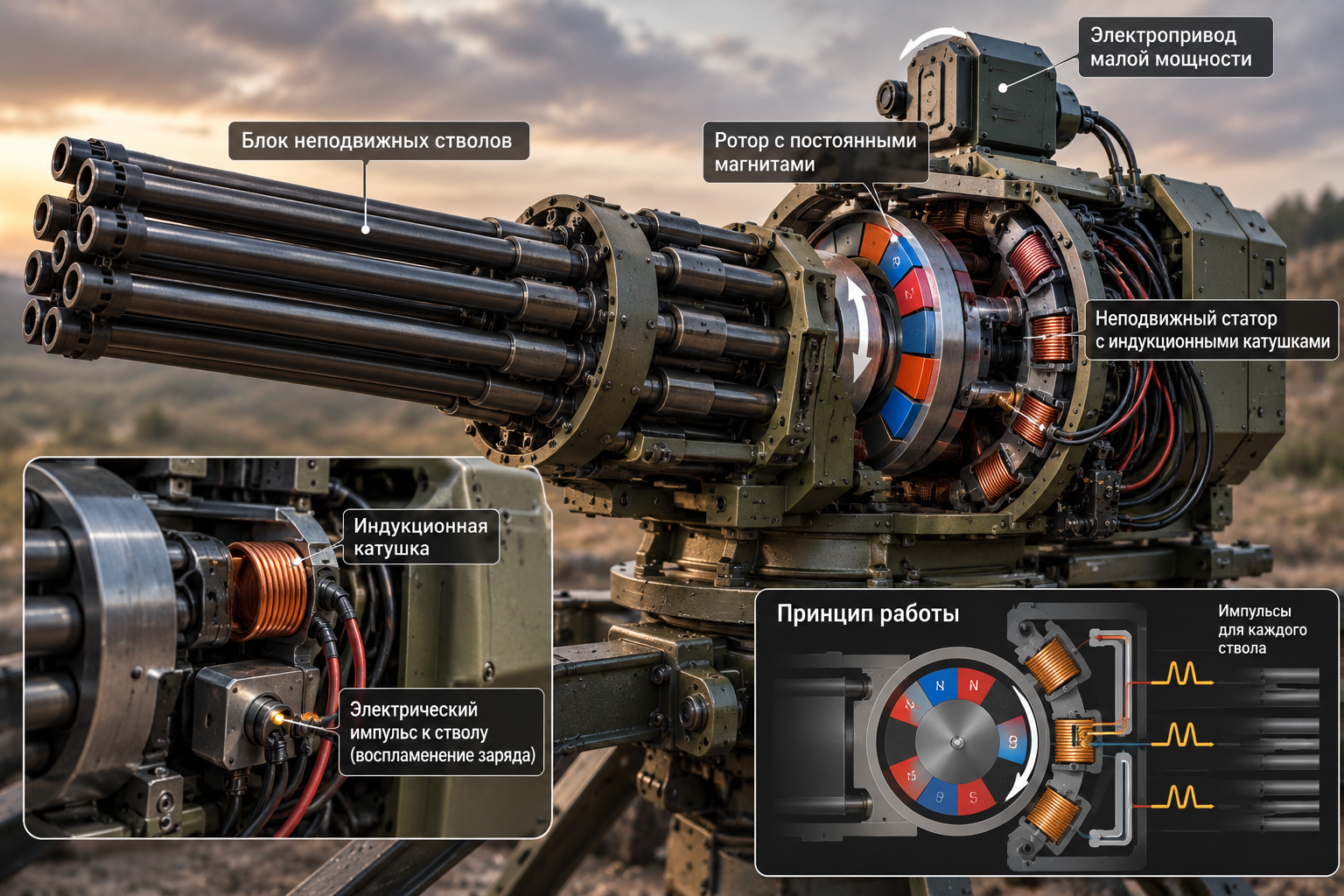
The key element of the patent is the multiplier principle. According to the author's idea, for one full rotation of the rotor, the sequence of pulses for all barrels is formed over a significantly smaller angle of rotation. As a result, the pulse frequency can theoretically be higher than the rotation frequency by a corresponding number of times.
What physics says
The principle of generating electrical pulses itself does not require unusual physics: a rotating magnet changes the magnetic flux through the coil and creates an EMF. The energy for this comes from the electric motor that rotates the rotor.
The calculated pulse frequency does not determine the actual rate of fire of the weapon. It depends on the operation of the barrels, ammunition feeding, reloading, and other parts of the system. Even if a pulse can be created quickly, it will not help if there are problems with ammunition feeding, reloading, barrel heating, part strength, or shot energy dissipation. Therefore, increasing the pulse frequency cannot automatically increase the actual rate of fire.
Read more on the topic:
Never miss our newsAdd this site to your preferred sources to see us more oftenAdd on Google

















