Translated with AI from the Russian original.
Cognitive Pilot introduced the Cognitive Voice Assistant AI voice assistant for a fully autonomous cabinless mini-tractor. With it, an operator can use ordinary words to find out what is happening with the machine, how its task is progressing, and what it is going to do next, and if necessary, give the robot a command by voice.
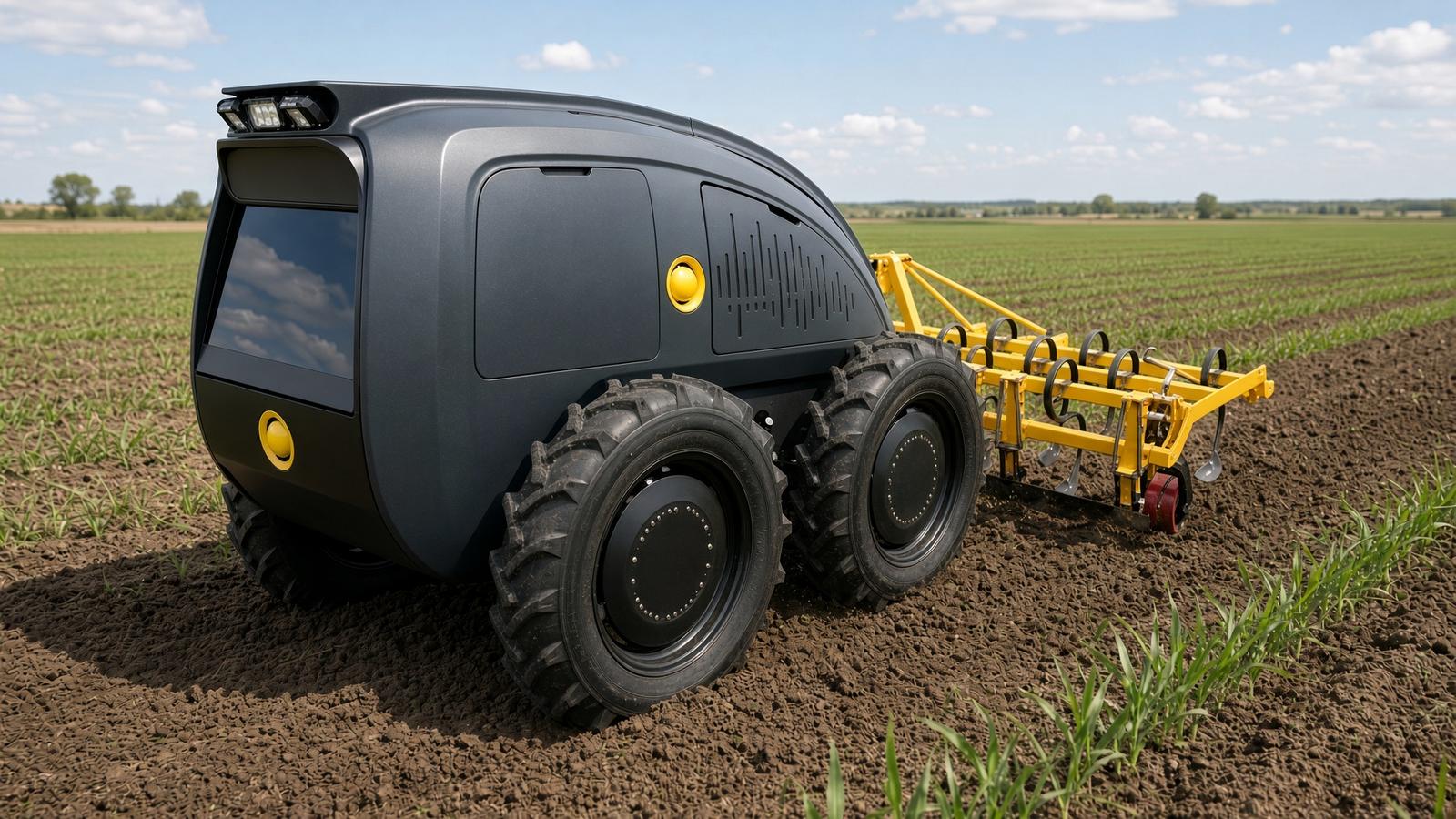
The development emerged after requests from mini-tractor users. Customers need to be sure at any moment that the machine is working according to plan, to know its status, and to understand its next actions. However, constantly typing commands on a tablet or laptop while the robot is working is inconvenient, so the developers focused on voice control.
Cognitive Voice Assistant is based on Cognitive Pilot's generative neural network "Ippolit". The assistant perceives ordinary human speech, understands the request, and processes it in real-time in a cloud computing environment.
Unlike public services based on large language models, the system operates in an isolated cloud environment on the company's own computing resources. It does not depend on external providers and, according to the developers, is not subject to potential threats from them.
The system's peculiarity is that it starts analyzing speech even before the person finishes the phrase, the developers claim. Therefore, the operator does not have to wait for each processing stage to complete, and the conversation can proceed almost without pauses.
If there is not enough information to answer, the assistant itself accesses the robot's internal systems. It can obtain data on the equipment's condition, diagnostics, telemetry, navigation, or parameters of the operation being performed, and only then formulate a response.
For example, the operator can ask about the machine's condition, communication quality, current missions, task characteristics, or its completion stage. The assistant can analyze telemetry, report battery charge levels, provide forecasts, and assess whether the robot can complete a specific task.
The system can consider several parameters at once
For example, when asked about a trip to point "B" at a distance of 50 km, it can determine that with complex terrain, many ascents, and attached equipment, the task cannot be completed due to low battery charge.
The robot can also inform the operator about the work result itself. For example, it can explain: "I couldn't clear the debris at the entrance because there was an obstacle." Which specific functions will be available to the user is set in the system settings.
Cognitive Voice Assistant can be further customized for a specific customer. This includes the ability to create special functions and choose the robot's voice timbre.
In one children's camp, the robot is used for cleaning the territory. In addition to information about its work, it can answer children's questions like "Why is snow white and grass green?" or tell a joke. For communicating with children, the robot uses a child's voice.
The assistant can also accept control commands. For example, the operator can ask the robot to stop, continue moving, signal with its headlights, or sound an alarm.
The developers paid special attention to safety. According to the company, the system incorporates scenarios designed to prevent situations where, due to malicious actions or user error, the robot might run over a person or damage a machine.
Cognitive Voice Assistant is offered to be controlled from a smartphone via a simple interface. In the near future, the developers plan to complete the graphical image of the AI robot and the module responsible for its facial expressions.
Cognitive Pilot believes that voice assistants will help adapt AI robots faster for work in agriculture, housing and communal services, cargo transportation, and other areas. The company calls the project a possible first example of mass interaction and "friendship" between humans and industrial robots.
Read more on the topic:
Never miss our newsAdd this site to your preferred sources to see us more oftenAdd on Google

















