Translated with AI from the Russian original.
Specialists of OOO "Gazprom SPG Portovaya" have developed an innovative method for cooling air for gas turbines, which will be applied directly before the filters. Water is sprayed into the air stream at a distance of only 1–2 meters from the filtering elements.
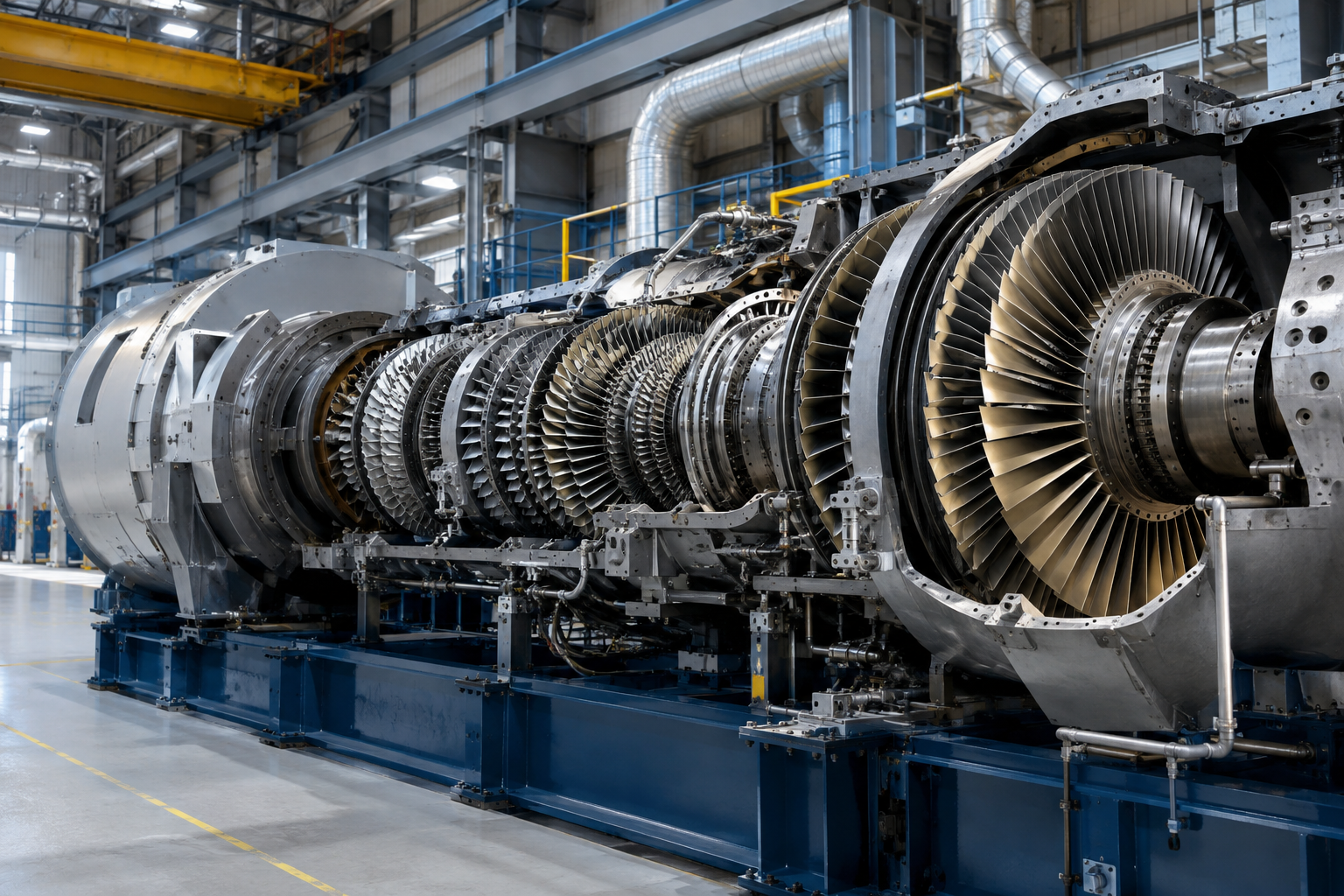
The solution is aimed at compensating for the decrease in gas turbine power under high temperature conditions by increasing the air density before the compressor.
The key paradox of the development is that water is proposed to be supplied not after air purification and not into a separate cooling module, but actually into the air intake zone before the Air Intake System (AIS). Fine aerosol is entrained by the flow, evaporates, and removes heat from the air even before it passes through the filters. Nozzles are placed directly inside the precipitation-retaining visor of the AIS, with the distance to the filtering elements being 1–2 m.
The patent provides a calculation for a gas turbine unit with an electrical capacity of 25 MW, operating throughout the year with ambient air temperature varying from −35 to +35 °C. At +35 °C, the simulation showed a decrease in inlet air temperature by 10–14 °C and an increase in its density by 4–6%. As a result, the GTU at temperatures above +25 °C could maintain 95–98% of its nominal power, whereas without pre-cooling, the indicator decreased to 75–80% of the winter nominal.
The technical calculation here is based on a simple physical effect: when water evaporates, heat is drawn from the air flow, reducing its temperature and increasing its density. To form an aerosol, the patent provides for nozzles with openings no more than 0.5 mm, and in some variants — 0.25 and 0.01 mm. Several pumps and nozzle groups allow changing the water supply depending on conditions, and the unit itself is additionally equipped with a filter for preparing the cooling liquid.
The developers specifically point out the problem of large-droplet spraying: water must have time to evaporate before contacting the filtering elements, otherwise the risk of their wetting and deterioration of the air intake tract increases.
Read more on the topic:
Never miss our newsAdd this site to your preferred sources to see us more oftenAdd on Google

















