Skoltech scientists, together with researchers from Canada and Japan, have developed an AI simulator for working with phobias. The neural network creates images of the object of fear, evaluates a person's reaction, and gradually increases the intensity of the impact — for example, making spiders or insects increasingly frightening.
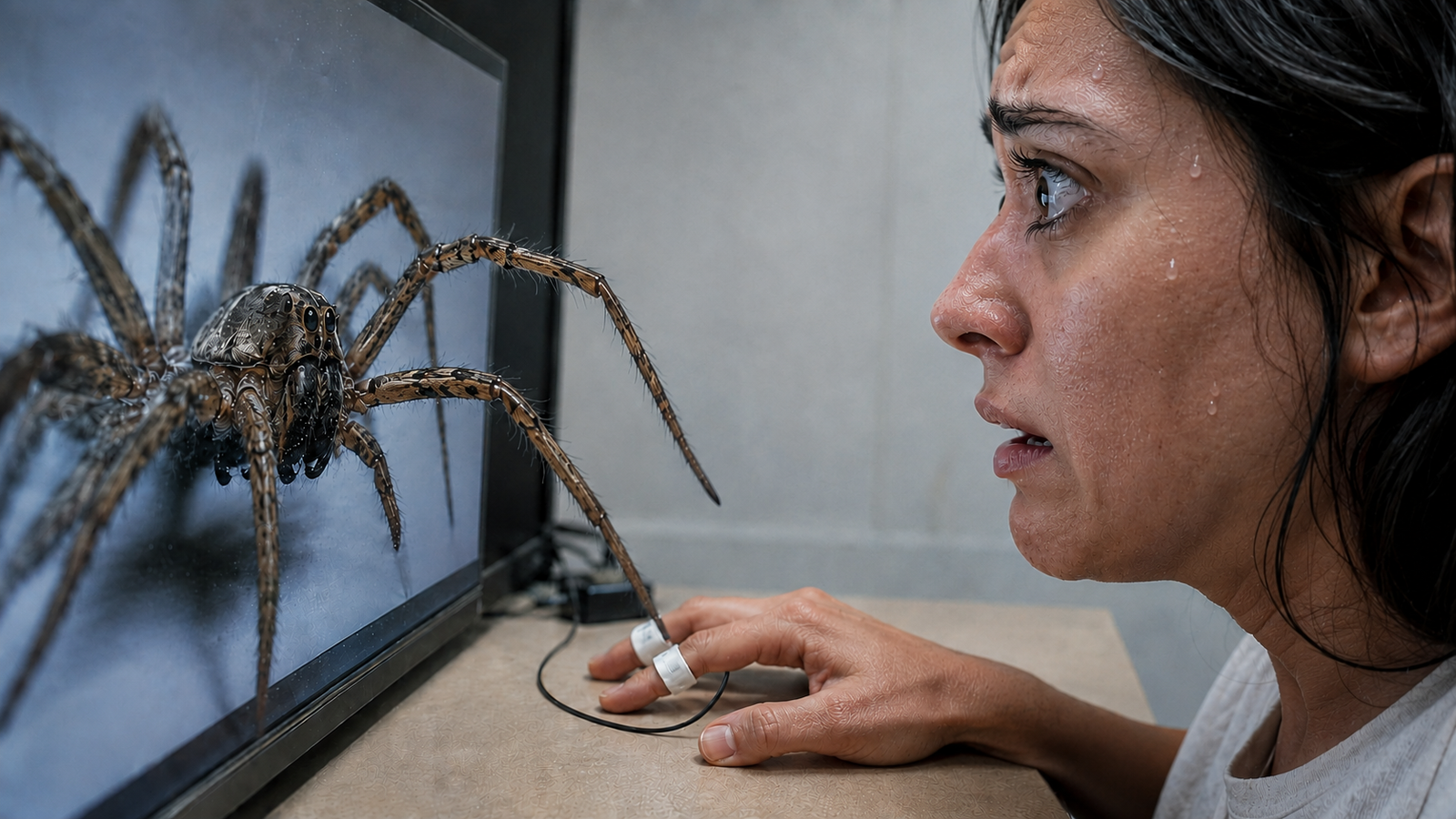
The method is based on desensitization: a person gradually confronts fear in controlled conditions. The system takes into account the subjective assessment of fright and the galvanic skin response, and in the future, developers want to connect fMRI data and directly consider brain activity.
20 people participated in the experiment. According to their conscious assessments, the neural network indeed managed to generate increasingly frightening images. When using only the physiological indicator, such an effect could not be obtained — the average level of fright did not exceed the reaction to control images. Researchers believe that fear is too complex to be measured by a single body signal.
The authors see the technology as a basis for personal simulators for phobias and anxiety disorders. This approach potentially can make desensitization therapy more accessible, especially where there is a shortage of specialists.
However, psychologists warn: it is dangerous to independently turn a neural network into a "horror generator." If the intensity of the impact is chosen incorrectly, instead of adaptation, a strong emotional reaction up to a panic attack can be obtained, so such systems require further research and specialist control.
Read more on the topic:
Never miss our newsAdd this site to your preferred sources to see us more oftenAdd on Google