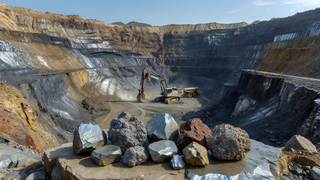
Ethiopia is interested in attracting Siberian gold miners. As Genet Teshoma Jirru, Ambassador Extraordinary and Plenipotentiary of Ethiopia to Russia, told TASS on the sidelines of the International Forum of Indigenous Peoples in Krasnoyarsk, gold mining has been named one of the key areas for future cooperation with Siberian regions. According to him, enterprises for the exploration, mining, and processing of gold-bearing ore are already operating in Ethiopia, and equipment for the industry is also being produced.

The diplomat emphasized that Ethiopia sees Siberian companies as strong partners and is ready to develop cooperation across the entire chain – from geological exploration to the supply of machinery and technologies. In addition to gold mining, trade, investment, and education have been identified as promising areas.
The forum is taking place in Krasnoyarsk from August 13 to 16, with over 700 participants from 27 Russian regions and 14 countries. The main theme is "Indigenous Peoples in the Context of Biodiversity and Climate." For Siberian businesses, Ethiopia can become a new sales market for equipment and a platform for joint projects, which is especially relevant given the sanctions restrictions in traditional areas.
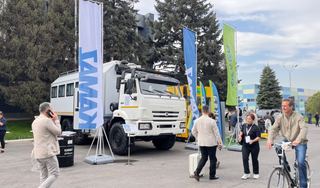
The interest of Siberian gold miners in Ethiopia fits into a broader picture of Russian-Ethiopian industrial rapprochement. We have already reported that at the end of 2023, AvtoVAZ signed an agreement to assemble Lada in Ethiopia, and the head of Ethio Engineering Group then specifically noted the prospects of the country's mining industry for foreign investors. Then, in early 2026, the topic of localizing production in Ethiopia was picked up by KAMAZ, GAZ, and UAZ, which are negotiating the assembly of gas-powered vehicles, taking into account local regulations. Thus, negotiations on gold mining projects become another link in the chain of Russian industry initiatives in the Ethiopian direction – along with the automotive industry and, more broadly, the strategy of entering African markets under sanctions pressure.
Read more on the topic:
Never miss our newsAdd this site to your preferred sources to see us more oftenAdd on Google