Roscosmos, together with Yandex Weather, will broadcast the solar eclipse live. The broadcast will be launched from the top of the Lakhta Center, the tallest building in Russia and Europe. On August 12, 2026, Russians will also be able to see a parade of planets and the peak of the Perseid meteor shower.
Where to see the solar eclipse and when the broadcast begins
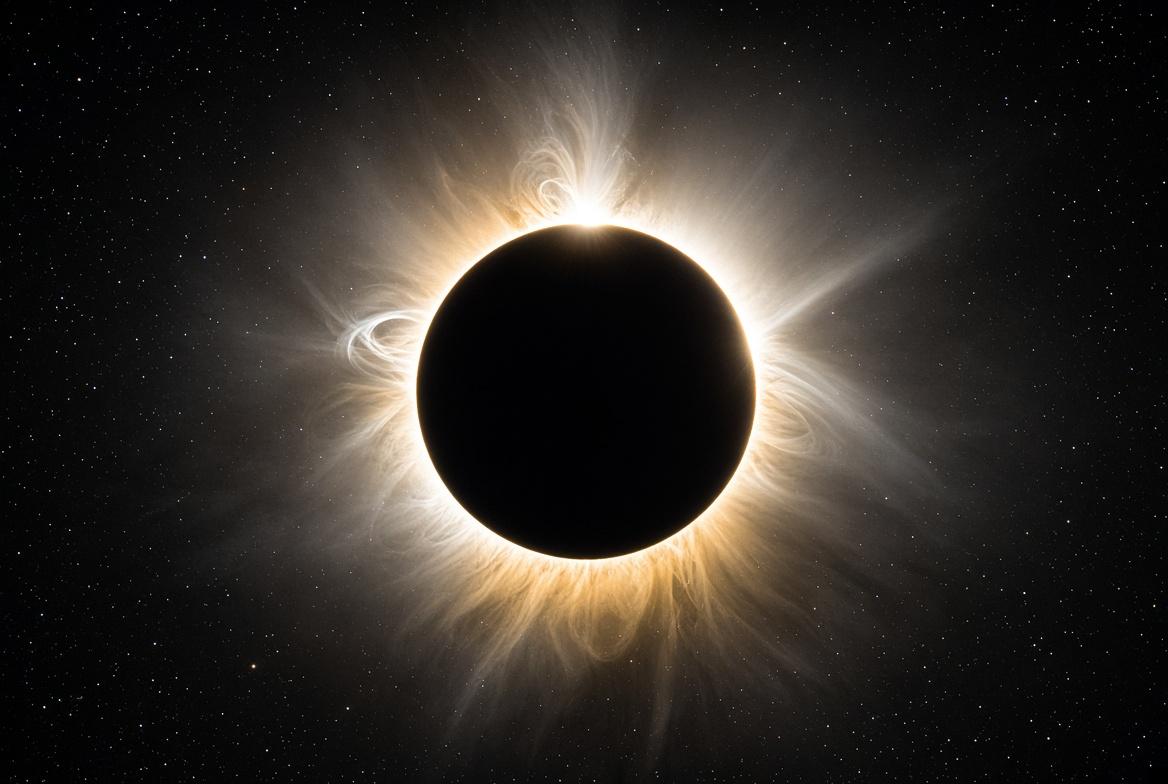
A total solar eclipse, when the Moon completely covers the Sun, will only be visible in a narrow band of lunar shadow. It will pass through northern Russia, the Arctic Ocean, Greenland, Iceland, northern Spain, and a small part of Portugal.
Those who find themselves in this band and are lucky with the weather will be able to see the most interesting thing – the solar corona around the Moon. In Russia, the eclipse will be fully visible only in Taimyr. In other northern and northwestern regions of the country, the Moon will cover the Sun only partially.
In Moscow, St. Petersburg, and almost all of the rest of Europe, the Moon will "bite off" about 79% of the solar disk area.
The broadcast starts at 8:00 PM Moscow time. If the weather permits, viewers will see the eclipse itself and also hear lectures from experts. Astrophotographer Nikolay Vdovin and employee of GAO RAS Elena Kupriyanova will explain how everything works and how to safely observe the phenomenon.
We have already described in detail the space events of August 2026: the solar eclipse on August 12 and the Perseid meteor shower became the main astronomical phenomena of the summer.
Separately, we wrote about the Perseids in 2026: the peak of the meteor shower coincides with the new moon, which makes the conditions for observations especially favorable – moonlight will not interfere, and in a dark place, you can expect up to 100 meteors per hour.
For comparison: the previous solar eclipse, available to residents of Moscow and St. Petersburg, took place on March 29, 2025 – then it was also partial, and in the capital, the Moon covered less than 10% of the solar disk.
Read more on the topic:
Never miss our newsAdd this site to your preferred sources to see us more oftenAdd on Google