Translated with AI from the Russian original.
The Sun constantly emits sounds — more precisely, it creates sound waves that can be described as a peculiar "moan." But humans cannot hear them directly: the frequencies are too low for the human ear.
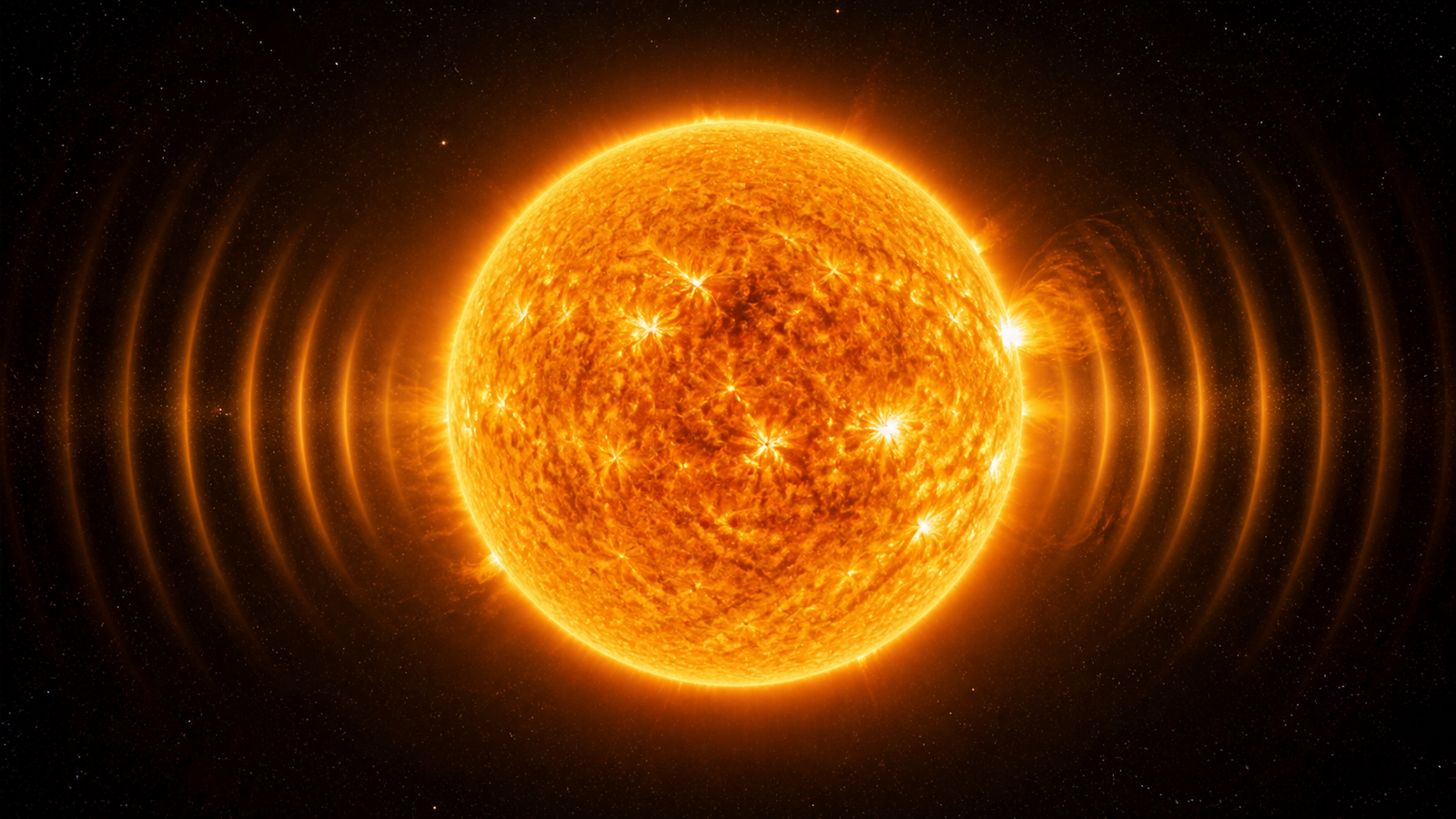
As PNRPU expert Evgeny Burmistrov explained, our star continuously pulsates. These oscillations occur with a period of about five minutes — which is approximately 10,000 times slower than the lowest note a human can distinguish. Therefore, without special technologies, it's impossible to "hear" the Sun.
Nevertheless, scientists have learned to detect these waves. The SOHO spacecraft records the slightest oscillations of the star's surface, after which the data is accelerated thousands of times and converted into an audible range. The result is audio recordings that can then be played.
But this is not just scientific curiosity. These "sounds" are actively used by helioseismologists — specialists who study the internal structure of the Sun. By analyzing how waves travel through different regions, scientists can track the movement of plasma beneath the surface and even detect active regions on the far side of the star in advance.
In fact, such observations allow us to "listen" to the Sun from within — and learn about its activity even before it becomes noticeable from Earth.
Read more on the topic:
Never miss our newsAdd this site to your preferred sources to see us more oftenAdd on Google

















