Translated with AI from the Russian original.
Russian engineers have developed a system that allows hydrogen to be produced directly from ammonia during gas-diesel operation and used to improve the fuel combustion process. The technology was patented by specialists from the Volga State University of Water Transport.
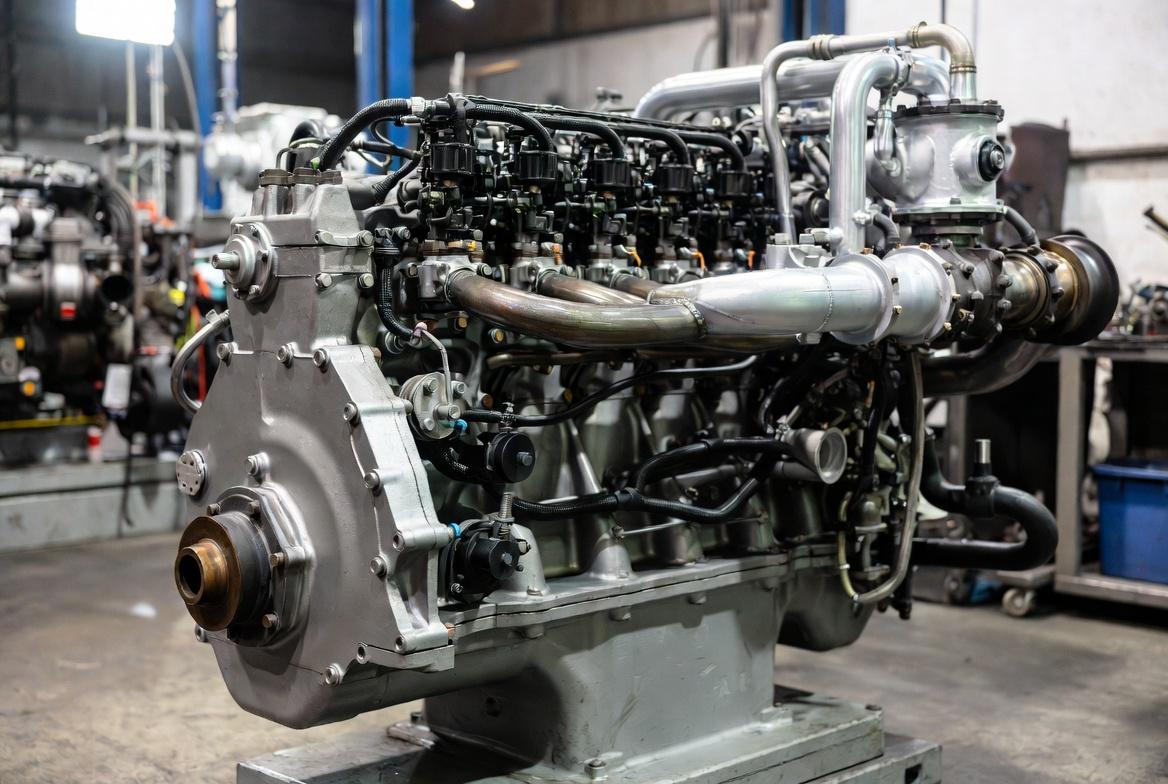
The development is intended for internal combustion engines running on alternative fuels. The new method is based on partial dissociation of ammonia — its decomposition into hydrogen and nitrogen using a catalyst installed in the engine's exhaust tract.
The system divides the ammonia flow into two parts. One enters the engine as the main fuel, while the other passes through an evaporator and a catalyst, where, under the influence of high temperature, a hydrogen-nitrogen mixture is formed from it. The resulting hydrogen then returns to the intake manifold and is used as a fuel additive.
According to the developers, adding hydrogen in an amount of 1 to 5% helps to accelerate the ammonia combustion process and increase the completeness of combustion. This allows for reduced fuel consumption and improved stability of the gas-diesel engine.
One of the key elements of the system is the catalyst in the exhaust manifold. It uses the heat of exhaust gases for the ammonia dissociation process, so no additional external energy source is required. The resulting hydrogen-nitrogen mixture is directed back into the engine intake.
The developers note that ammonia is considered a promising hydrogen carrier due to the high storage density of this element. However, the use of ammonia itself in engines faces the problem of slow and incomplete combustion, which the new technology is designed to solve.
Calculations presented in the patent show that with partial dissociation of ammonia, the energy output of the fuel mixture can increase. In one of the considered variants, the release of hydrogen from 10% of the supplied ammonia allowed for an additional energy effect and reduced potential fuel consumption.
Read more on the topic:
Never miss our newsAdd this site to your preferred sources to see us more oftenAdd on Google

















