Translated with AI from the Russian original.
The Islamic Revolutionary Guard Corps (IRGC) has for the first time used the new high-speed Hadid-110 kamikaze unmanned aerial vehicle in combat conditions, according to the Russian service of Iran State Radio and Television. The Pentagon is concerned about the emergence of such drones: low-flying, low-observable aircraft are difficult to detect, while intercepting them requires expending costly surface-to-air missiles, creating a dangerous "cost-effectiveness" imbalance.
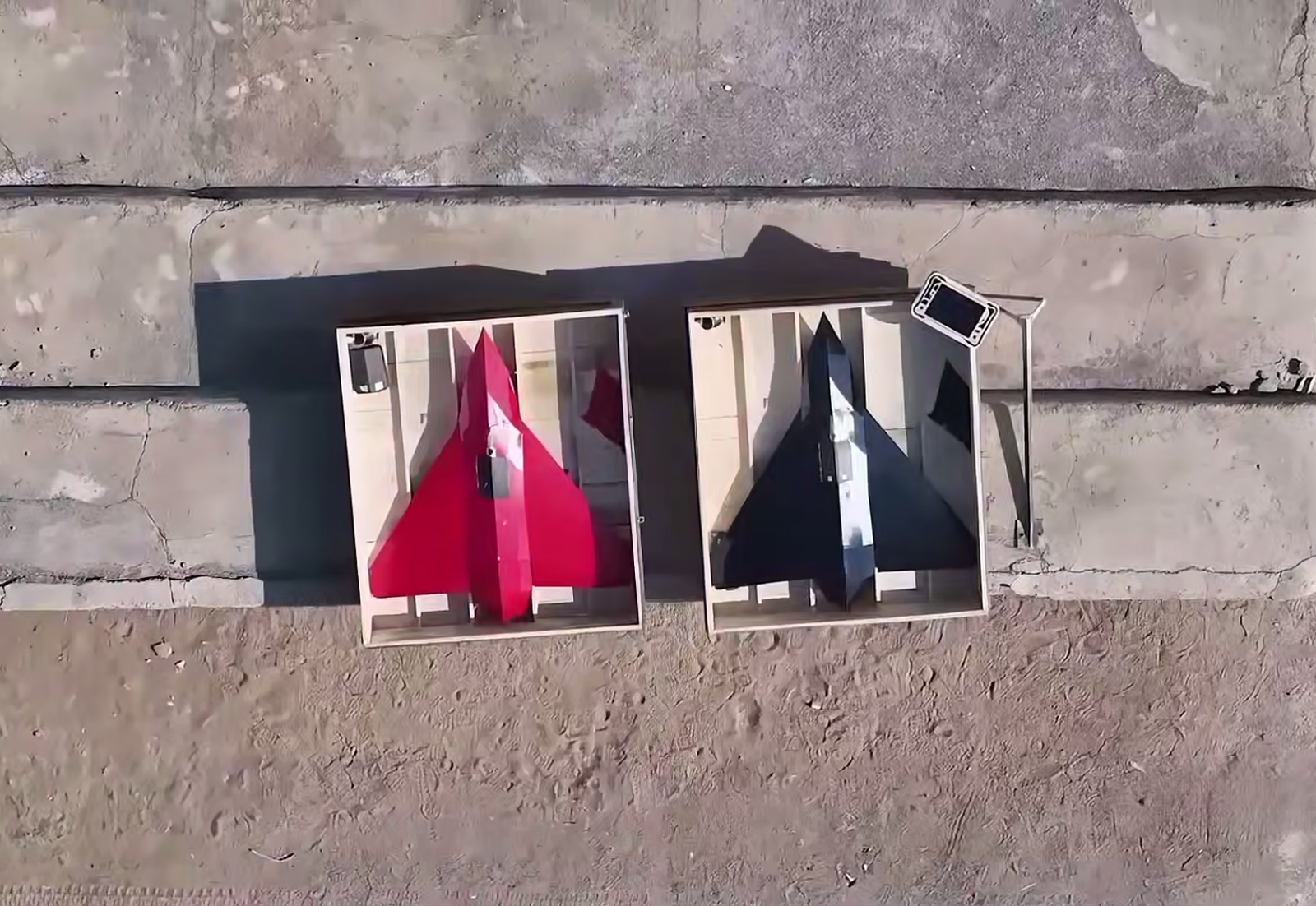
Testing of the Hadid-110 stealth drone took place in December 2025 during the multilateral anti-terrorist exercises "Sahand-2025" in Iran's East Azerbaijan province. Russian military specialists took part in the drone's trials and closely coordinated with the Iranian side, as reported by Pervyi tekhnicheskii.
The drone is built according to a stealth design, with an angular plastic fuselage that reduces radar visibility. Its radar cross-section (RCS) is estimated at only 0.01-0.02 square meters, making it an extremely difficult target to detect.
The Hadid-110 reaches speeds of up to 510 km/h, has a flight range of 300-350 km, and carries a warhead weighing from 30 to 50 kg. Its flight altitude reaches 9 kilometers, placing it beyond the engagement zone of most short-range air defense systems and mobile fire groups. A distinctive feature of the drone is launch by means of a solid-fuel booster, which allows it to be used without a runway.
Read more materials on the topic:
- S-300 and Tor air defense systems: what Iran's air defense consists of
- An Israeli Air Force F-35I fighter shot down a Yak-130 in the skies over Tehran
- Financial Times: Iran concluded a secret deal with Russia to purchase Verba MANPADS and missiles for it
Never miss our newsAdd this site to your preferred sources to see us more oftenAdd on Google

















