Translated with AI from the Russian original.
During the multilateral exercises "Sahand-2025", Iran presented a new Hadid-110 jet unmanned aerial vehicle (UAV) developed using radar signature reduction technologies. The testing of the latest drone took place in close cooperation with Russian military specialists.
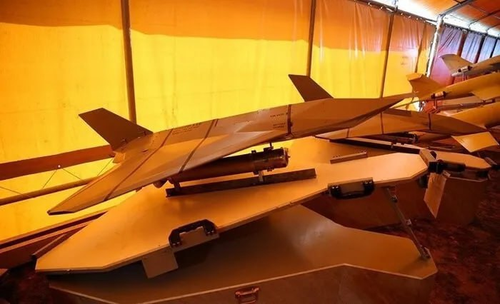
The drone's design takes into account the principles of stealth technologies: rounded contours, reduced protruding elements, and, probably, the use of radar-absorbing materials.
Special attention was paid to the mobility of application - the UAV does not require a runway and can be launched from a tactical launcher.
Hadid-110 demonstrates the following tactical and technical characteristics:
- Maximum speed - 510 km/h;
- Flight range - up to 350 km;
- Practical ceiling - about 9,000 meters;
- Autonomous flight time - up to 60 minutes;
- Combat load - 30 kg.
The "Sahand-2025" exercises, at which the Hadid-110 was tested, brought together the participating countries of the SCO: Russia, China, India, Pakistan, Belarus, Kazakhstan, Kyrgyzstan, Tajikistan and Uzbekistan, which emphasizes the growing role of joint military initiatives in the region.
Read more materials on the topic:
- The new Russian "OSOT" AI interceptor drone was presented: attacks at a speed of 350 km/h
- Russia and India are discussing the localization of the production of "Lancet" drones
- The newest strike unmanned seaplane for ammunition for FPV drones is being developed by engineers from the "Spektr" design bureau
Never miss our newsAdd this site to your preferred sources to see us more oftenAdd on Google

















