The magnetic storm that began on the evening of January 19 after the first X-class solar flare of 2026 ended 42 hours later. This was reported by the Institute of Applied Geophysics (IPG) and the Solar Astronomy Laboratory of the Institute for Space Research (IKI) of the Russian Academy of Sciences.
According to experts, the maximum disturbance power reached level G4.7 on the five-point Kp scale, where G5 means "extremely strong" and G1 means "weak." By noon on January 20, the Kp index had dropped below 5, and the storm was officially recorded as having ended.
This is the fourth geomagnetic storm of the current solar cycle with a level of G4 or higher — the previous ones were in May and October 2024, as well as in November last year.
The cause of the turbulent activity was the plasma flows ejected by the Sun during the X1.95 class flare on January 18. They reached Earth on the night of January 19, causing a sharp increase in the disturbance of the magnetic field. The storm quickly reached a peak close to G5, then weakened to G2 by the morning of January 20, after which a second peak was observed around the G4 level, and the storm gradually subsided to its end.
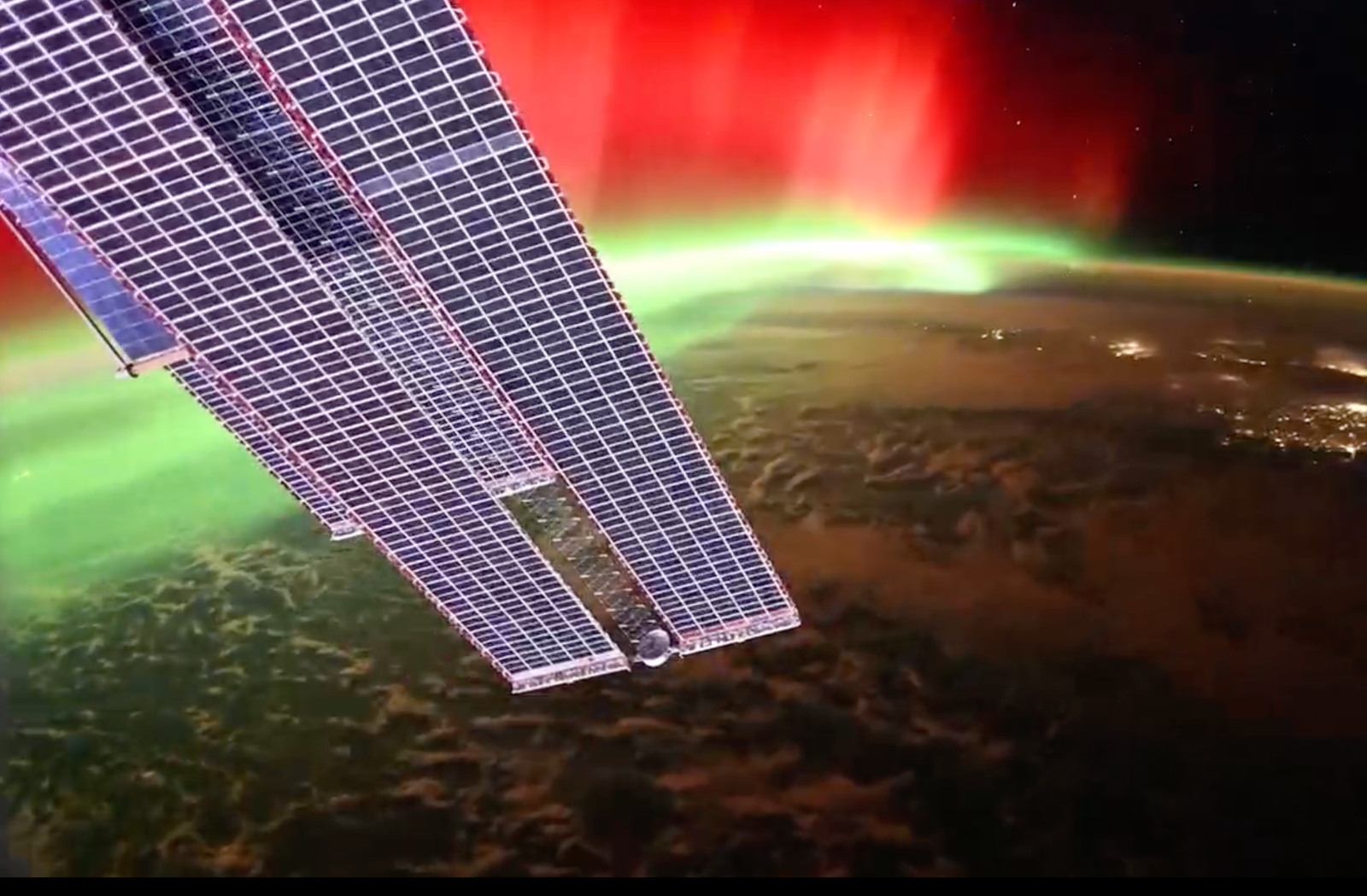
The event caused some of the brightest auroras of the 21st century. The lower limit of their visibility on the night of January 20 dropped to a latitude of about 40 degrees. Russian cosmonaut Sergei Kud-Sverchkov, who is on the ISS, noted an unusual red glow of the auroras, occurring at altitudes of 300–400 kilometers and indicating the impact of strong energy. Auroras were also observed on the night of January 21.
Read more on the topic:
- Geomagnetic storm does not subside: magnetic storm reached level G3
- The most powerful radiation storm of level S4 in the last 22 years is observed near the Earth
- A record flow of solar protons was recorded — 200 times higher than normal
Never miss our newsAdd this site to your preferred sources to see us more oftenAdd on Google






![Growth Point: After 5G Launch, Mobile Internet in Russia Accelerated by 20%","subtitle":"TelecomDaily recorded an upload speed increase of 19.7%, and download speed of almost 14%","announce":""}[]}],](https://media.ixbt.site/fit-in/320x/ixbt-data/1727896/ai-image-nvgq0a0v5cjnyxwoc8xpelva.webp)