The Ural Design Bureau of Transport Machine Engineering (UKBTM) has patented a new passive protection for tanks and other armored vehicles against kamikaze drones with shaped-charge warheads. Engineers have proposed a solution based on a frame structure with mesh fabric and flexible elements that move the detonation point away from the armor. The concept has already been registered with Rospatent.
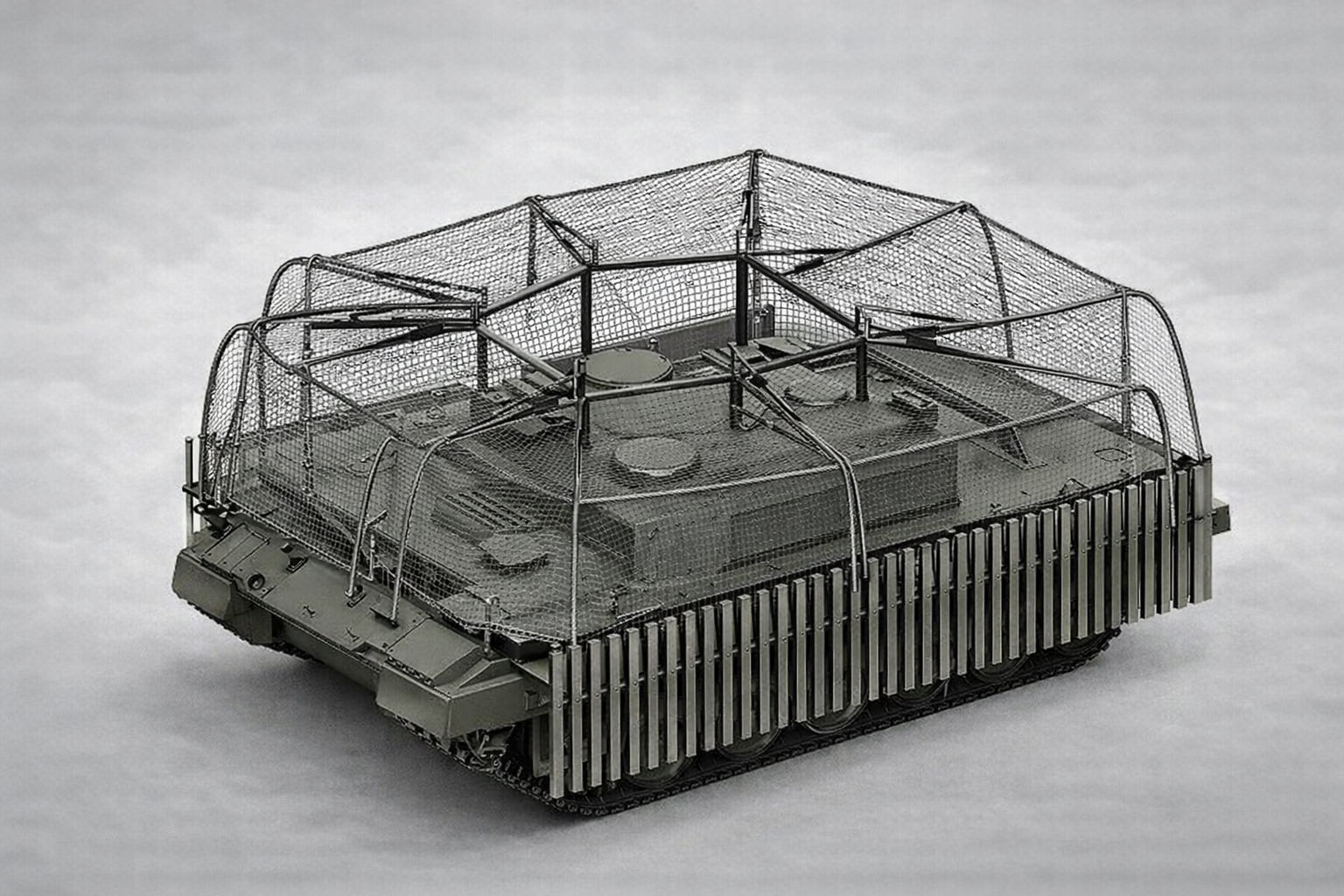
The patent states that it is proposed to install a frame with a mesh anti-drone fabric over the protected surface of the tank. At least four rods are radially and cantilevered around its perimeter, forming a common frame.
The rods, which extend beyond the dimensions of the vehicle, are secured through flexible elastic elements, allowing them to deflect upon contact with obstacles without destroying the structure.
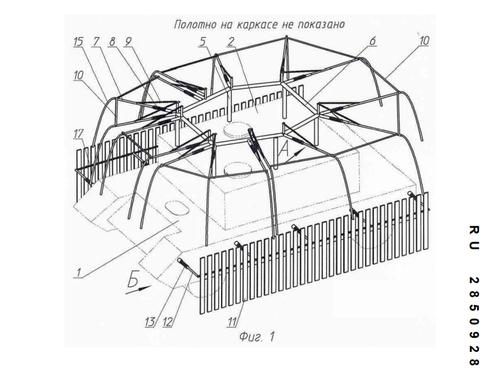
The mesh fabric covers most of the hull's projection in plan and provides all-round protection for the superstructure — from the frame level to the roof of the hull. The falling edges create circular vertical protection.
The UKBTM design allows for the installation of a false roof with reactive armor elements, as well as rubberized fabric shields. At the ends of the rods, the developers provide freely hanging cables with a diameter of 18–50 mm. To increase survivability, the rods are additionally connected to the frame with flexible, strong tension members, including chains.
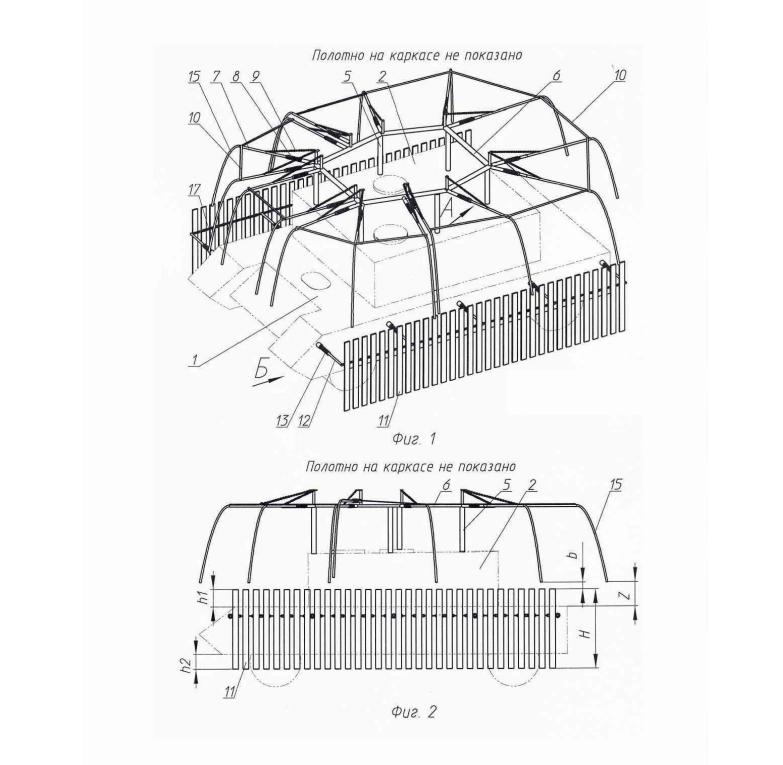
Separate rods with flexible screens are used to protect the sides of the hull. They overlap the side projection from the level above the roof of the hull to the area below the bottom, providing removal of the detonation point of the shaped-charge warhead.
Note that it is unclear from the presented concept shots how exactly the tank turret will rotate. But given the changed role of combat vehicles, this is unlikely to be a problem.
The issue of protection against kamikaze drones has become key for tanks. The military is resorting to various tricks, welding a mesh metal structure, popularly known as "barbecue".
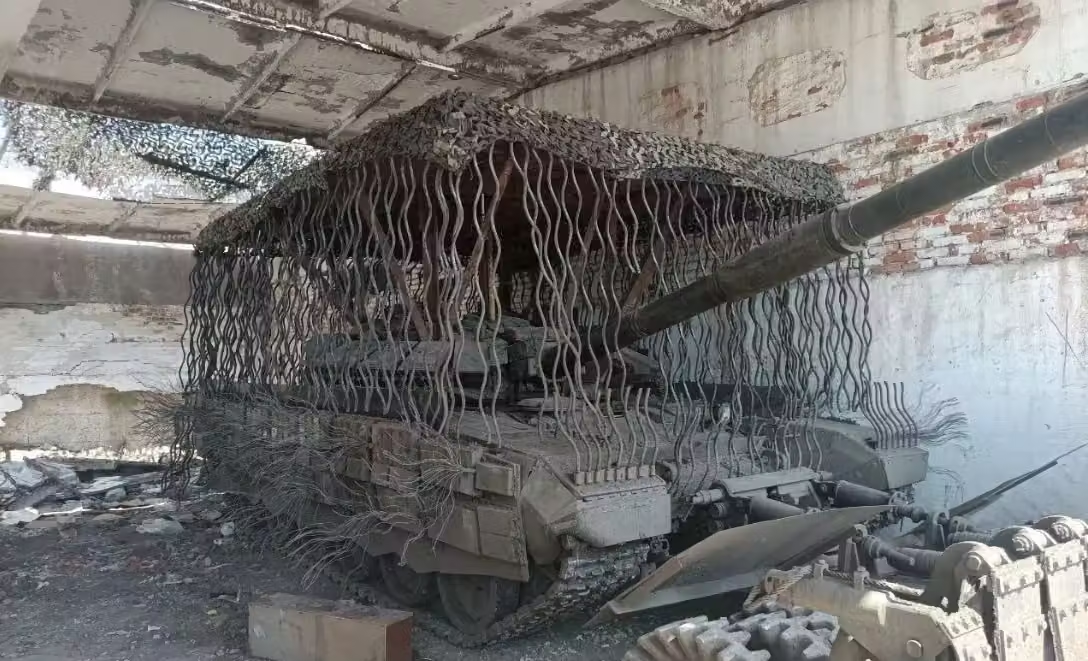
There were also shots on the Web with untwisted metal cables around the perimeter of combat vehicles, this method was called "dreads". A few weeks ago, another design appeared to protect tanks, which was aptly nicknamed "dandelion".
Earlier, "The First Technical" wrote that Russia had come up with a new way to protect equipment from drones, based on the principle of constantly running blades. According to the idea, they should literally chop drones in half and throw them aside.
Read more materials on the topic:
- Self-propelled gun "Coalition-SV" was closed from drones from above: new protection patented
- Armored tanker with alcohol patented in Russia — for aviation
- The design of a unique mortar was patented in Russia: twice as light as traditional models
Never miss our newsAdd this site to your preferred sources to see us more oftenAdd on Google

















