Translated with AI from the Russian original.
Scientists from the Saratov National Research University named after N.G. Chernyshevsky (SGU) have developed a model of a three-layer film based on graphene and lithium oxide-phosphate compounds, which can make batteries faster, more durable and safer. This was reported by the Ministry of Education and Science of the Russian Federation.
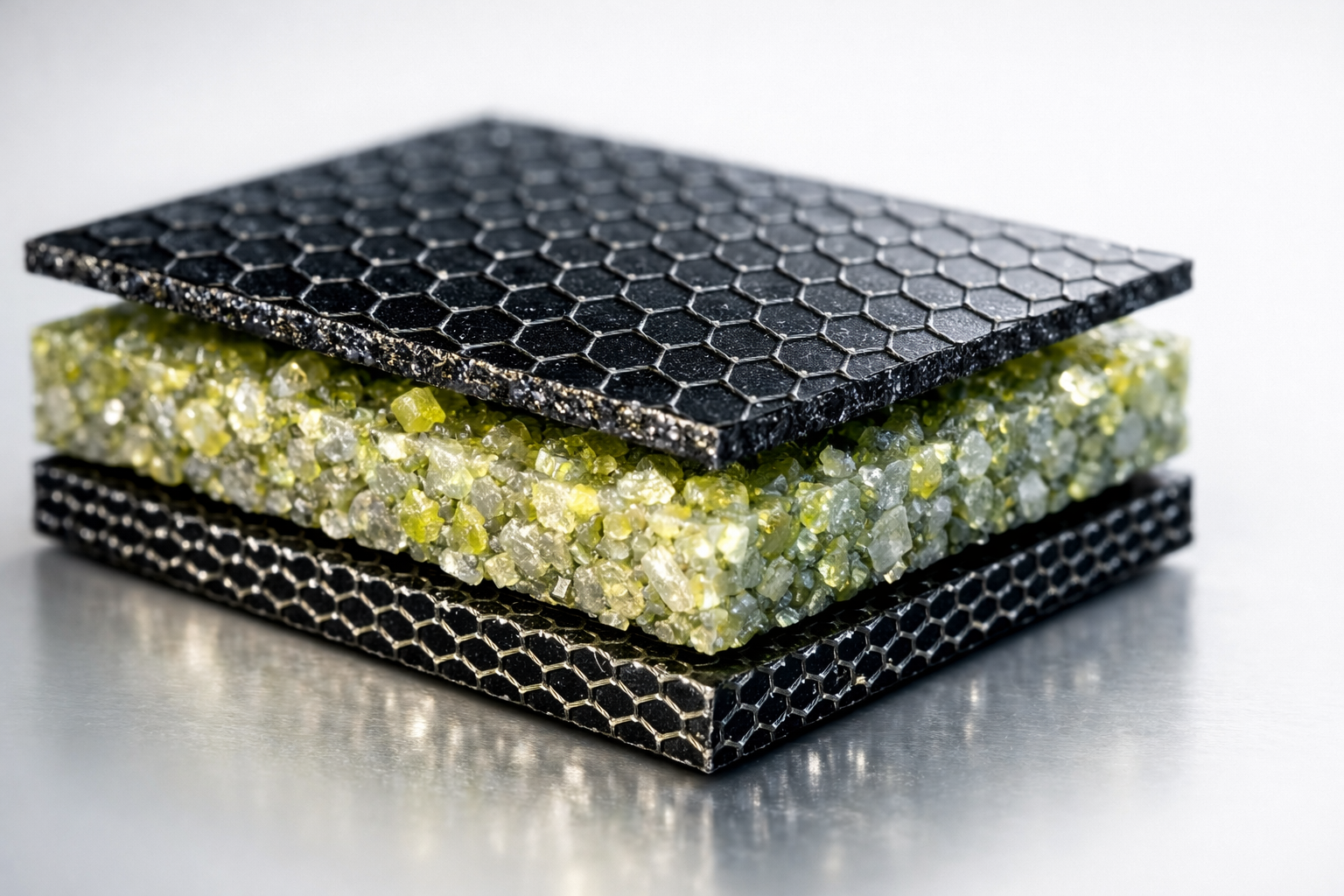
The new structure is an "energy sandwich": vanadium-lithium phosphate is on top, lithium titanate is on the bottom, and a strong and conductive layer of graphene is between them. This composite 2D film combines the properties of lithium-ion batteries and supercapacitors: it is capable of holding a large charge and quickly releasing it to an external load.
An original method for calculating quantum capacitance helped to create the model - a key parameter that determines how much charge a material can accumulate. Unlike traditional methods, the new method takes into account changes in the chemical composition of the material when interacting with lithium atoms. Thanks to this, the quantum capacitance of the three-layer film reached 868 mAh/g and 750.24 mAh/g in different modes of operation, which significantly exceeds the performance of many modern electrode materials.
For the uninitiated, the researchers explain the design as a "technological sandwich": the upper and lower layers interact with the lithium-ion charge, and the graphene in the middle accelerates its movement and strengthens the entire structure. This combination makes the material flexible, efficient and potentially suitable for batteries that can charge faster and last longer than modern counterparts.
The new composite is potentially capable of solving three main problems of modern electronics and transport - charging speed, service life and safety.
Read also materials:
- Manufacturer of traction batteries for e-Largus introduced a battery for public electric transport
- The first drone battery factory will appear in Russia
- Moscow company CleanPower increased the production of batteries by 25%
Never miss our newsAdd this site to your preferred sources to see us more oftenAdd on Google

















