Researchers at ITMO University have developed a physicomathematical model that allows predicting key parameters of laser deposition of metals on glass. The accuracy of predictions reaches 90%, which opens up new opportunities for creating protective marks and decorative coatings with micron resolution.
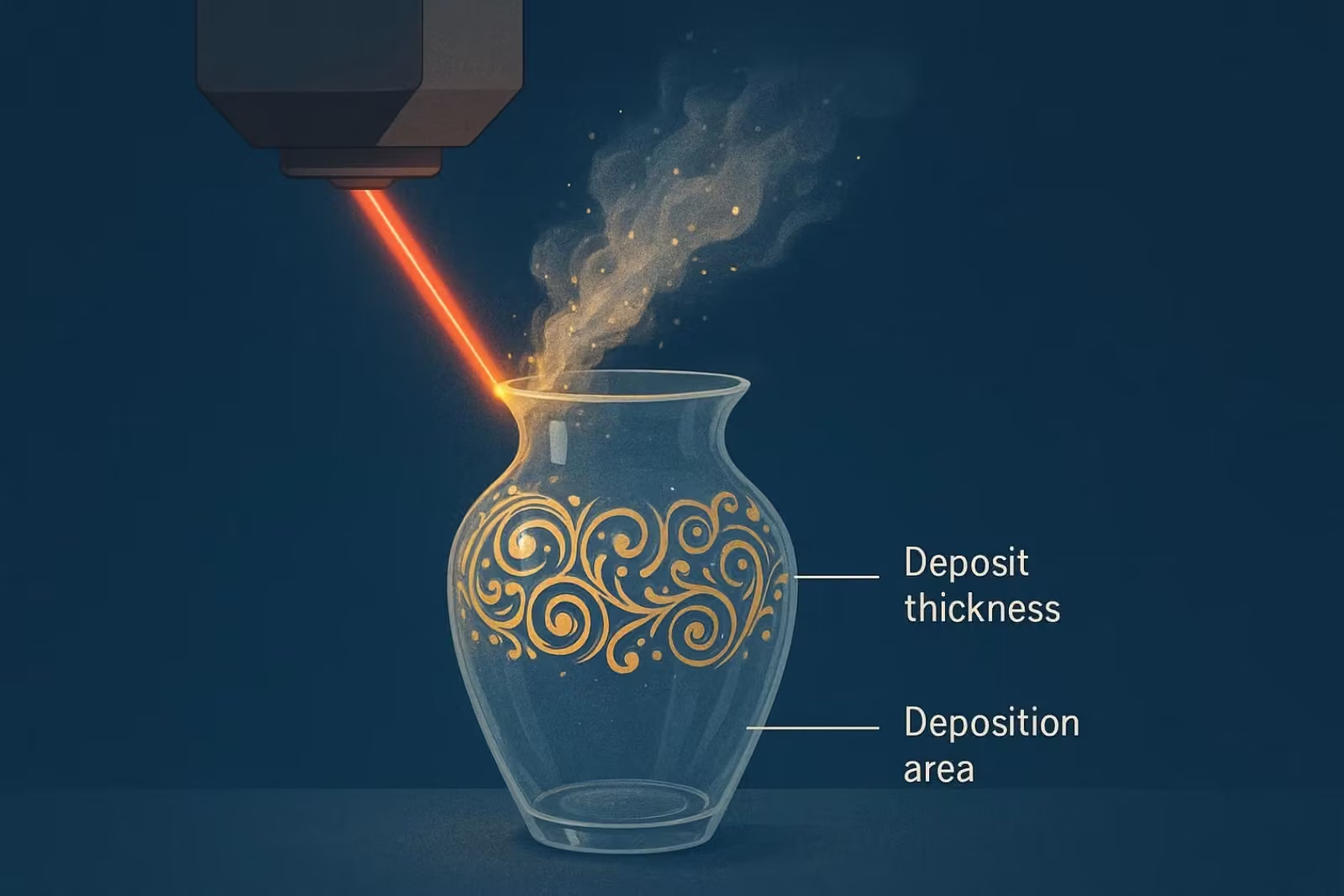
The method on which the development is based is called laser-induced backward transfer (LIBT). In this method, a metal plate is heated by a laser to high temperatures and evaporates, forming a cloud of vapors, droplets, and small particles - a vapor-gas plume. The metal is then deposited on a transparent substrate, creating a coating thinner than the diameter of a human hair. The main difficulty with LIBT until now has been in selecting the correct gap between the target and the substrate - an incorrect distance leads to loss of material or uneven deposition.
The ITMO model solves this problem: it allows calculating the optimal gap, the diameter of the deposition area, and the thickness of the metal. For calculations, it is necessary to specify the parameters of the laser pulse, the diameter of the focal spot, as well as the optical and thermophysical properties of the metal.
The development opens up new opportunities for industry and design. Micron-resolution metal coatings can be used to apply indelible protective markings directly to products, as well as to decorate glass objects and create artistic elements, combining functionality and aesthetic effect.
Read more on the topic:
- Russian mobile laser will clean the seas of sunken ships
- With a resolution of 350 nm: the first Russian lithographer was developed at ZNTC
- New materials for Russian engines, turbines and storage devices created at RTU MIREA
Never miss our newsAdd this site to your preferred sources to see us more oftenAdd on Google