Production of the new UK-25/28 SP tracklaying crane, designed to replace railway switchgears, is starting at the Kalugaputmash plant. The machine was successfully certified in September 2025.
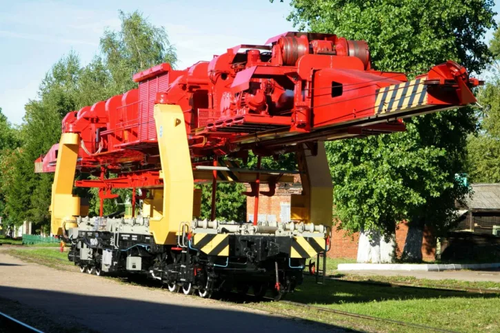
The UK-25/28 SP tracklaying crane will be used for transporting, dismantling, and laying switchgears. The telescopic boom, made of high-alloy steel, provides a lifting capacity of up to 30 tons. The new electrical equipment has increased the reliability of the Russian crane's components and reduced the cost of its maintenance. The manufacturer notes that alternating current generators are used for the first time on the machine instead of direct current ones.
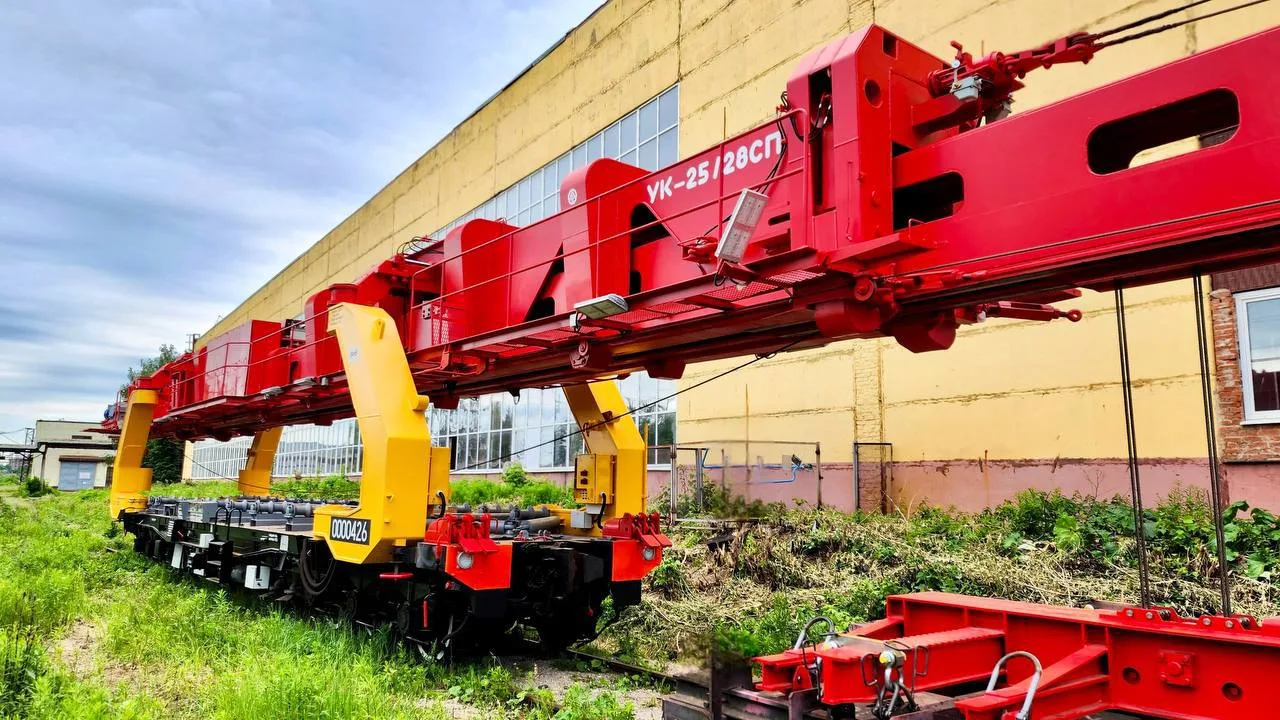
The crane is used to replace large blocks of any switchgears of the 1/9, 1/11 brands with rails of types R50, R65, R75 on reinforced concrete and wooden beams, as well as for dismantling and laying railway tracks in 25-meter sections. The maximum width of the blocks or sections to be laid/dismantled is 5.5 meters.
The UK-25/28 SP can move independently at a speed of up to 20 km/h or as part of a freight train at a speed of up to 80 km/h. The service weight of the machine is 130 tons. The personnel required for operation is 2 people.
Earlier, www1 reported that the cruise ship of the PV300VD project "Vladimir Zhirinovsky" will be completed at the Baltic Shipyard USC in St. Petersburg.
Read more on the topic:
Giant crane successfully tested at the construction site of the Leningrad NPP-2
Crimean Bridge: What is hidden behind the grandiose project?
Never miss our newsAdd this site to your preferred sources to see us more oftenAdd on Google