A meeting dedicated to the development of laser welding and additive technologies in shipbuilding took place on September 2, 2025, at the USC Sevmash enterprise in Severodvinsk, Arkhangelsk Oblast. Representatives of the enterprise and specialists from St. Petersburg Polytechnic University participated in the discussion.
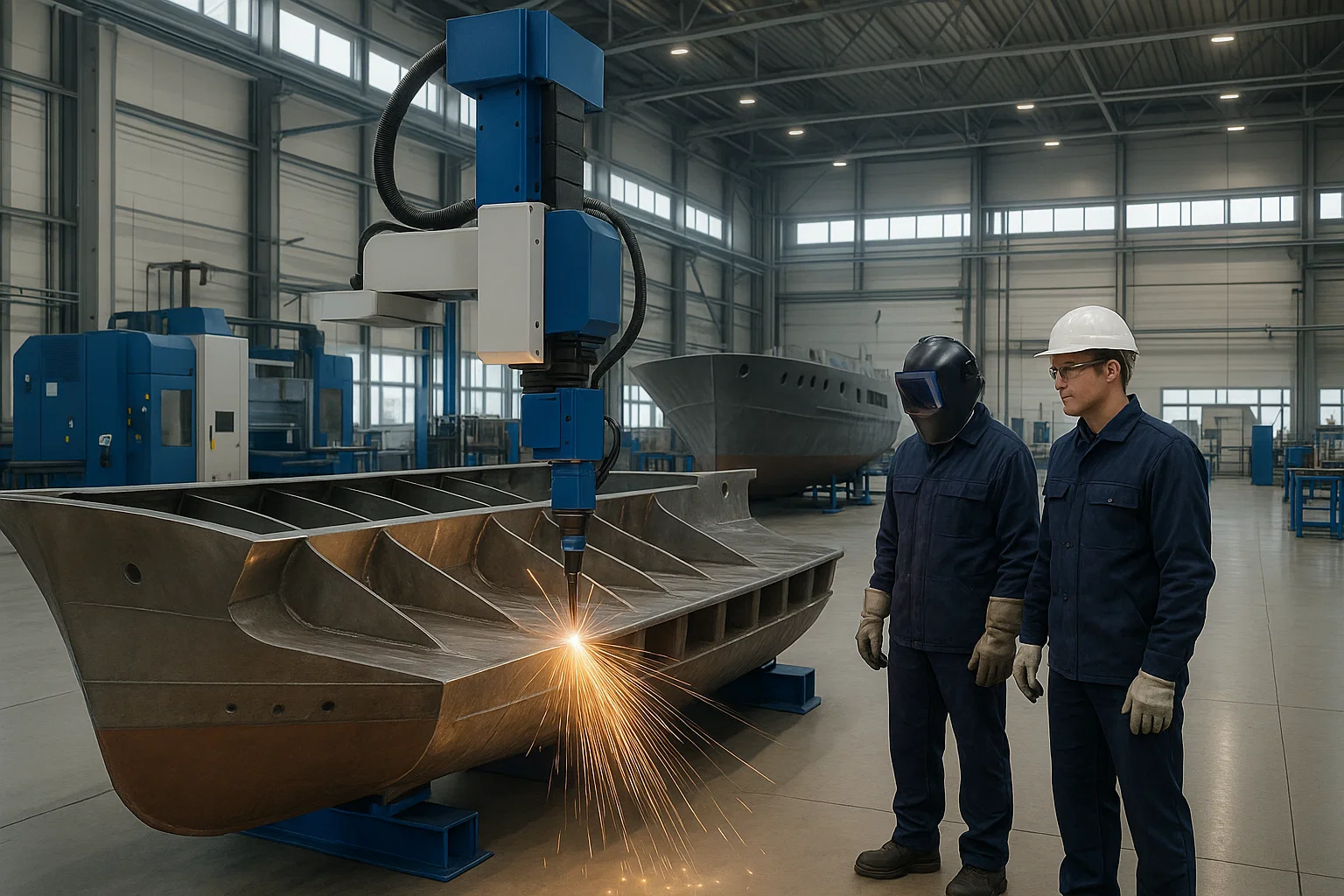
The meeting identified areas for the implementation of modern technologies in production. For the first time at Sevmash, it is planned to use laser welding and additive technologies for the manufacture of large-thickness products. Laser welding allows for joints to be made in a single pass without edge preparation, with high speed and quality, without the use of expensive materials such as fluxes or filler wire, noted Anatoly Abramov, the chief welder of the enterprise.
To implement the project, Sevmash and St. Petersburg Polytechnic University will soon sign an agreement on joint research. The goal is to develop a welding technology for samples with a thickness of at least 30 mm with the necessary mechanical properties. Information on the timing of the implementation of technologies and their impact on production is still being clarified.
The USC Sevmash enterprise, located in Severodvinsk, is one of the largest shipbuilding plants in Russia, specializing in the construction of nuclear submarines and other large vessels.
Read more materials on the topic:
USC to Reduce 70% of Staff at Khabarovsk Shipbuilding Plant
Work Completed: Renovated Pier at Makhachkala Port Put into Operation
Never miss our newsAdd this site to your preferred sources to see us more oftenAdd on Google

















