Ural scientists have developed a solid oxide fuel cell (SOFC) with a new design of functional layers, which simplifies production and reduces its cost. The development was carried out by specialists from the Ural Federal University (UrFU) and the Institute of High-Temperature Electrochemistry of the UB RAS with the support of the Russian Science Foundation. The research results arepublished in the scientific journal Nanomaterials.
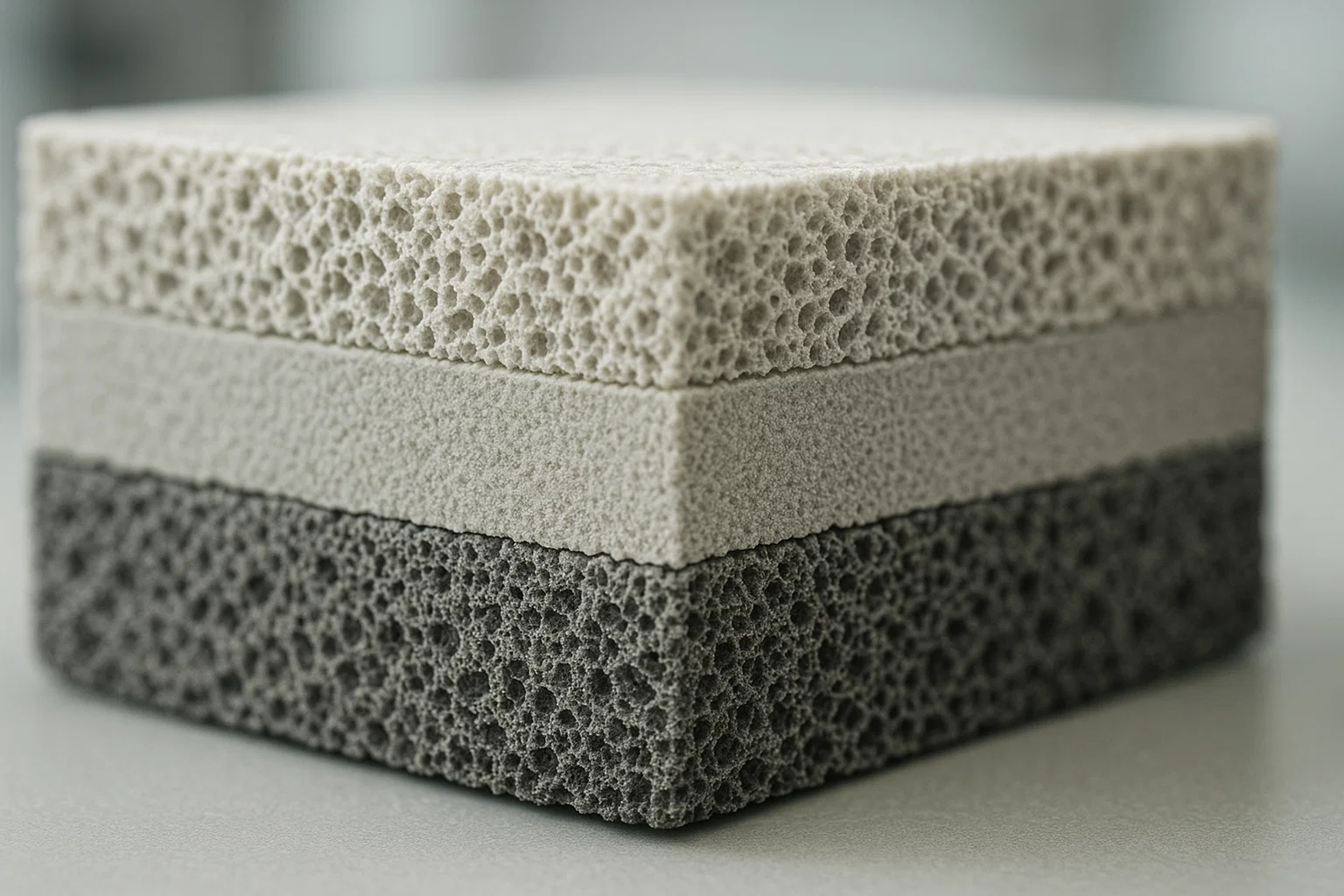
The new approach involves using materials with identical ionic composition for the anode, cathode, and electrolyte. This increases their compatibility, reduces chemical interaction, and increases the service life of the device. According to senior researcher Denis Osinkin, the key reagents for production - lanthanum and gallium compounds - are mined in Russia, which in the future will allow organizing a full production cycle within the country.
The identical ionic composition of all functional layers of the fuel cell increases their affinity for each other, which significantly reduces the chemical interaction of the layers. This allows the device to function longer than existing analogues, which is noticeable both during the manufacture of a single electrochemical cell and during the operation of several elements. In addition, for the production of SOFCs of our proposed design, the most expensive reagents are lanthanum and gallium compounds, which are mined in Russia.
During tests at a temperature of 800°C, the new elements worked for more than 950 hours, showing minimal degradation and maintaining low resistance. This stability allows us to predict the durability of the technology. Unlike classic designs with heterogeneous layers, the new design reduces the technological chain of production, which leads to lower costs.
To get closer to the industrial production of SOFCs, an important step is the transition to high-performance technologies for producing the supporting electrolyte layer, for example, to the slip casting technology. It will increase both the number of ceramic plates and their geometric dimensions. After obtaining the first enlarged electrochemical cell, it will also be necessary to ensure its stable operation in a single copy and in a stack, which will allow testing the full-fledged device in operating mode.
The introduction of such technologies is still hampered by infrastructural factors, including the high cost and complexity of hydrogen delivery. The next stage of the research will be to scale the development and test large-format elements using industrial production methods.
Read more materials on the topic:
No diesel - it will run on oil: a prototype of biofuel based on rapeseed oil was created at NovSU
Control a drone with your hand: a development by MEPhI allows you to control UAVs with a glove
Never miss our newsAdd this site to your preferred sources to see us more oftenAdd on Google













![Growth Point: After 5G Launch, Mobile Internet in Russia Accelerated by 20%","subtitle":"TelecomDaily recorded an upload speed increase of 19.7%, and download speed of almost 14%","announce":""}[]}],](https://media.ixbt.site/fit-in/320x/ixbt-data/1727896/ai-image-nvgq0a0v5cjnyxwoc8xpelva.webp)