Translated with AI from the Russian original.
The Perseid meteor shower affects not only the Earth but also the Moon, gradually weakening its exosphere - a rarefied gas envelope. This conclusion was reached by scientists from Moscow State University, the Institute of Astronomy of the Russian Academy of Sciences, the Ural Federal University (UrFU), and the University of Helsinki. The research results werepublished in the journal Meteoritics and Planetary Science.
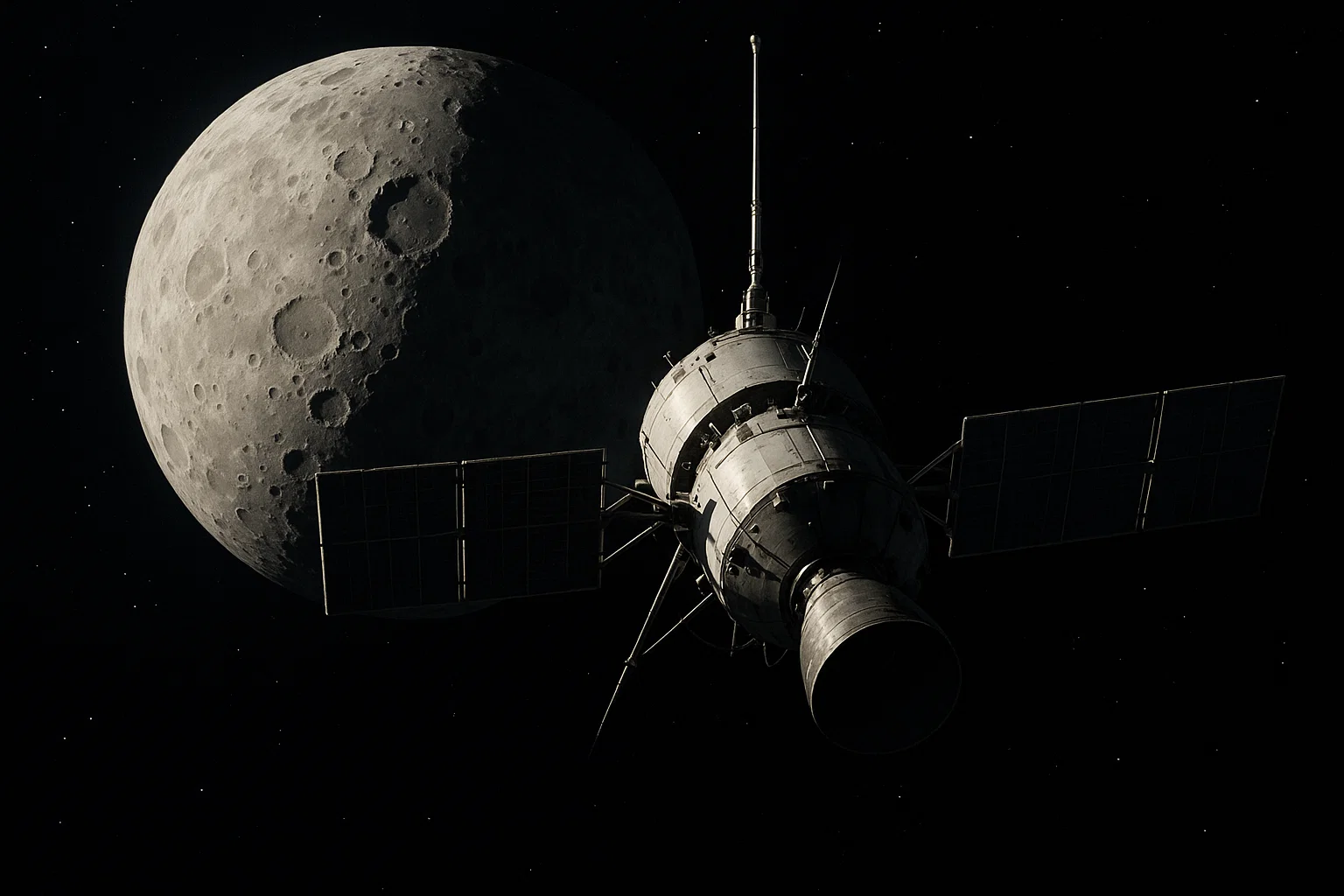
The Perseid stream occurs annually in August when the Earth passes through a plume of dust particles left by the Swift-Tuttle comet. The peak of activity occurs on August 12-13, causing a phenomenon known as the "star rain." However, as the modeling showed, these particles also reach the Moon, affecting its exosphere.
Scientists analyzed data for the last 25,000 years and identified 175 dust plumes that could reach the Moon. A computer model based on observations from 2009 confirmed that particles weighing up to 5-10 millionths of a gram per square centimeter, colliding with the exosphere, change its composition and density.
The Moon was subjected to meteorite bombardment. All objects in the Solar System that do not have an atmosphere are subject to this. This process leads to space weathering. And when preparing lunar missions, it is necessary to take into account these phenomena, which occur not only on the surface of the satellite but also in the orbits of the Moon and the Earth. Sometimes collisions of these tiny particles cause visible damage to equipment. Although the dust is very fine, it has a high speed. And our model can predict where and when you can encounter them, and not fly there. Choose landing sites and a schedule for the expedition.
The data obtained will help in planning lunar missions, allowing to avoid zones of increased meteor activity. In addition, the study contributes to understanding the processes that occurred during the formation of the Solar System.
The work was supported by the Ministry of Education and Science of Russia as part of the Priority-2030 program.
Earlierwww1.rureported that this year the Moon may interfere with the observation of the Perseid meteor shower.
Read more materials on the topic:
The Moon may interfere with the observation of the Perseid meteor shower in August
The Bion-M No. 2 biosatellite with space mice on board has been refueled and prepared for launch
Never miss our newsAdd this site to your preferred sources to see us more oftenAdd on Google

















