Translated with AI from the Russian original.
Physicists from Tomsk Polytechnic University and their colleagues from Germany have studied silane molecules and its isotopes. The research opens up new opportunities for accurately predicting the composition of gas planets in the Solar System and planetary nebulae. This was reported by the press service of the Ministry of Education and Science of the Russian Federation.
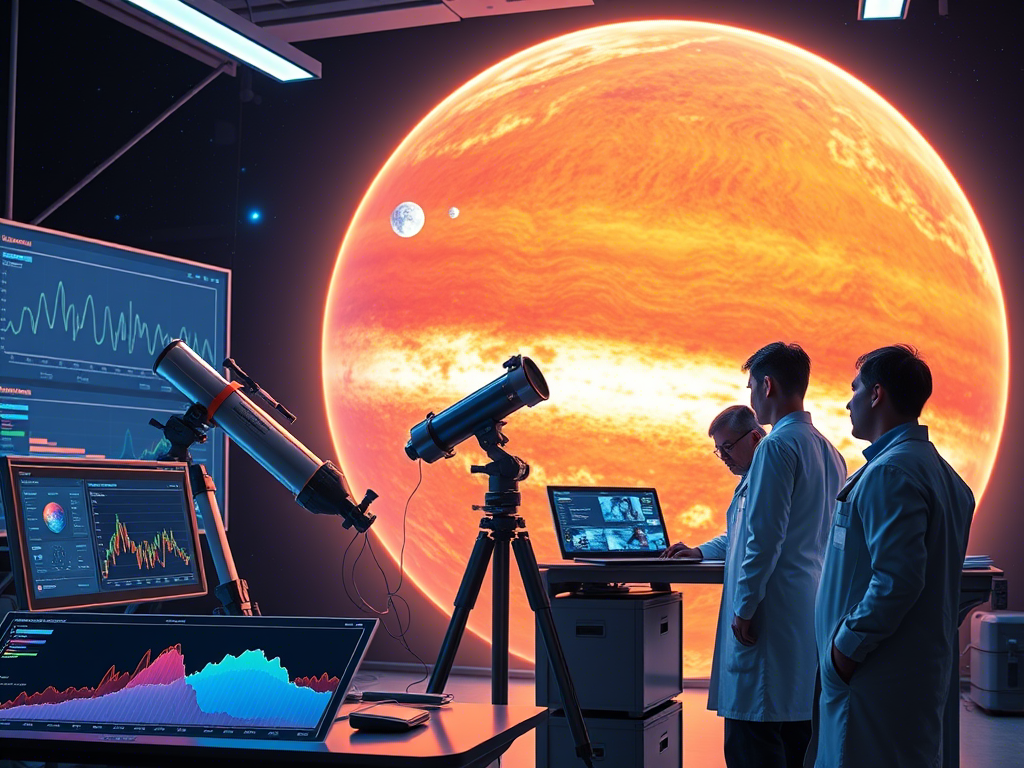
Our research focused on three isotopologues of silane with a high level of symmetry. Today, these compounds play an important role in the analysis of the atmosphere of gas planets, in the production of high-purity semiconductors, and for understanding chemical processes in such interesting objects as planetary nebulae.
The study provided accurate information on the vibrational parameters of isotopologues, including harmonic frequencies, anharmonic and resonance characteristics, as well as parameters of tetrahedral splittings. Thus, scientists obtained the most complete and accurate description of the vibrational structure of silane.
The study of the vibrational structure and parameters of the intramolecular potential function of a molecule are key aspects that underlie the solution of a wide range of practical problems in the field of molecular physics and chemistry, spectroscopy, molecular dynamics, kinetics, planetology, and industry. However, existing methods for their determination have limitations due to inaccuracy and lack of experimental data.
Researchers conducted a series of experiments with silane molecules and its isotopes. For this, they used a comprehensive approach, including the use of advanced experimental data and a specially developed analytical method. This made it possible to obtain spectroscopic data on silane, which is ten times more accurate than currently available.
The study was carried out jointly with scientists from the Braunschweig University of Technology (Germany).
Earlier, scientists from St. Petersburg State University developed a neural network model for analyzing the composition of water. Now it is possible to quickly determine the level of carbon dioxide in water bodies, which greatly simplifies monitoring the state of the ecosystem.
Read materials on the topic:
Russia is flying to the Moon: testing of the landing module model has been completed
"Chemical Shepherds" will clean the sea from fuel oil: Russian scientists have created new reagents
Never miss our newsAdd this site to your preferred sources to see us more oftenAdd on Google