Translated with AI from the Russian original.
Scientists have created a new class of metal-organic compounds. They can be used for continuous monitoring of the temperature of living beings, the press service of the Ministry of Education and Science of Russia reported. Aquarium fish provided significant assistance to the specialists.
An international group of scientists has discovered a new path to the development of highly sensitive and biocompatible thermometers. The proposed method is based on the use of coordination chemistry of luminescent two-dimensional materials. Scientists believe that the development opens up opportunities for a wide range of applications in biomedicine.
Researchers have developed innovative two-dimensional metal-organic structures that meet the criteria of biocompatibility and provide effective luminescent thermometry in the body. As a result, nanosheets were created that can be safely introduced into living organisms, maintaining their functionality for a long time.
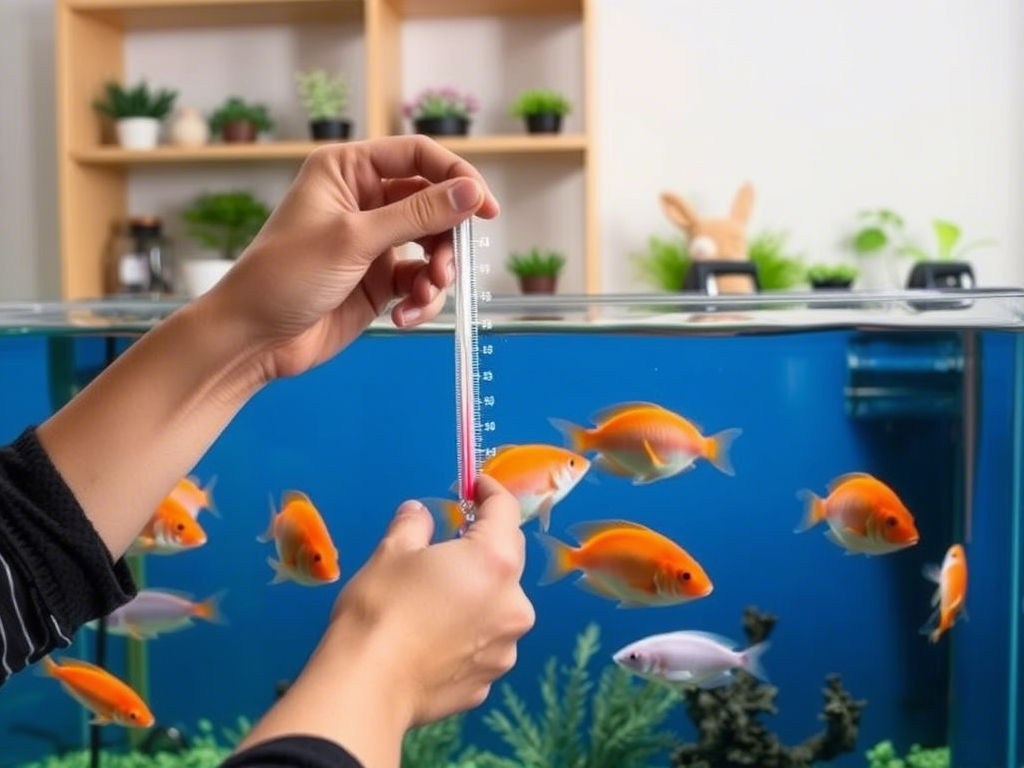
Popular laboratory fish Danio rerio were taken as test subjects. During the experiment, scientists discovered that luminescent nanosheets change color depending on the body temperature of the fish. At the same time, the behavior of the fish in the experimental group did not differ from the behavior of the fish in the control group, and all the fish survived after the experiment.
The method of luminescent thermometry, which does not harm animals and does not require surgical intervention, provides high accuracy and speed of measurements with a high level of detail. This opens up prospects for the development of new biocompatible temperature sensors.
The main part of the study was carried out at ITMO University and the V. A. Almazov National Medical Research Center in St. Petersburg, as well as at the University of Lorraine in France and the A. V. Zhirmunsky National Scientific Center of Marine Biology FEB RAS in Vladivostok.
Earlier, scientists from Sechenov University, together with colleagues from the Medical University of Vienna, developed a recombinant vaccine for the treatment of cat dander allergy.
Read more materials on the topic:
First in the world: Russian geneticists "revived" frozen mouse embryos
In Russia, a technology for 3D printing of human tissue from living cells has been developed
Thinking at the speed of light: MIPT scientists are developing a photonic brain using nanolasers
Vessels in the light: an innovative method for examining the human body has been developed
Never miss our newsAdd this site to your preferred sources to see us more oftenAdd on Google

















