Scientists at the University of MISIS have created detectors that will help create detailed space maps. This will help in scientific research.

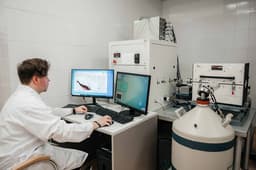
The developed detectors can operate at temperatures below 1 Kelvin. During their operation, thermodynamic noise remains very low. They capture terahertz waves, located between radio waves and visible light.
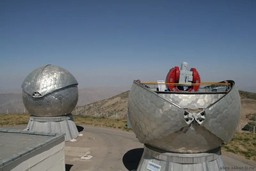
The use of short waves opens up opportunities for creating devices for aperture synthesis, which allows for radio observations with high angular resolution on small radio telescopes. This, in turn, helps to explore the distant Universe.
Several detectors can be combined into an array for simultaneous observations at different frequencies or for obtaining images similar to photographs. This is useful for research and allows studying previously inaccessible areas.
In addition, MISIS was able to combine two RFTES bolometers. The device is similar to scales with identical weights. If there is a signal difference, it does not deviate, it is in equilibrium. The detector responds to the slightest radiation gradients from the extensive surface of objects. It can be used to study the inhomogeneities of the background radiation of the Universe caused by the Big Bang.
Read more on the topic:
Mice may be sent to conquer space
Cheaper than NASA: scientists have developed a refueling tanker for space satellites
Scientists in Crimea have modernized a telescope and made a discovery