An analysis of the use and failure of Russian armored weapons and equipment (BTVT) was conducted by Sergey Tishin, Lieutenant Colonel, Candidate of Pedagogical Sciences, Senior Lecturer at the Omsk branch of the Military Academy of Logistics named after General of the Army A.V. Khrulev. The research results were published in October in the journal "Material and Technical Support of the Armed Forces of the Russian Federation".
According to the Lieutenant Colonel, all Russian BTVT models, when conducting combat operations in populated areas, showed low survivability when attacked by enemy anti-tank grenade launchers from a distance of up to one hundred meters in the most vulnerable places. The defeat led"to the destruction of components and assemblies of the MTO, failures of the stabilizer, automatic (mechanism) loader, penetration (cracks) in internal fuel tanks, destruction of optical and optoelectronic systems, melting (destruction) of electrical wiring, failure of communication equipment".
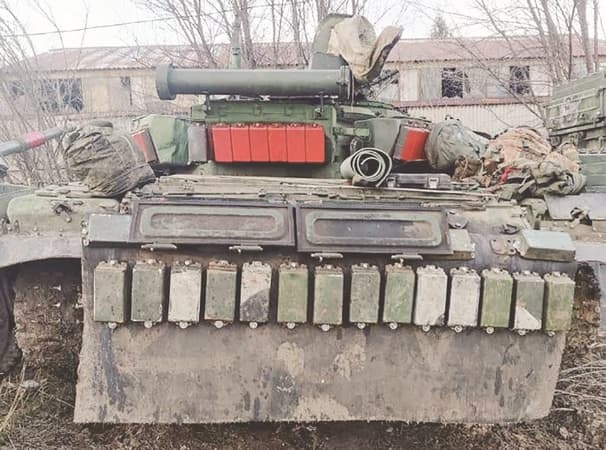
The protection of tanks without the use of dynamic protection did not ensure the operability of the main systems and personnel when a cumulative grenade hit. The use of add-on dynamic protection revealed a number of shortcomings. From one hit (as a result of the activation of a protection element), 3‒5 neighboring containers are torn off, which increases the total area of unprotected armor.
During the study of the causes of ammunition detonation in tanks and infantry fighting vehicles, a number of design flaws were identified in the layout of the fighting compartment, in the placement of ammunition and fuel in unarmored compartments, in the use of a fire extinguishing system with thermal sensors that do not provide reliable suppression of fire sources either in the MTO or in the fighting compartment. The design and placement of night vision devices for aiming, observation and reconnaissance showed their low survivability from small arms fire and illumination from fires and shots from neighboring tanks.
The expert noted more than ten of the most common problems of serial BTVT models during combat operations: from the lack of a unified unification and interchangeability of parts to the design of the entrance windows of sights, the difficulty of evacuation for driver mechanics, and the lack of a place on tanks to store a set of VKPO and personal belongings of military personnel.
There are also problems that have become typical for specific BTVT models.
Typical places of combat damage to BMP-1, BMP-2, BMP-3, received as a result of being hit by anti-tank grenade launchers, as well as from direct or fragmentation damage from mines, are distributed mainly along the hull, in the locations of the landing party, in the MTO. When an RPG-7 grenade hits, through penetration of the armor (from side to side), displacement of the turret (BMP-2) as a result of the destruction of the turret ring, jamming of hatches and doors (BMP-3) were observed. With direct impact of mines and fragments from a short distance, penetration of armor and fuel tanks in the doors of the troop compartment occurred, followed by ignition of the BMP and detonation of ammunition, a characteristic sign of which is the tearing off of the turret and its flight 5‒7 m from the vehicle hull.
Armored personnel carriers BTR-70 showed almost complete unsuitability for combat use in these conditions. The personnel of motorized rifle units prefer BTR-80, BTR-82 as better protected and more comfortable inside, equipped with a diesel engine. The use of this kind of equipment in combat operations showed that the armor is penetrated by fire from large-caliber machine guns throughout the hull, damage also occurred from mine fragments. The destruction of the BTR was also carried out by RPG-7 by shelling the locations of the landing party and the engine compartment.
Tishin proposes to ensure the protection and survivability of Russian BTVT from high-precision enemy weapons by equipping BTVT with passive and active protection means and other additional equipment. This includes, in particular:
- signaling systems to facilitate the search, detection, recognition and identification of BTVT in case of damage;
- automated smoke screen deployment systems in case of damage. They will help the crew evacuate, and also help to notice the combat loss;
- possible equipping of the driver mechanic with a single combined observation device having both day and night channels, or the use, in addition to the optical devices of the driver mechanic, of standardly installed low-level television cameras operating day and night;
- laser irradiation indicators of the visible and near infrared range (up to 1.06 μm);
- protection elements for observation devices and sights on the hulls and turrets of tanks and vehicles for all conditions of their use;
- navigation equipment and automation tools for control and ballistic training, improving the accuracy of determining target coordinates and calculating firing settings to increase their autonomy.
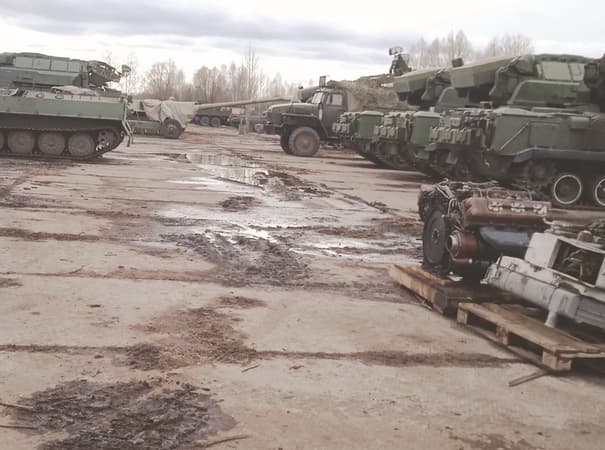
Separately, Tishin criticized the state of weapons and military equipment at storage and reserve bases in recent years, due to which, with the start of the SVO, armored vehicles arrived to military personnel on the front line with malfunctions, incomplete spare parts and other problems. He explained this situation by a number of reasons, the main of which were"the transfer of weapons and military equipment to the CBRT according to their actual technical condition, under-delivery of spare parts, a large shortage of personnel due to the reduction of military positions and their replacement by civilian personnel".
Read materials on the topic:
"Kalashnikov" Will Release New Thermal Imagers "Kudesnik", "Mangust" and "Pigmei"
Now on home

Start of deliveries scheduled for 2027

Over 51,000 new motorcycles were sold in Russia in 2025

The car will take at least a year to assemble

The application's audience has reached 20 million users

The model will be included in the list of cars for taxis, price - from 2.25 million rubles

All parking lots of the "Administrator of the Moscow Parking Space" are connected to the service

The cars will be supplied to the Moscow Transport Service Directorate

Deliveries to India may begin in 2028

The technology provides automated search for all types of defects in power units

The plane flew 500 km, accelerating to 425 km/h

The plant stated that the information about the termination of purchases for models 6 and 8 is not true

Scientists are using the "Ekran-M" installation
Articles
-
Russian An-124 "Ruslan" Stuck in Canada for 4 Years and Accrues Millions in Fines
26 Jan 2026
-
Coaxial Propellers: How Counter-Rotation Increases Turboprop Engine Efficiency
25 Jan 2026
-
Kazan Aviation Plant Breaks Old System: Tu-214 to be Assembled Like Cars
25 Jan 2026
-
How Engineers and Technicians Are Paid Today in the Russian Aviation Industry: An Overview with Figures
24 Jan 2026