More than 2.5 thousand scientists from over 100 Russian universities and institutes use the "Lomonosov-2" and "MSU-270" supercomputers in their research, according to Viktor Sadovnichy, Rector of Moscow State University. The "Lomonosov-2" supercomputer has a performance of 5 petaflops, and the "MSU-270" has 400 petaflops. These data were announced at the opening of the All-Russian "Science 0+" festival, which aims to popularize science.

Sadovnichy spoke about the significance of the "Lomonosov-2" and "MSU-270" supercomputers in scientific research. These systems have a capacity of 5 and 400 petaflops, respectively, and are actively used by more than 2.5 thousand researchers from over 100 Russian universities and institutes of the Russian Academy of Sciences.
Sadovnichy emphasized the importance of such capacities for the development of scientific research, especially in the field of artificial intelligence and molecular biology. He also noted that the "Science 0+" festival coincides with the awarding of the Nobel Prizes, which allows highlighting the achievements of Russian scientists.
In the context of discussing molecular biology, Sadovnichy noted that the foundations for the study of microRNAs, for which the Nobel laureates were awarded, were laid at Moscow State University. This discovery contributed to the development of regenerative medicine, which is actively developed at the Institute of Regenerative Medicine of Moscow State University under the leadership of Academician Vsevolod Tkachuk.
Read more on the topic:
Russian company K2Tech launched two lines of supercomputers
114.67 teraflops: Russian supercomputer "Sergei Godunov" modernized
Now on home

Герой России Гарнаев: никто из профессионалов о возобновлении производства на КАЗ всерьёз не говорит
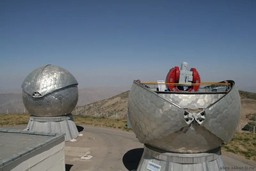
Система отслеживает спутники на высотах до 50 000 км и ведёт за ними наблюдение
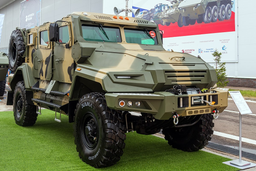
The armored vehicle is equipped with a KamAZ-740.35-400 diesel engine with a power of 400 hp.
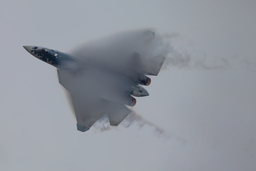
Constant improvements in avionics, weapons and tactical capabilities will make the aircraft a flexible response to future challenges

The exterior of the KamAZ-54901 features fairings on the cab and chassis for fuel economy
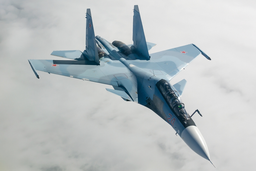
Fighters are in demand both domestically and abroad
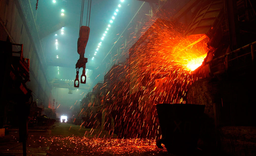
Tyazhpromexport and Venezuela Agree on Plant Revival
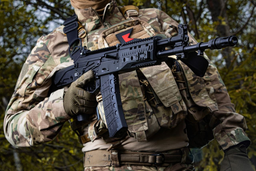
The company not only completed the state order, but also quickly mastered the production of AK-12K for special forces
Experts have developed a photogrammetric complex with a resolution of less than 1 cm