The anthropomorphic robot Marfa will never fly into space, but it can become a platform for a new generation of space robotic systems that will fly to other planets. This was stated to IA "TASS" on the sidelines of the EEF by the executive director of Marfa's developer company, NPO "Android Technology", Evgeny Dudorov.
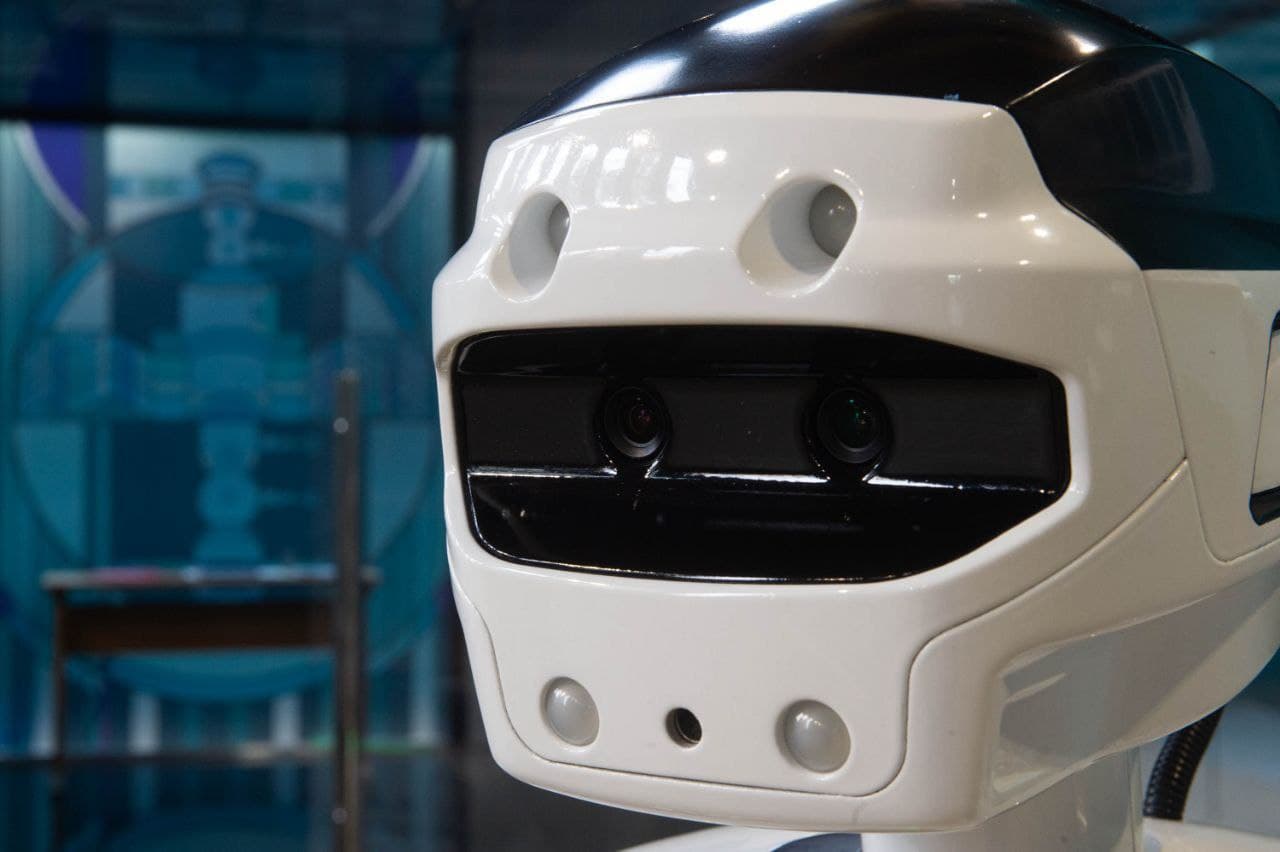
Marfa definitely won't fly for one simple reason — she was created for Earth conditions, and it is necessary to ensure that the robot is initially created for working in the vacuum of space, where there is cosmic radiation, and even extreme temperatures.
According to him, Marfa is primarily a simulator for preparing astronauts to work with similar platforms in the future, since "conceptually similar robotic systems may be created in the future" will also be used on the Moon. The operator can be located either on the ship or the ISS, or on Earth.
Earlier this summer, at the Cosmonaut Training Center, astronauts Anna Kikina, Dmitry Petelin, and Ivan Wagner conducted experiments on controlling the robot Marfa. At that time, the Cosmonaut Training Center noted that she is practically the successor to the robot Fedor, who visited the ISS in 2019, and some of Fedor's developments were used in her construction. Two interaction options were tested: in an emergency, the astronaut controls the robot manually, in normal mode Marfa operates automatically.
Read materials on the topic:
Robot DIMA may become the first Russian on the Moon
Resistant to radiation, controlled from Earth — Russia is developing a space "Teledroid"