VERA is a product of a small innovative enterprise - STAR LLC (Satellite Technologies and Space Development) at the National Research Nuclear University MEPhI. The enterprise was created and launched by the university and an initiative group of its employees.
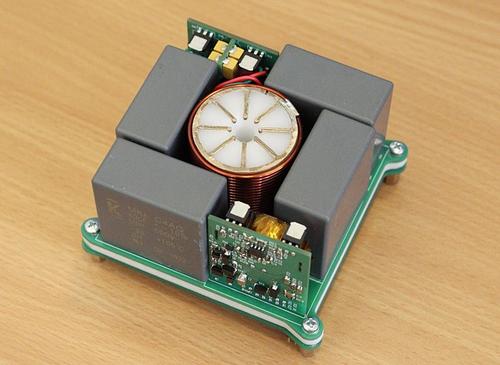
VERA (an abbreviation for "Volume-Effective Rocket-propulsion Assembly") was developed at the Plasma Rocket Engine Laboratory of NRNU MEPhI. According to the developers, it is the best in Russia among engines of this class in terms of size, weight, energy efficiency and operational safety.
In near-Earth orbit, such installations perform several tasks:
- correct the orbit of the spacecraft, allowing to increase the service life of the satellite and the payload installed on it;
- allow you to build and optimally distribute devices over the earth's surface that are part of multi-satellite groupings;
- help to bring satellites with expired service lives into the Earth's atmosphere, freeing near-Earth space from space debris.
VERA is already successfully operating in space. It was received by three satellites, including NRNU MEPhI's own remote sensing satellite "Svyatobor-1".
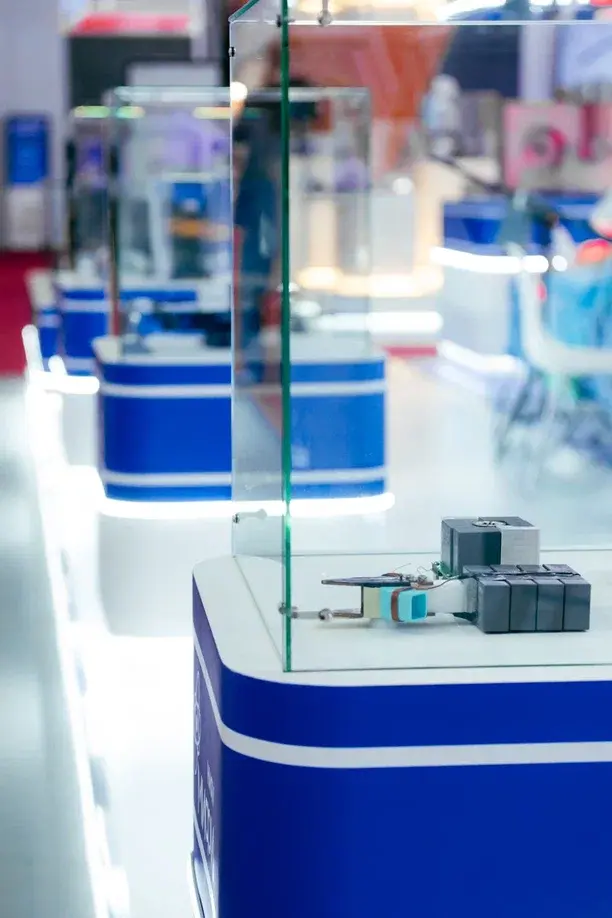
Now, STAR plans to put the production of installations on stream, the engines will be assembled by company employees on the territory and infrastructure base of NRNU MEPhI. The first sales will be held before the end of 2024.
The task of the innovative enterprise will be the serial production of propulsion systems of various types, including plasma ones, intended for small spacecraft - nano- and microsatellites (CubeSat format and their analogues in size), and in the future - for spacecraft of greater mass and size.
The volume of the Russian market alone for engines of this type is about 70 units per year. And this is only to meet the needs of large Russian space companies, such as, for example, Sputniks LLC and Geoscan LLC. However, at present, as noted in NRNU MEPhI,"the most important task of an innovative enterprise is to increase the reliability of the propulsion system electronics and, in particular, the transition to a domestic electronic component base".
Read materials on the topic:
ODK launched a new test bench for helicopter engines
Russian plasma engines SPD-70M on xenon and krypton will be launched into mass production
Russia is working on a new rocket engine for flights into deep space
Never miss our newsAdd this site to your preferred sources to see us more oftenAdd on Google

















