In just a few days, a rare full moon can be observed on Earth. A few days before it, the Moon will be close to its perigee, that is, it will approach the Earth at the closest possible distance in a month. It will become clearer for a few days - this is the so-called supermoon, which happens several times a year. But in August 2024, the supermoon coincides with the "Blue Moon": this is the name of a rare and actually the second full moon in a month on Earth.
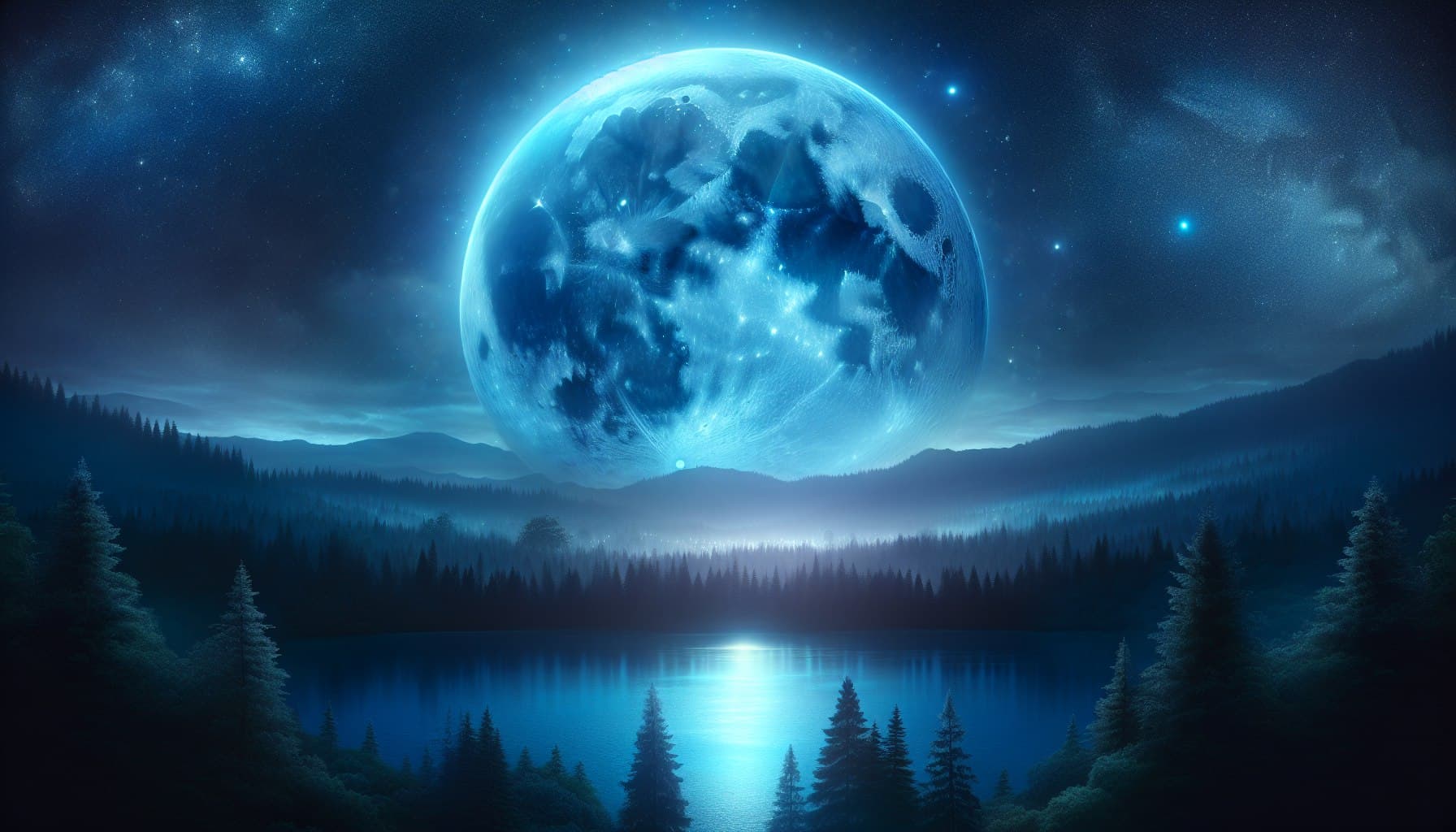
This does not affect the color of the Earth's satellite, the Moon became "blue" because of the English expression "Once in a Blue Moon", which means a very rare event.
The "Blue Moon" is seasonal and calendar. The seasonal one falls on the third of the four full moons in an astronomical season that has four full moons. The calendar one is just the second full moon in a month. The combination of supermoons and "blue moons" occurs once every 10-20 years. In particular, according to NASA, the next pair of such moons is expected in the sky only in January and March 2037.
In August, astronomy enthusiasts could already observe the peak of the Perseid meteor shower and a fairly rare conjunction of Mars and Jupiter. Ahead of them on August 21 and 22 is another event: the Moon covering Saturn and Neptune. The eclipse will be visible on the territory of Russia, but the Moscow Planetarium warns: observation can only be carried out with a telescope.
Extreme caution is needed when pointing binoculars or a telescope at the sky when the Sun is above the horizon, as even a fleeting glance at the Sun through such a device can lead to permanent blindness.
Read materials on the topic:
"Scenarios are not defined": The Sun is increasing the activity of flares after a month of calm
What can the new Russian CubSat "Khors" do, which "Baumanka" brought to "Army-2024"