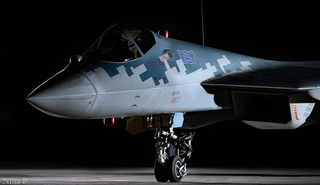
The 4th generation Su-35S fighter jet is without an upper speed brake, although the previous Su-27 had one. In the new version, designers abandoned a separate flap and its actuator, transferring some of the aerodynamic braking functions to the rudders.
"Pervy Tekhnichesky" explains how a combat aircraft weighing 34.5 tons, reaching speeds of up to 2500 km/h, reduces speed during maneuvering and landing.
Instead of a speed brake — two rudders
The KSU-35 integrated control system on the Su-35S can simultaneously deflect the rudders outwards, in different directions from the longitudinal axis. In this position, they increase drag and act as an aerodynamic brake.
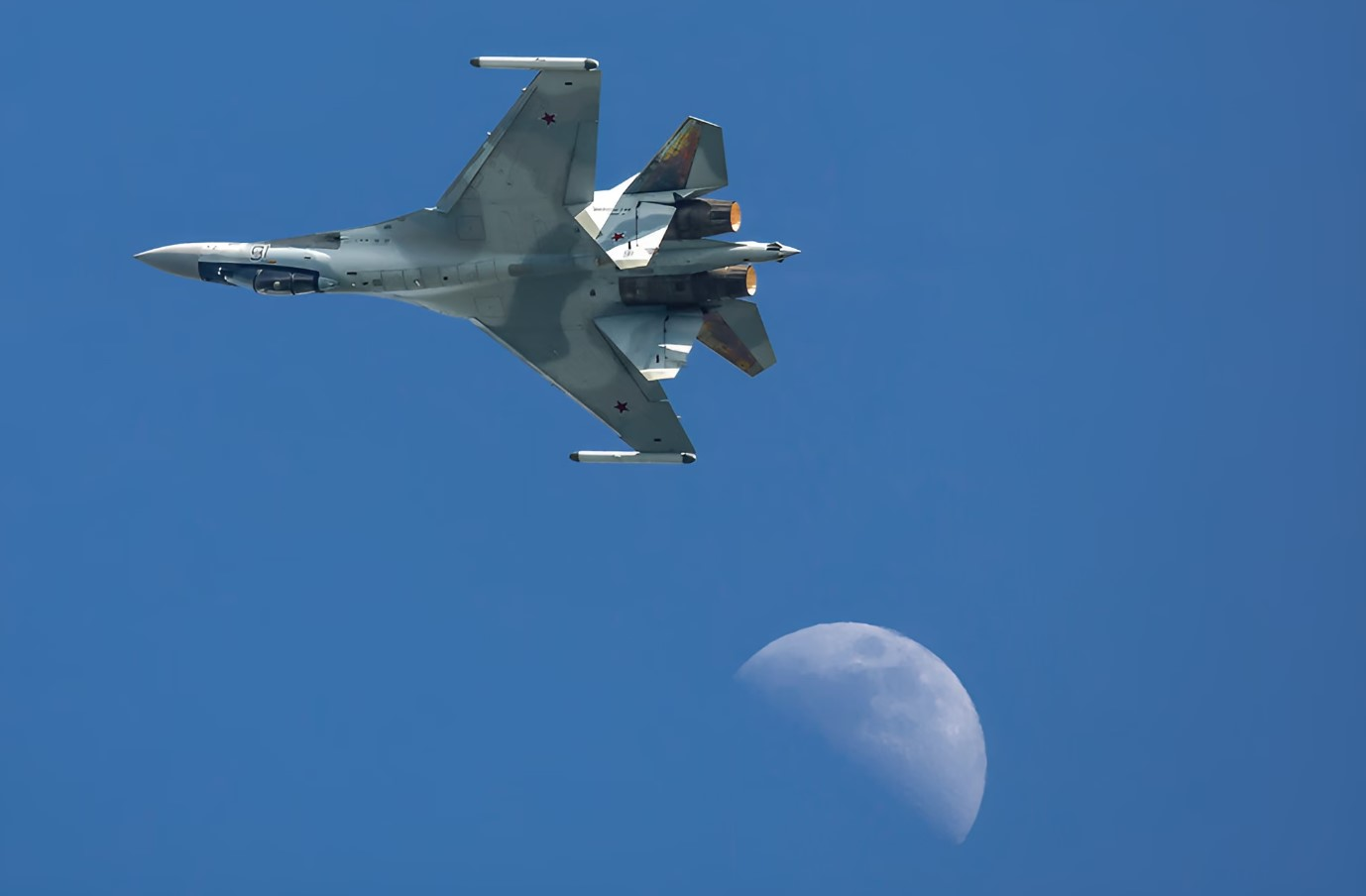
A separate large flap is not needed for this. The rudders already have actuators and are part of the control system.
The AL-41F1S engines also participate in air speed reduction. By deflecting the nozzles in different directions, the control system can sharply change the thrust vector and create an additional braking effect when performing maneuvers with a large loss of speed.
The parachute wasn't forgotten either
After touchdown, the main work is performed by the wheel brakes, and then, if necessary, the braking parachute is engaged. By the way, it is also used on the newest Su-57; "Pervy Tekhnichesky" discussed in an article why the fifth-generation fighter still has it, while the F-35 and F-22 do not.
The official UAC website states that the estimated landing roll of the Su-35S with a concrete landing weight is about 700 m using wheel brakes and a braking parachute.
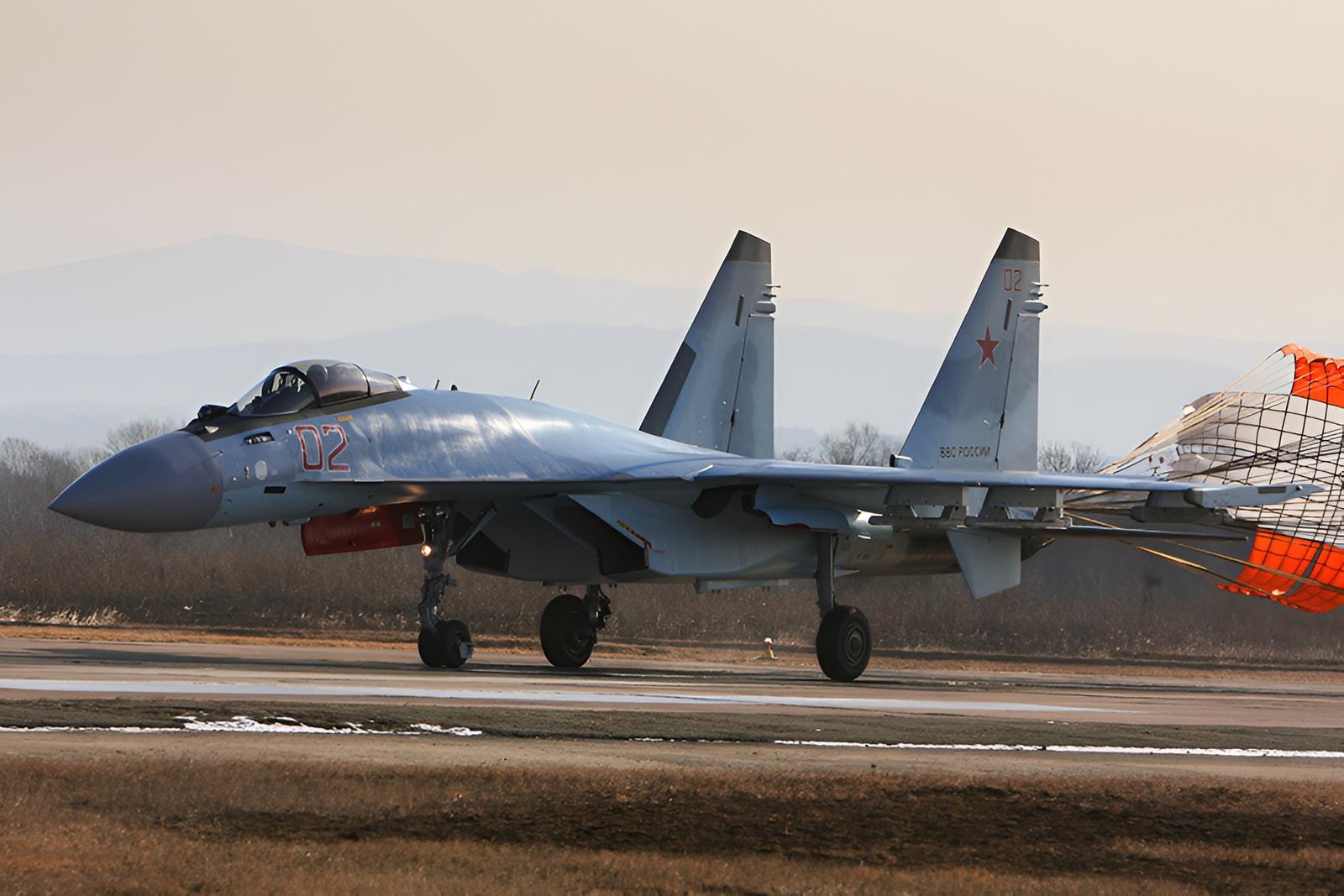
At a maximum takeoff weight of 34,500 kg, two AL-41F1S engines develop a total of up to 29,000 kgf of thrust in afterburner. The aircraft received reinforced landing gear capable of operating with significantly greater weight than earlier Su-27 family aircraft.
Why the Su-35 abandoned the speed brake
Recall that on the Su-27, the speed brake was a separate large element of the fuselage. The Su-35 received a more integrated control system: the same rudders can create additional drag without a separate mechanical flap.
The pilot still has aerodynamic braking with rudders, thrust vectoring, wheel brakes, and a braking parachute at their disposal.
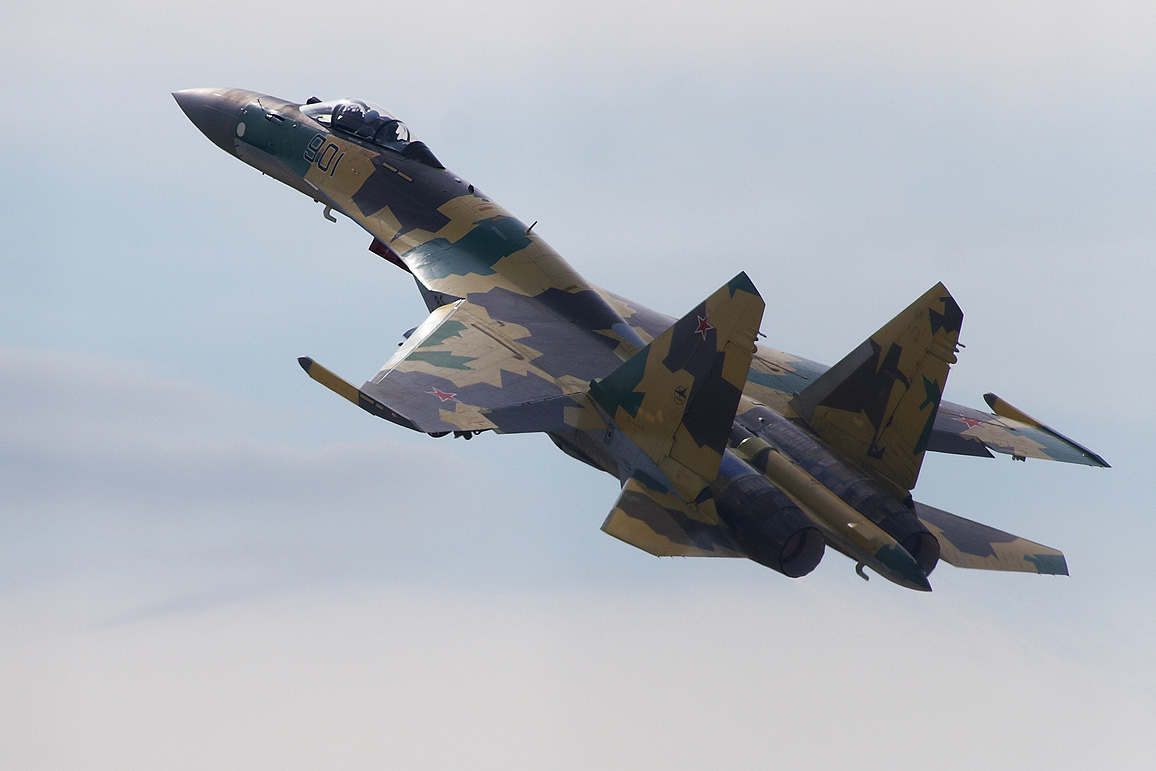
As a result, the Su-35 managed without a separate speed brake, retaining several other control elements.
Read more on the topic:
Never miss our newsAdd this site to your preferred sources to see us more oftenAdd on Google


![Growth Point: After 5G Launch, Mobile Internet in Russia Accelerated by 20%","subtitle":"TelecomDaily recorded an upload speed increase of 19.7%, and download speed of almost 14%","announce":""}[]}],](https://media.ixbt.site/fit-in/320x/ixbt-data/1727896/ai-image-nvgq0a0v5cjnyxwoc8xpelva.webp)