The F-22 Raptor's F119 engine nozzles have a flat, rectangular shape. The Su-57 is equipped with round axisymmetric AL-41F1 nozzles. Both aircraft, however, use thrust vectoring.
"Pervy Tekhnichesky" explains why Russian designers maintained the ability to control thrust in several planes at once, while Americans opted for two-dimensional thrust deflection and stealth.
Su-57 received a round nozzle with 3D vectoring
The Su-57's AL-41F1 uses an axisymmetric nozzle. Its round design allows for significantly freer deflection of the jet stream than a flat 2D nozzle.
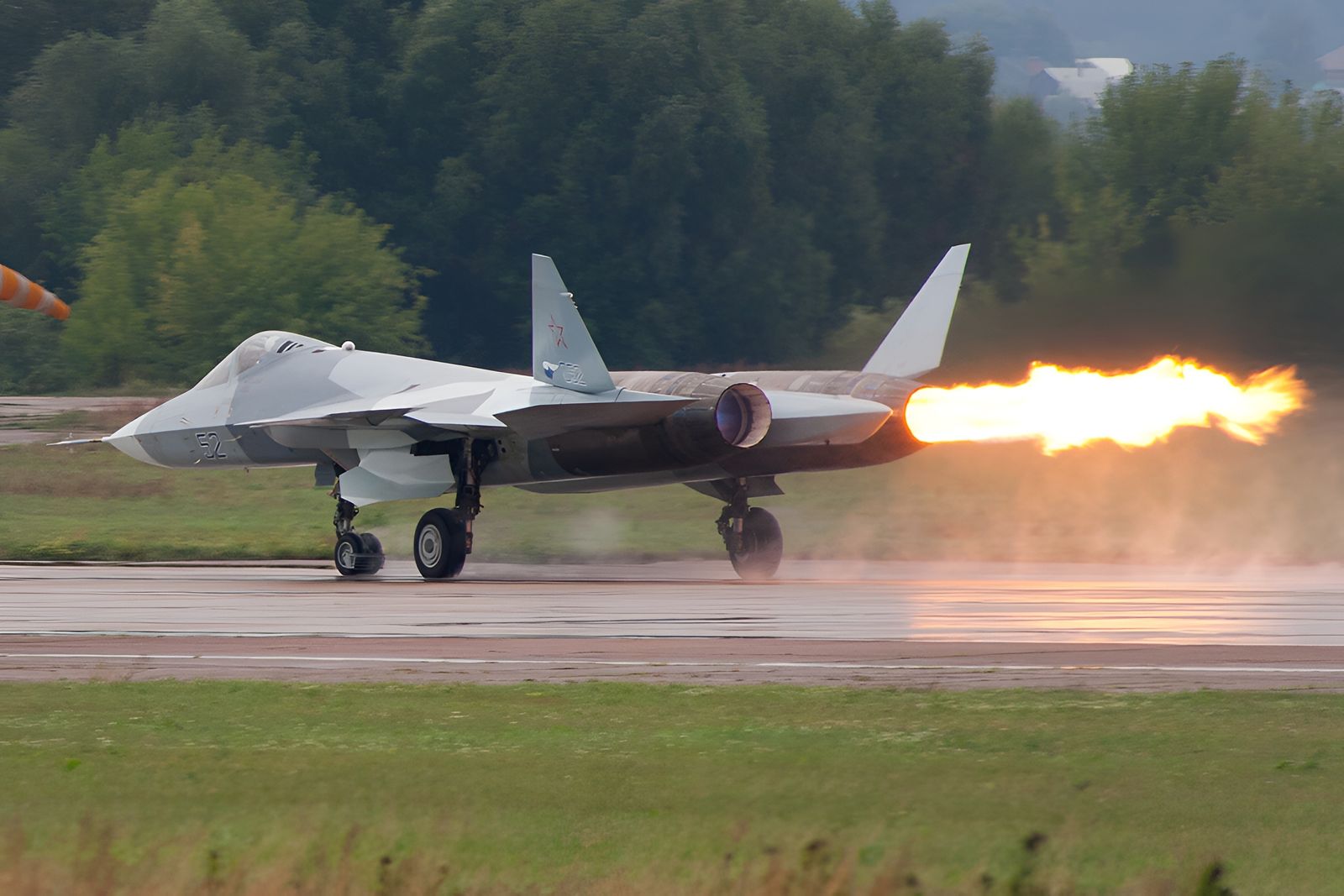
The two nozzles of the Su-57 operate in different planes: their deflection axes are angled relative to each other. Therefore, the combined operation of the engines creates control moments not only in pitch but also in yaw and roll.
This results in a fundamental difference: the F-22 has 2D thrust vectoring, while the Su-57 has 3D thrust vectoring. The Russian scheme offers more possibilities for aircraft control at high angles of attack.
F-22 deflects the nozzle only up and down
Each F119 engine develops up to 35,000 pounds of thrust – about 15.9 tf. Its nozzle has a two-dimensional converging-diverging design: movable flaps change the cross-section of the exhaust channel and simultaneously direct the jet.
The F-22 nozzle deflects by ±20°, but only in pitch – up or down. The control is integrated into the FADEC digital system and linked to the aircraft's flight control system.
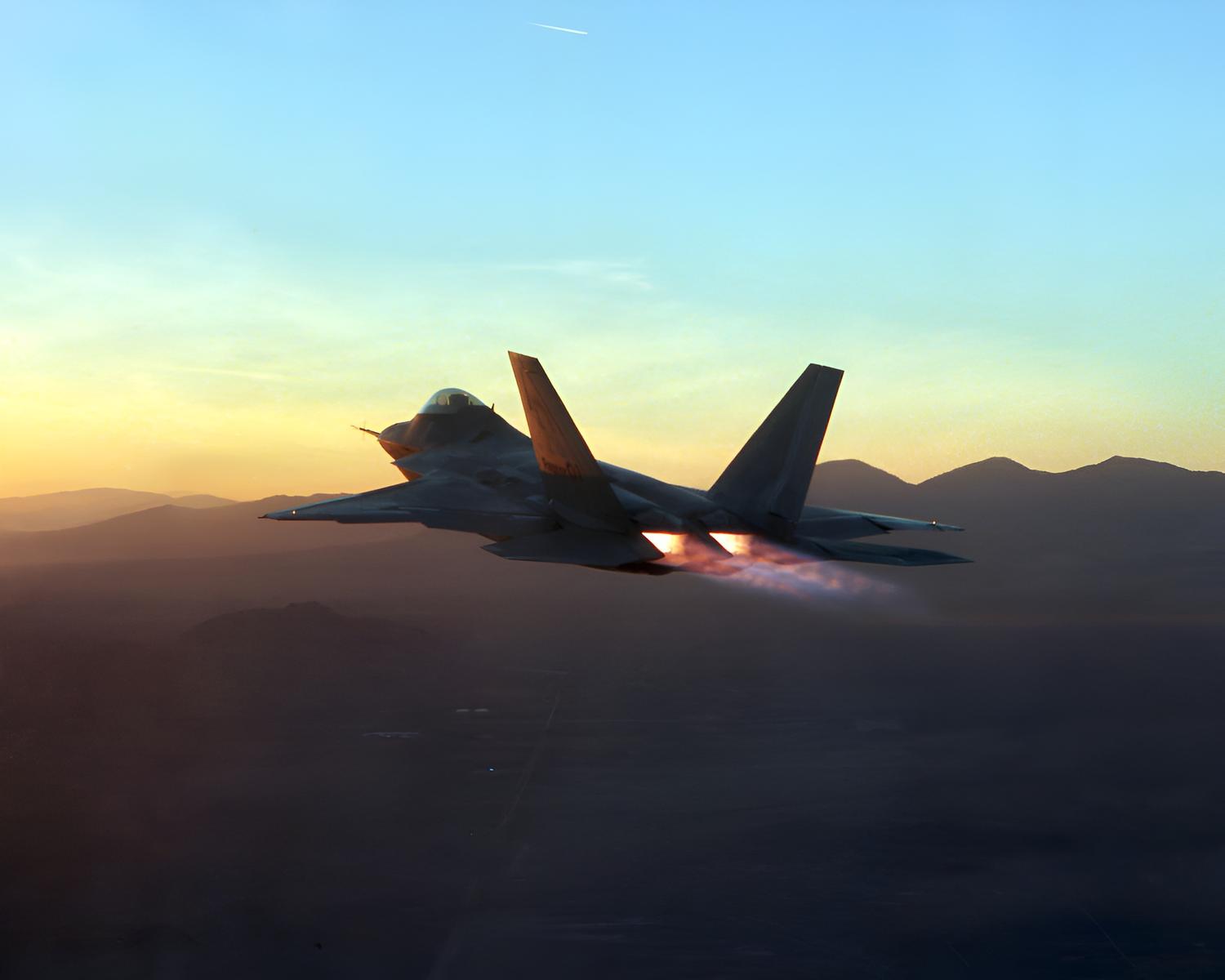
That is, the F-22 cannot turn each nozzle sideways. The aircraft achieves yaw control with aerodynamic surfaces, and thrust vectoring primarily assists with pitch maneuvers.
Why the F-22 had to "flatten" its nozzle
A flat nozzle solves another problem – reducing observability in the rear hemisphere. The rectangular exhaust gas flow mixes faster with the surrounding air, and the nozzle shape limits direct visibility of hot engine parts.
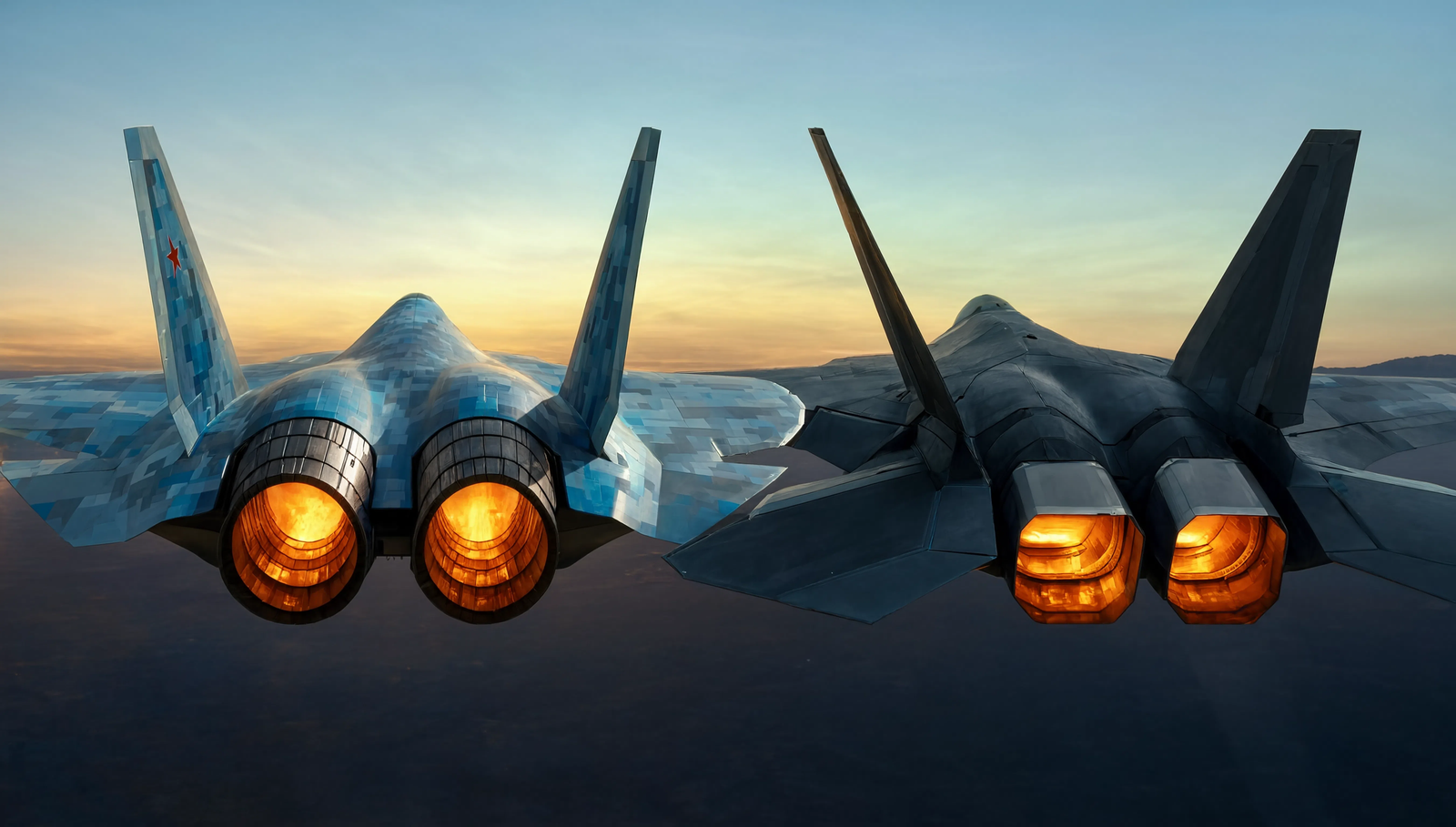
But stealth came at the cost of limiting thrust vectoring to a single plane. The Su-57 chose a different compromise: a round axisymmetric nozzle fits less well into the concept of reducing infrared signature, but it allows for more versatile jet stream control.
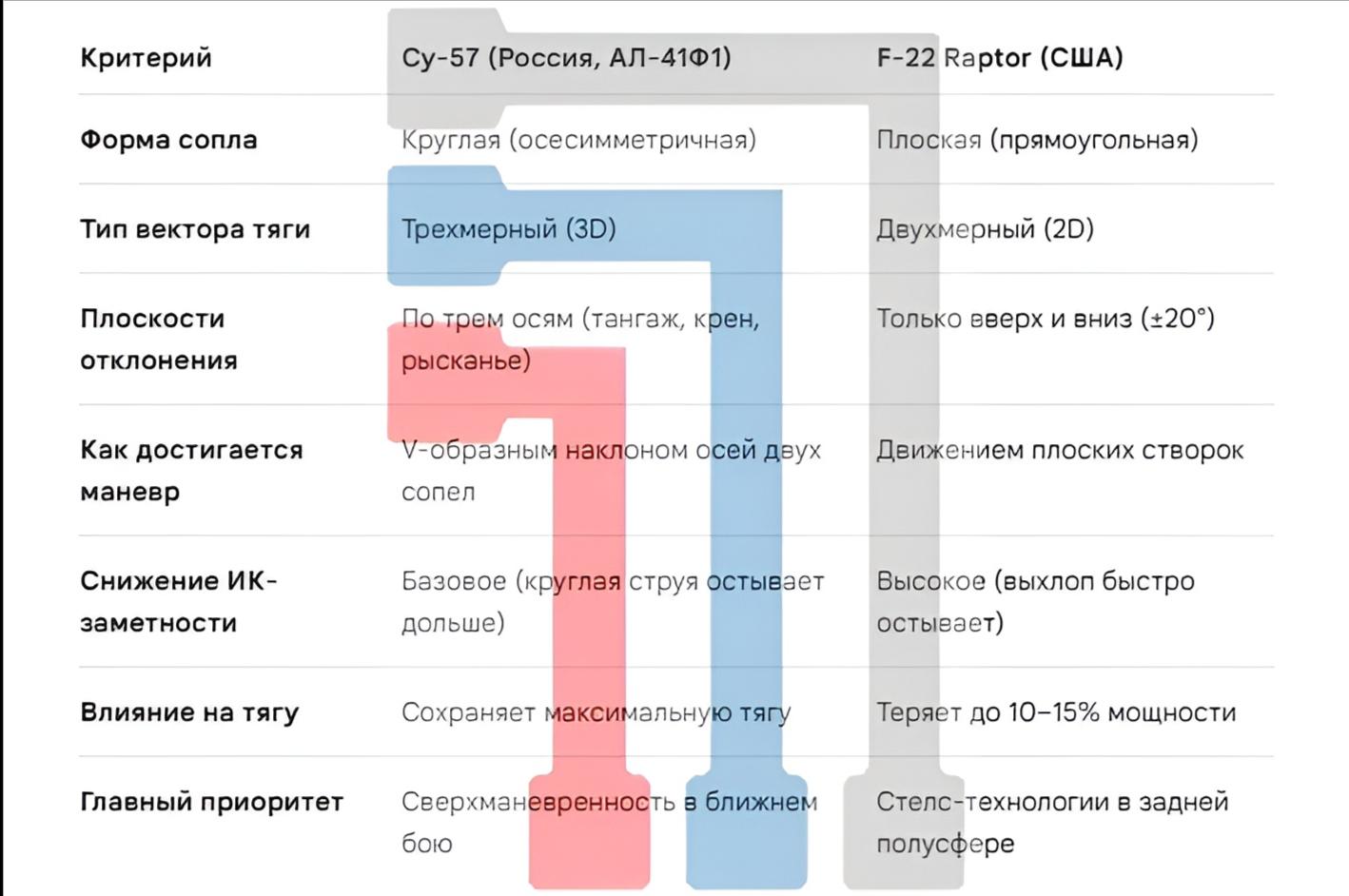
Therefore, the F-22's flat nozzle cannot simply be called more modern. The Americans gained ±20° deflection up and down and won in stealth. The Su-57 retained a round nozzle and gained 3-axis thrust control.
Read more on the topic:
Never miss our newsAdd this site to your preferred sources to see us more oftenAdd on Google