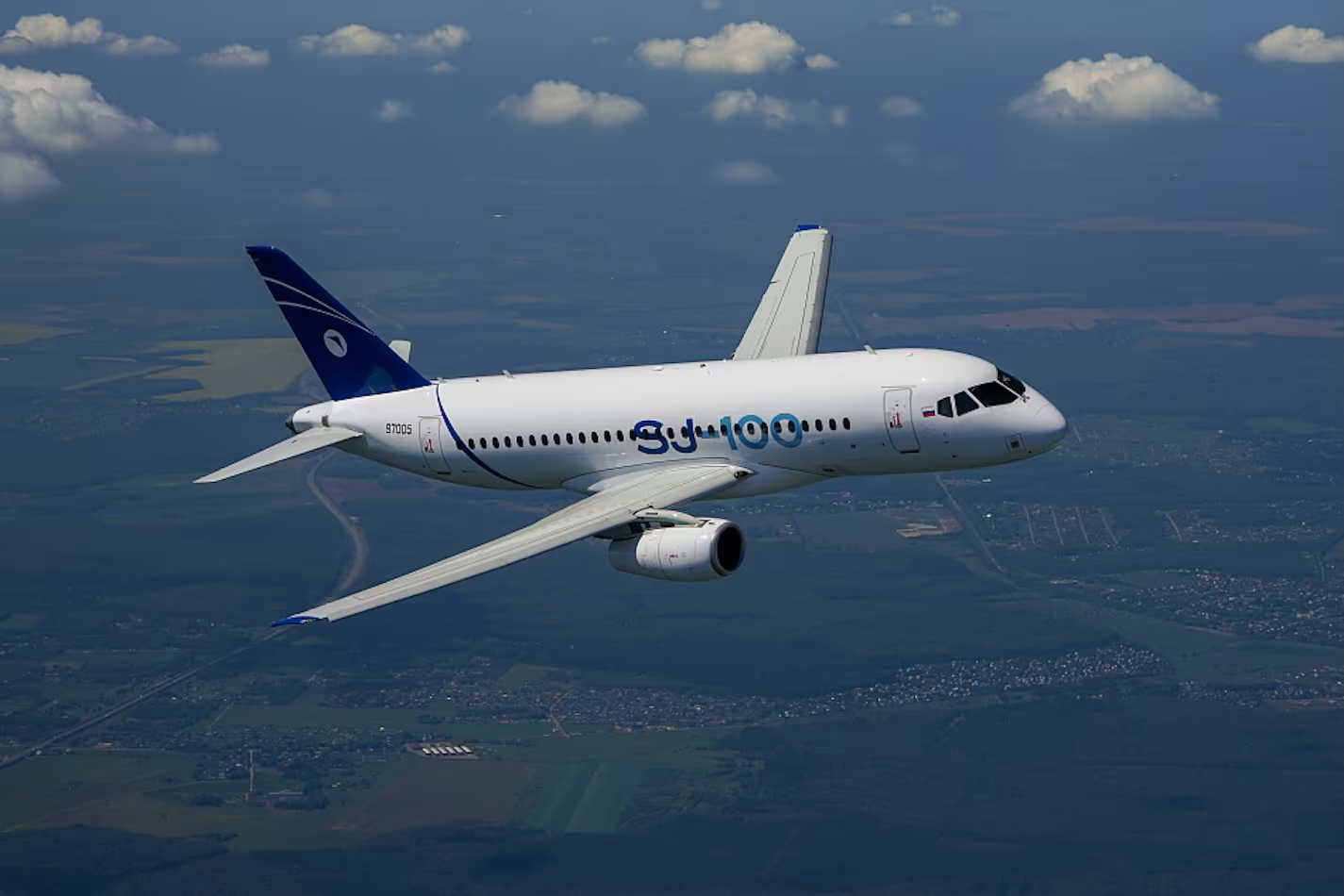
The SJ-100 and Airbus A220-100 belong to the same class of modern narrow-body aircraft designed for regional and medium-haul routes. However, the A220 was initially designed as a new platform, while the SJ-100 became a deep redesign of the Superjet with a transition to the Russian PD-8 engine and onboard systems.
"Pervyy Tekhnicheskiy" compared the two aircraft based on five key criteria.
Capacity
The SJ-100 is designed for approximately 100 passengers in its basic configuration. The A220-100 can carry between 100 and 135 passengers, depending on the cabin layout.
In terms of maximum capacity, Airbus gains an advantage, but the gap is not as significant as when comparing the SJ-100 with the larger A220-300. We give a point to the foreign aircraft.
Range
Here, the difference is much more substantial. For the new SJ-100 with PD-8 engines, the basic range is estimated at approximately 3000 km, and depending on the load, it can reach about 3500 km.
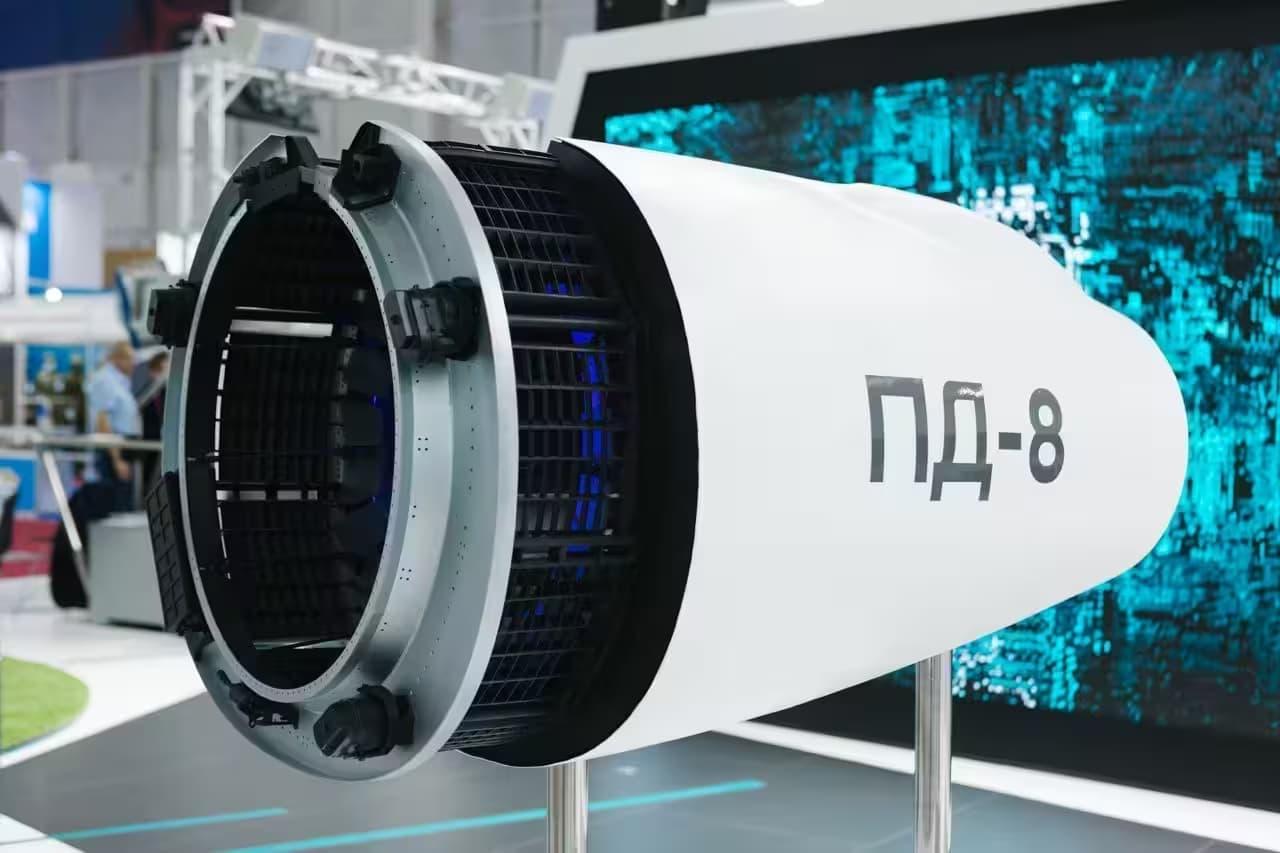
It is important not to confuse these figures with the range of 4320–4578 km previously stated for the Superjet 100LR version with SaM146 engines. These are the characteristics of a different aircraft configuration.
The A220-100 claims a range of up to 6300 km. Thus, Airbus can perform almost twice as long flights without an intermediate stop and therefore looks more advantageous.
Efficiency
The A220-100 was created with the requirements of modern civil aviation in mind. It received a new composite wing and Pratt & Whitney PW1500G engines, and Airbus claims a reduction in fuel consumption and CO₂ emissions of approximately 25% per seat compared to previous generation aircraft.
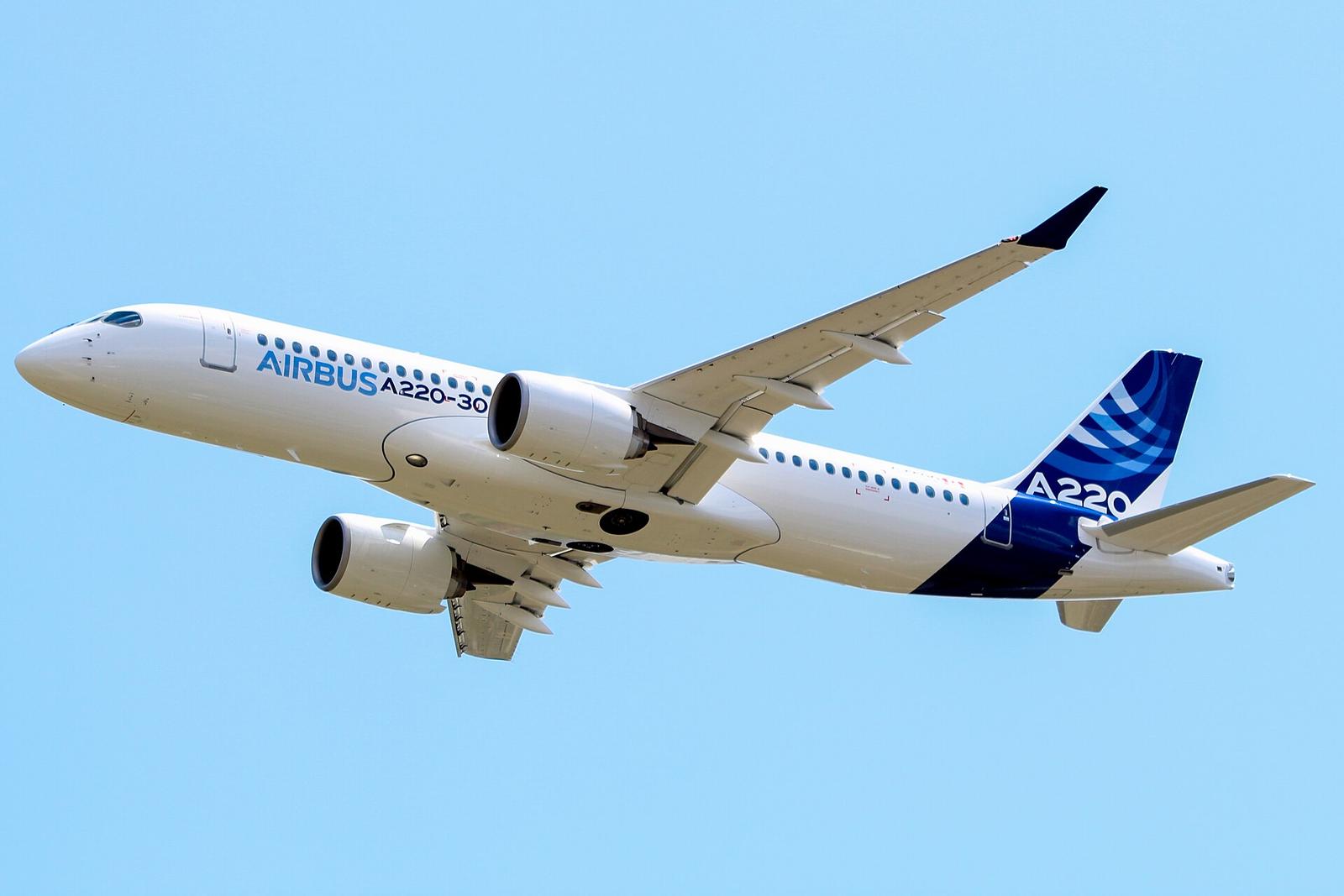
The SJ-100 with PD-8 should also be significantly more efficient than the original Superjet with SaM146. However, the serial commercial operation of the new Russian engine is yet to come: there is no statistics on its fuel consumption and service life in airlines yet. We give another point to the A220-100.
Passenger comfort
The aircraft use different cabin layouts. The SJ-100 received a 2+3 configuration, while the A220-100 uses a mirrored 3+2 scheme. In both cases, the passenger gets one middle seat in a three-seat block, so there is no fundamental difference.
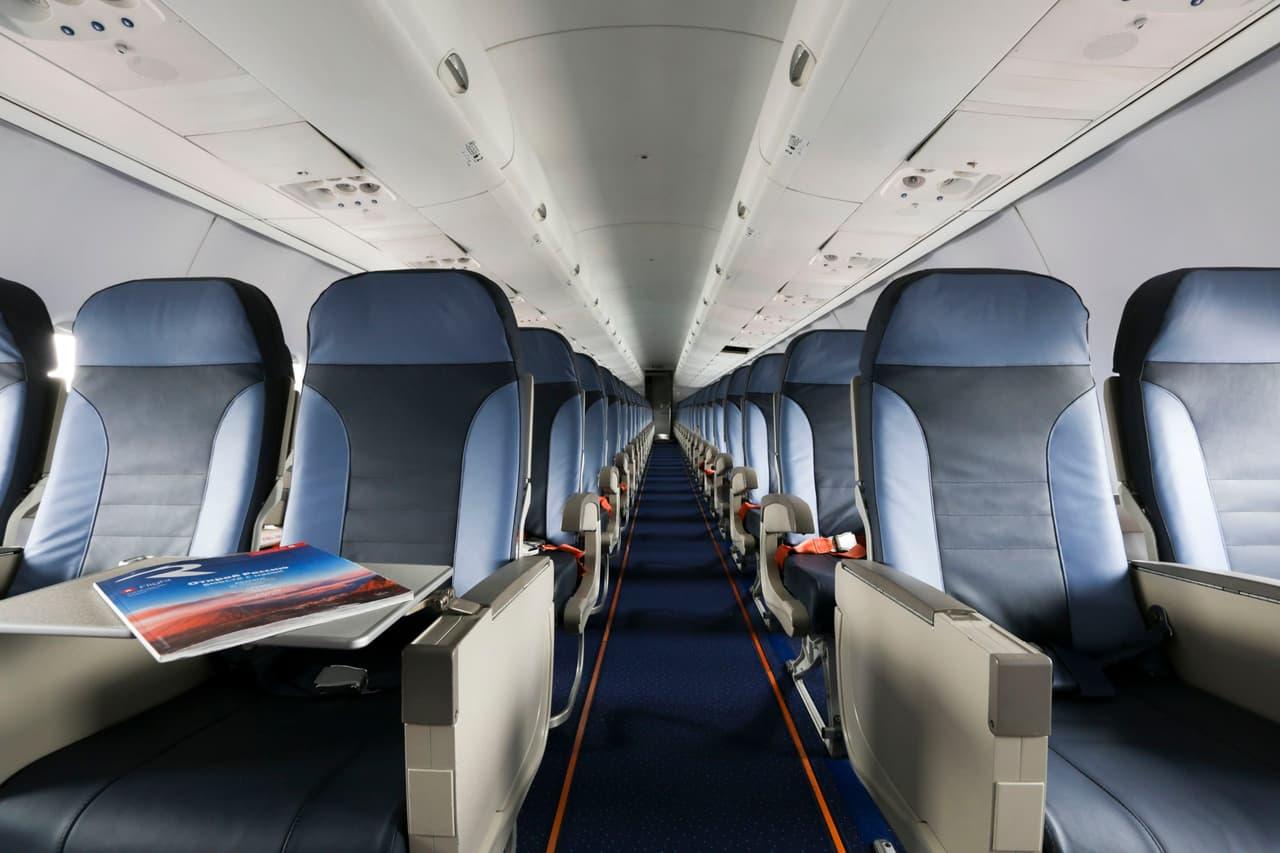
At the same time, the Russian aircraft can offer a wider aisle between rows, while the A220-100 features a more spacious fuselage, wider seats, larger windows, and roomy overhead bins. We call it a draw.
Operation and independence
The SJ-100 has a crucial advantage for the Russian market — the transition to PD-8 and domestic systems should free airlines from critical dependence on foreign suppliers and sanctions restrictions.
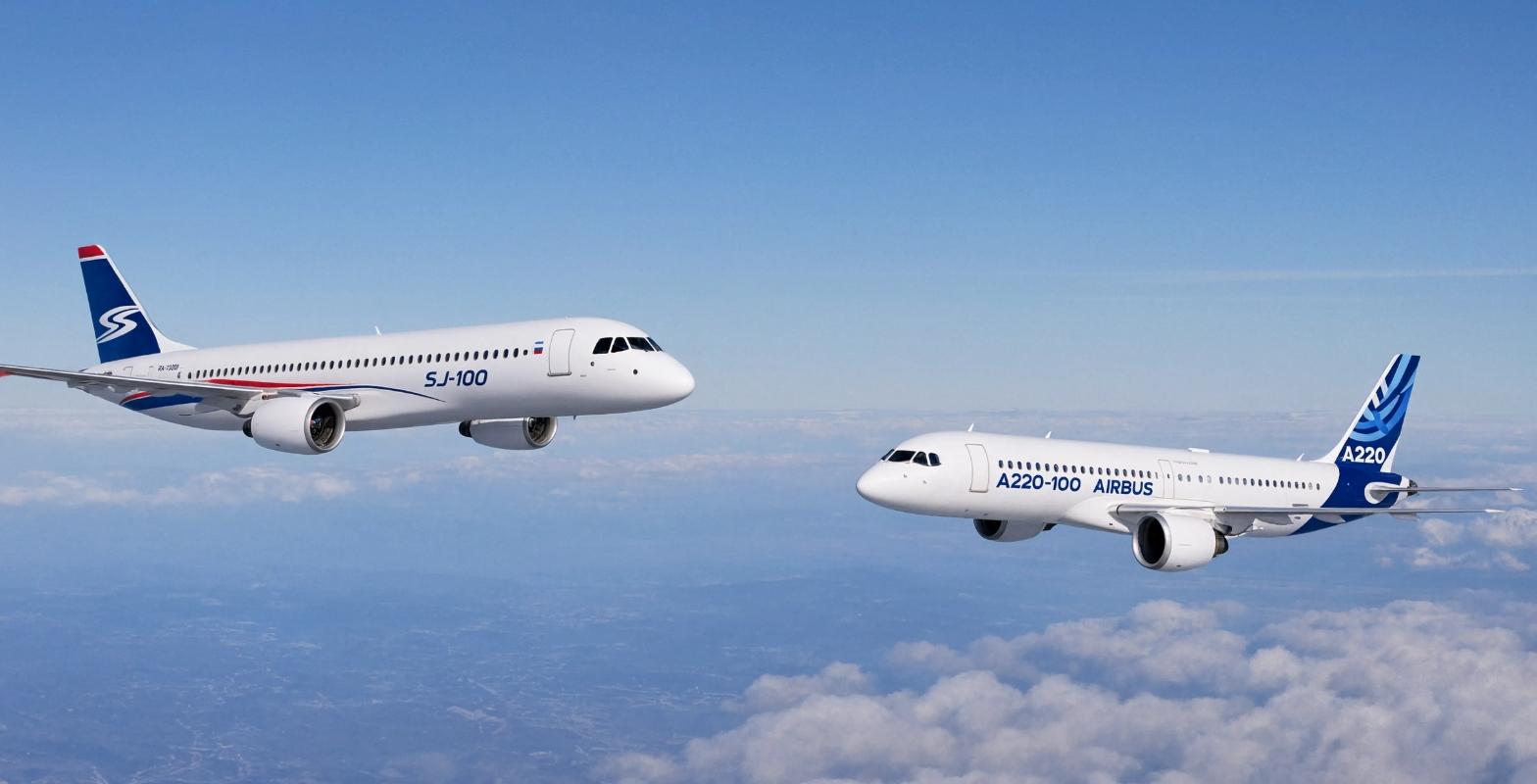
But from the point of view of actual operation, Airbus is still ahead. The A220 has an established global system of maintenance, spare parts supply, and service centers. Under sanctions, these benefits will not be available to us, so we give a point in favor of the SJ-100.
Final score — 3:1 in favor of the A220-100.
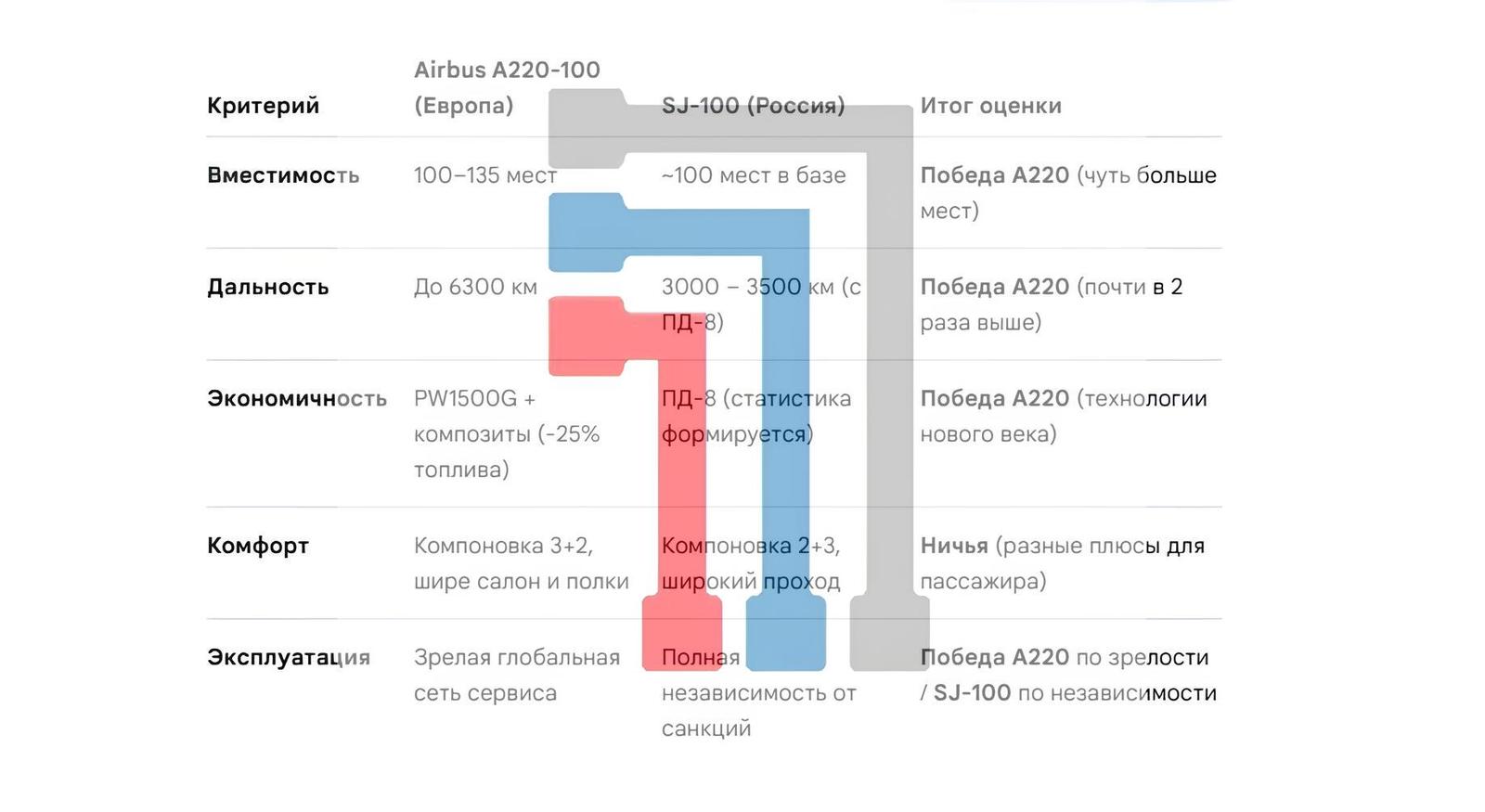
The SJ-100 gains its main advantage in technological independence, which is of strategic importance for the Russian market.
Airbus wins in range, capacity, and efficiency, and also has a more mature global operational infrastructure.
Read more on the topic:
Never miss our newsAdd this site to your preferred sources to see us more oftenAdd on Google