Translated with AI from the Russian original.
Since the beginning of the year, ZALA unmanned aerial vehicles have managed to survey more than 5 million kilometers of fuel and energy infrastructure and continue to increase the scale of surveys.
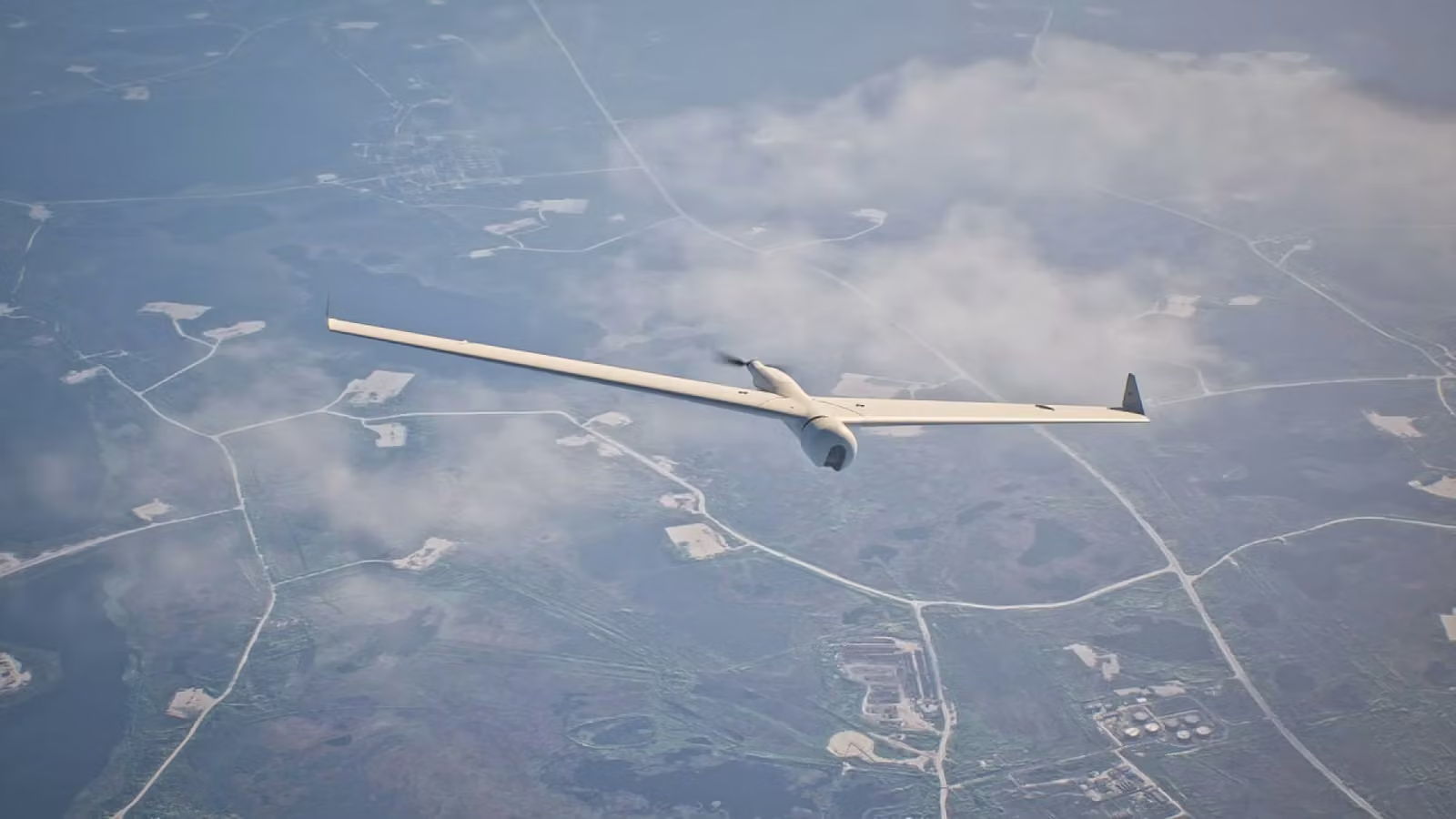
The demand for air monitoring services of critical infrastructure from energy companies has recently increased significantly due to the significant advantages of using unmanned aerial vehicles.
Thus, the flagship models of UAVs ZALA T-16 and ZALA T-20 daily ensure the safety of more than 200 thousand kilometers of main pipelines throughout the country, operating in all weather conditions.
The company's digital ecosystem combines unmanned technologies and artificial intelligence, automating monitoring processes. The IRRA hardware and software complex allows analyzing video streams in the visible and infrared ranges in real time.
The development of hard-to-reach areas after the introduction of ZALA technologies, which changed the approach to the protection of the fuel and energy infrastructure, is no longer a problem. And the automation of monitoring and data analysis allows companies not only to improve the safety of facilities, but also to optimize their processes, making more informed decisions.
Read more related materials:
- Highlighting sources of ignition: ZALA ZARYA-1 and ZALA ZARYA-1M drones with AI help the Ministry of Emergency Situations fight fires
- Innovative OMDZET drone received an engineering "Oscar"
- Domestic drone SKAT 350 M from Kalashnikov received an operator certificate for the performance of aviation works
Never miss our newsAdd this site to your preferred sources to see us more oftenAdd on Google

















