Translated with AI from the Russian original.
Counterfeit manufacturers in Russia copy not only the appearance of branded items, but also individual elements of their authenticity verification system. Falsified tracking chips and authentication pages appear in fakes, which are supposed to create the impression that the product has successfully passed verification.
Because of this, a single check of an individual feature may not be enough to distinguish an original from a fake. Experts also record another scheme: original products are modified to pass them off as a rarer and more expensive version of the same model.
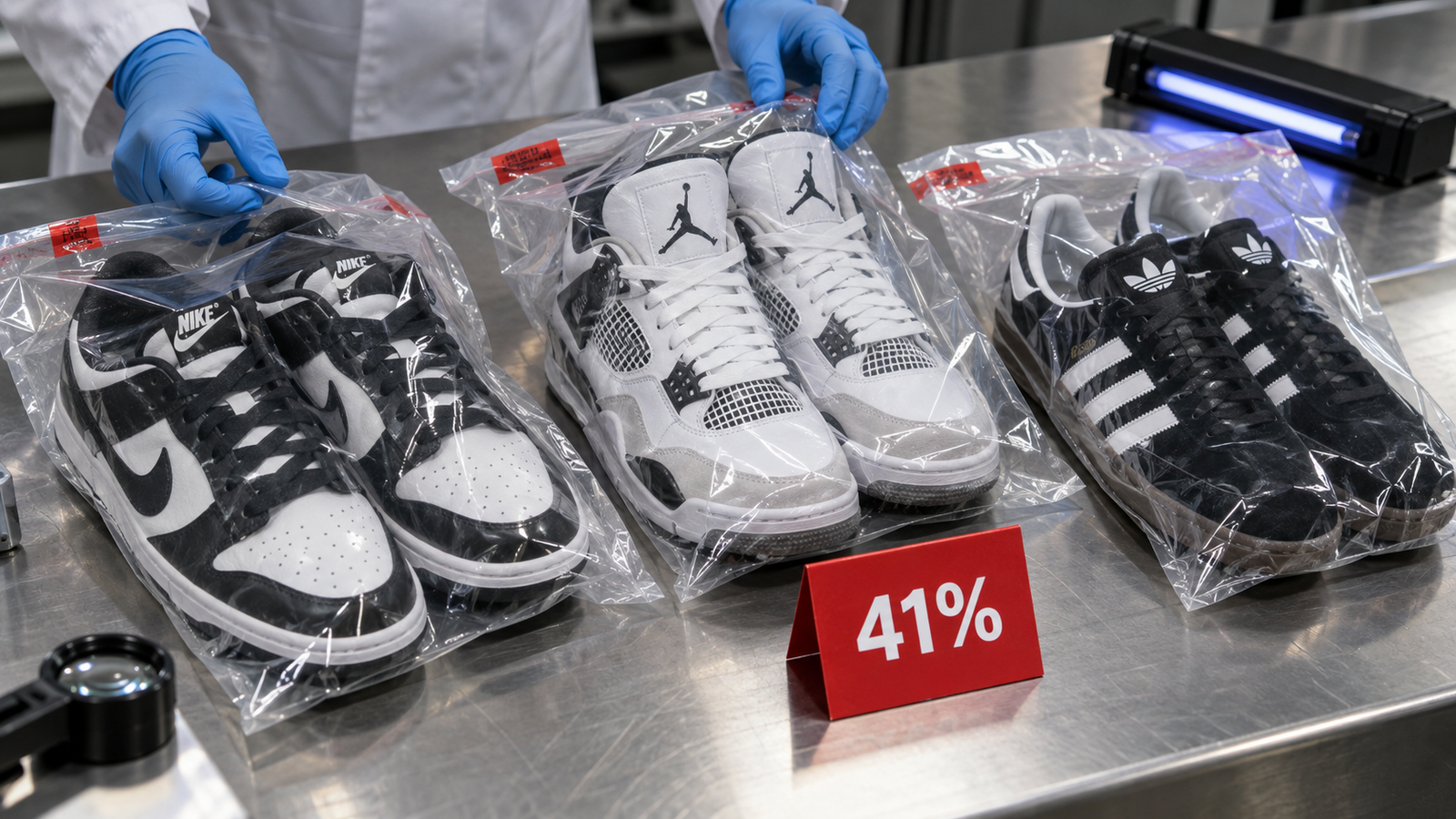
The scale of the market is evident from the inspection results. In the first half of 2026, users of the DEWU trading platform sent about 748 thousand goods for authentication. 307.5 thousand of them failed the verification — approximately 41%.
Most often, Nike fakes were identified — 58,348 items, which accounted for 19% of all detected counterfeits. Jordan followed with more than 48 thousand items, and Adidas Originals — over 17 thousand. Next are Louis Vuitton, New Balance, and Balenciaga. The top ten also included Gucci, Fear of God Essentials, Dior, and Bape.
The main category of identified counterfeits was footwear — it accounted for about two-thirds of the detected counterfeits, or 209.5 thousand items. Clothing accounted for 18%, bags — 10%, and accessories — another 2%. More than half of the fake items were in the price range from 5 to 15 thousand rubles, and about a third — from 15 to 50 thousand.
Read more on the topic:
- Counterfeits have seized the Russian auto parts market: even headlights and steering racks are being faked
- Scammers are massively creating phishing sites disguised as the Chinese marketplace Poizon: how to spot a fake
- Wildberries, fakes, and "Mafia": The Constitutional Court drew a line for marketplaces
Never miss our newsAdd this site to your preferred sources to see us more oftenAdd on Google

















