Translated with AI from the Russian original.
Sergey Gavrilov, an engineer at the Khlopin Radium Institute, has returned from a marine expedition to the Far East, where, as part of a research group from VNIROkeangeologia, he collected noble gas samples from the bottom water layer. This was reported by Rosatom's press service.
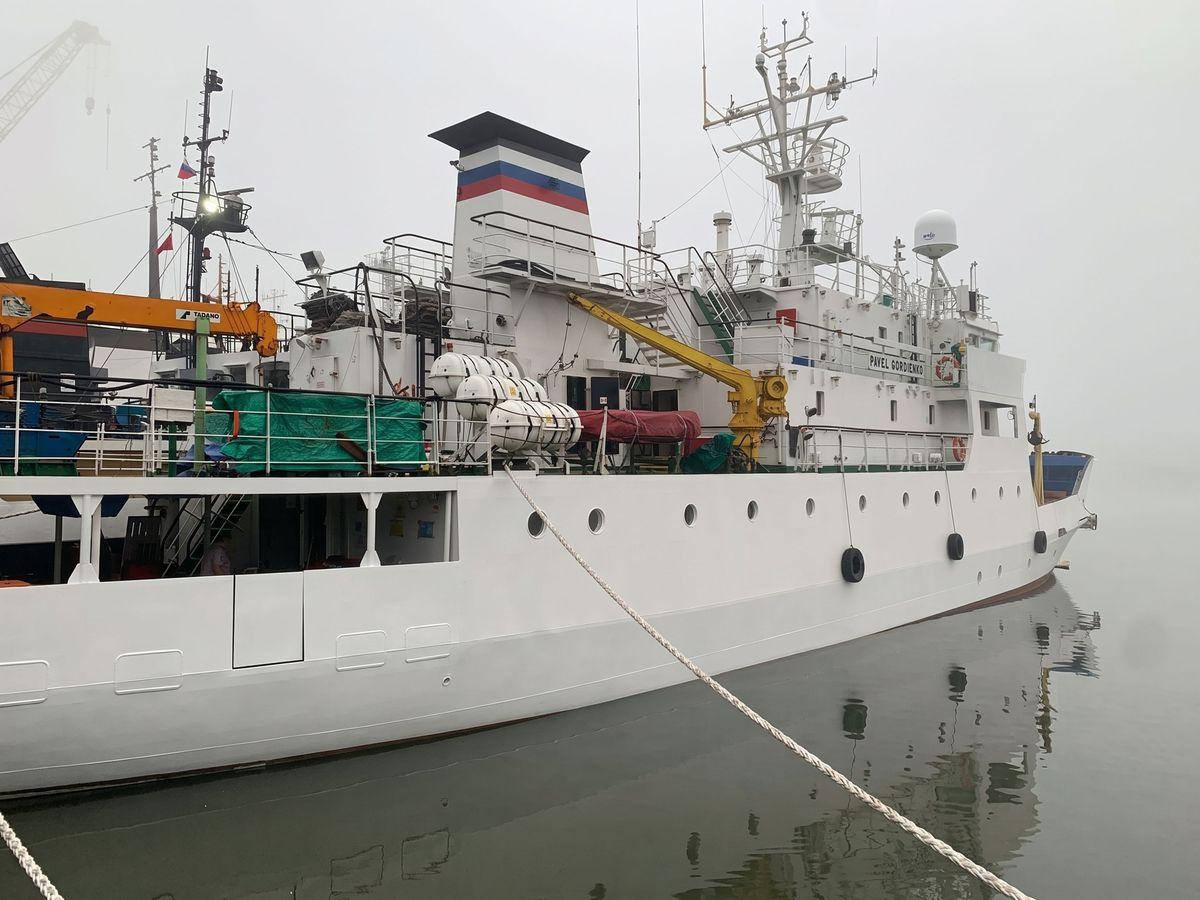
The expedition lasted two months. The route passed through the Sea of Japan to Aniva and Terpeniya Bays. A total of over 800 gas samples were collected — isotopes of helium and neon.
Samples were taken using a sealed bathometer, which was lowered 1–2 meters from the bottom. Then the water was pumped into a vacuum ultrasonic degasser — equipment created by Gavrilov based at the Radium Institute and the Institute of Geology and Geochronology of the Precambrian of the Russian Academy of Sciences.
How the degasser works
The concentration of noble gases in seawater is several orders of magnitude lower than in the atmosphere. The slightest depressurization — and the sample is contaminated with air.
Our degasser operates on the principle of a 'closed loop': we create a deep vacuum, then, using ultrasound and heating, 'squeeze' gases out of the water and immediately preserve them in special copper tubes.
Why this is needed
Helium and neon are reliable indicators of hydrocarbon deposits. They rise along faults from deep crustal layers and accumulate along with oil and natural gas. Their quantitative and isotopic analysis allows assessing the prospectivity of an area without resorting to drilling wells.
The results obtained will form the basis of a map of promising areas for domestic raw material companies.
The next stage is laboratory research in 2027. Samples will be measured using a mass spectrometer. First, they will be cooled to the temperature of liquid nitrogen (−196 °C) to freeze out active impurities, then heated to 200 °C. A 'pure' fraction of noble gases will remain, whose isotopic composition will show how long the gas has accumulated in the subsurface and how high the probability is of finding a large deposit there.
Read more on the topic:
Never miss our newsAdd this site to your preferred sources to see us more oftenAdd on Google

















